XBT (BTCB2) Mining Guide: Blake2b Miners, Pools and Profitability
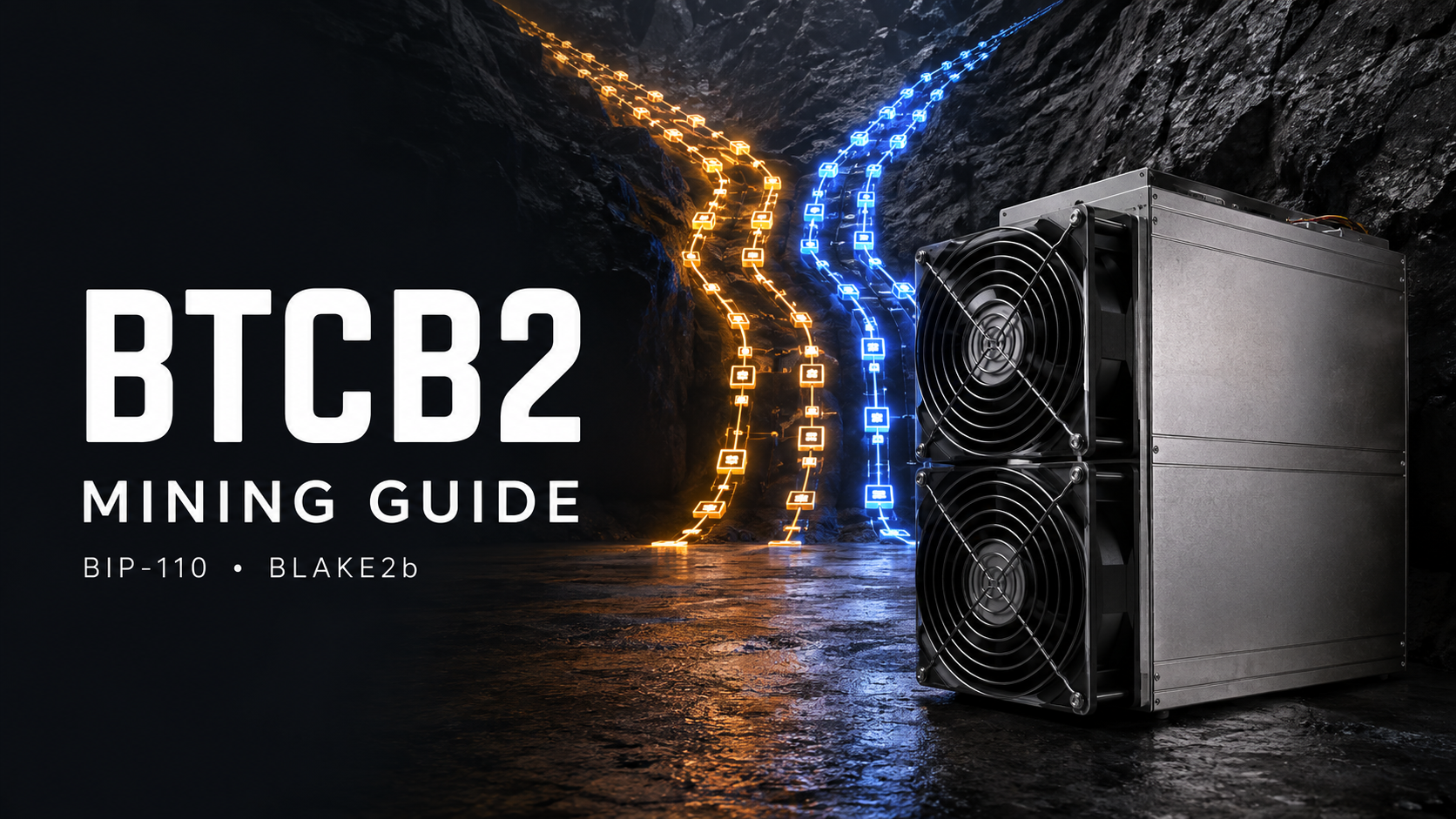
Status note: This article reflects publicly available information checked on September 8, 2026. The network is young, and its software, hashrate, pools, markets, and economics can change quickly.
Naming update — September 16, 2026: In this guide, XBT refers to the Bitcoin BLAKE2b fork also labeled BTCB2 by some mining pools and services. It is separate from Bitcoin’s SHA-256 network. Because XBT is also used as a Bitcoin ticker elsewhere, identify the network by its BLAKE2b context and the service’s network documentation, not by the ticker alone. This naming check does not refresh the September 8 hardware, pool-setting or profitability evidence below.
BTCB2 mining refers here to mining the independent BLAKE2b chain that emerged from the BIP-110 split. Earlier AlphaPool documentation used BTCB2; its homepage now displays XBT for this BLAKE2b branch, as recorded in the dated name map below. Other sites use labels such as BTC BLAKE2b, so naming is not yet uniform. BTCB2 is not BTC on Bitcoin’s SHA-256 network.
That distinction also applies to the proposal itself. The original BIP-110 proposal did not replace Bitcoin’s mining algorithm. Instead, it proposed a temporary soft fork that limited certain data fields. Only the later breakaway chain moved from SHA-256d to BLAKE2b.
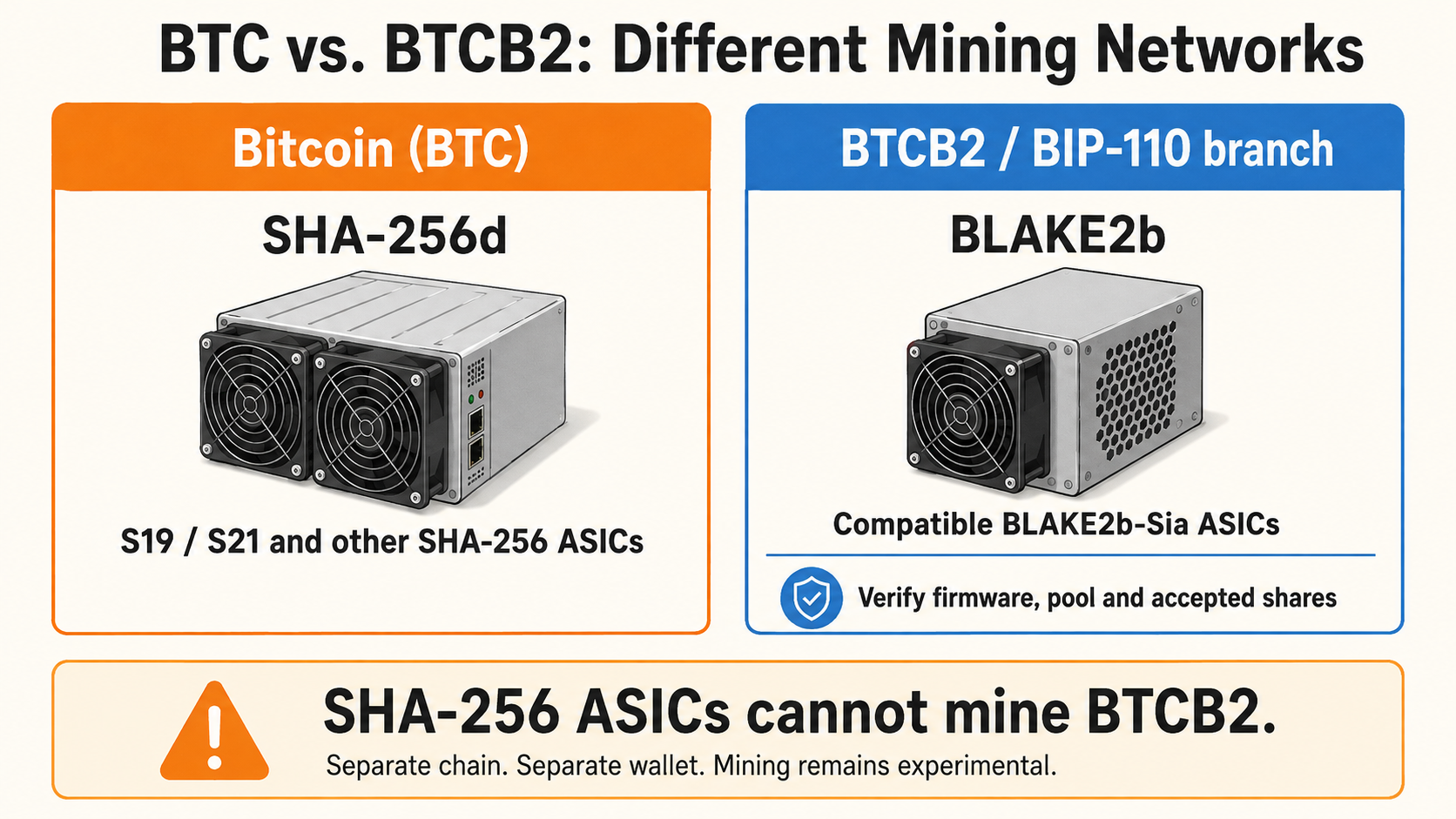
That distinction matters for every miner. A Bitcoin S19 or WhatsMiner cannot simply switch pools and mine this chain. Meanwhile, some older Sia ASICs can connect without new firmware. However, hardware compatibility does not make the coin liquid, profitable, or low risk.
This XBT (BTCB2) mining guide explains the split, the algorithm change, compatible miners, available pools, and the checks to complete before mining.
BIP-110 Was a Soft-Fork Proposal, Not a New Mining Algorithm
The original BIP-110 specification was titled “Reduced Data Temporary Softfork.” It aimed to restrict some forms of arbitrary data at the consensus layer for about one year after activation.
The proposal kept Bitcoin’s SHA-256d proof of work. Therefore, BIP-110 signaling and the later BLAKE2b chain should not be treated as the same technical event.
Miner support for the proposed activation stayed very low. As a result, the BIP-110-enforcing branch fell behind the dominant Bitcoin chain. Supporters then continued an independent chain and introduced a permanent proof-of-work change. At that point, the project became a hard-fork chain rather than merely a temporary soft-fork rule set.
How the BIP-110 Fork Changed Its Mining Algorithm
According to the chain’s technical reference, the branch shares Bitcoin history through block 961,631. It used SHA-256d through block 961,639. Starting at block 961,640, it switched permanently to BLAKE2b with a new 164-byte header format.
The change has several direct effects:
- SHA-256 Bitcoin ASICs cannot produce valid proof of work for the new chain.
- BLAKE2b and many BLAKE2b-Sia devices can participate through compatible pool software.
- The new chain no longer shares Bitcoin’s vast SHA-256 security budget.
- Difficulty, block timing, and mining income may remain volatile while hashrate is thin.
The target block interval remains 600 seconds. However, a target is not a promise. On a small new network, abrupt hashrate changes can produce unusually fast or slow blocks between difficulty adjustments.
Which ASIC Miners Can Mine BTCB2?
Evidence reviewed September 8, 2026. This is a review of published project, pool and hardware information. No BT-Miners miner connection, accepted-share, credited-reward or payout test is claimed.
Compatibility labels: BT-Miners tested requires an identifiable store test record; Pool/project-listed means the exact model is named in current documentation; Pending verification means only algorithm or specification evidence is available; Not compatible requires explicit conflicting hardware/protocol evidence. No device in this review is labeled BT-Miners tested.
| Exact model | BTCB2 evidence status | Evidence and limits — checked September 8, 2026 |
|---|---|---|
| iBeLink BM-S3+ | Pool/project-listed | AlphaPool explicitly names BM-S3+ and specifies port 7777 for its Sia firmware. Source |
| iBeLink BM-S3 | Pool/project-listed | B2Pool explicitly names BM-S3. Its combined BM-S3/BM-S3+ row shows 4.4 TH/s, which conflicts with this listing; do not use that pool table as a hardware specification. Source |
| Goldshell SC Lite | Pool/project-listed | The project miner guide explicitly names Goldshell SC Lite. Source |
| Goldshell SC5 Pro | Pool/project-listed | The project miner guide explicitly names Goldshell SC5 Pro. This evidence does not extend to SC5 Pro II or upgraded variants. Source |
| Goldshell SC5 Pro II | Pending verification | Algorithm / store specification only; exact-model test pending. Source |
| Goldshell SC6 SE | Pending verification | Algorithm / store specification only; exact-model test pending. Source |
| Goldshell SC-BOX | Pool/project-listed | AlphaPool names SC-BOX. This is not evidence for SC-BOX II. Source |
| Goldshell SC-BOX II | Pending verification | Algorithm / store specification only; exact-model test pending. Source |
| iBeLink BM-S1 Max | Pending verification | Algorithm / store specification only; exact-model test pending. Source |
| iBeLink BM-S1 | Pending verification | Algorithm / store specification only; exact-model test pending. Source |
| Goldshell HS5 | Pool/project-listed | AlphaPool explicitly names HS5 in Sia mode. Handshake mode is not the BTCB2 mining mode. Source |
| Goldshell HS6 | Pending verification | Algorithm / store specification only; exact-model test pending. Source |
| Goldshell HS6 SE | Pending verification | Algorithm / store specification only; exact-model test pending. Source |
| Goldshell HS Lite | Pending verification | Algorithm / store specification only; exact-model test pending. Source |
| Goldshell HS-BOX | Pending verification | Algorithm / store specification only; exact-model test pending. Source |
| Goldshell HS-BOX II | Pending verification | Algorithm / store specification only; exact-model test pending. Source |
Compare XBT (BTCB2) miner options · Shop Siacoin miners · Browse BLAKE2b hardware · Ask BT-Miners about your exact model and firmware
HS models require their Sia mode. Do not compare Handshake-mode hashrate or power with Sia-mode values. BLAKE2s and BLAKE3 are distinct algorithms, not substitute BTCB2 modes.
The chain’s miner guide names the Goldshell SC5 Pro and Goldshell SC Lite among its examples. B2Pool also publishes a broader working hardware list.
The table below compares practical candidates. Specifications are nominal and may vary by batch, mode, condition, and firmware.
| Miner | Nominal hashrate | Nominal power | Approx. efficiency | Practical assessment |
|---|---|---|---|---|
| iBeLink BM-S3+ | 25 TH/s | 3,400 W | 136 J/TH | Lowest rated energy per terahash among these candidates; requires substantial power and cooling |
| iBeLink BM-S3 | 19 TH/s | 3,100 W | 163 J/TH | Competitive modern option, but acquisition cost and resale market still matter |
| Goldshell SC Lite | 4.4 TH/s | 950 W | 216 J/TH | Lowest total rated power among these candidates; attractive for a small pilot deployment, with suitable ventilation and noise isolation |
| Goldshell SC5 Pro II | 14 TH/s | 3,300 W | 236 J/TH | More rated hashrate and better default-mode efficiency than the SC5 Pro; fork-specific firmware and pool compatibility still need verification |
| Goldshell SC5 Pro | 11 TH/s | 2,820 W | 256 J/TH | Lower total power than the SC5 Pro II; an optional low-power mode trades hashrate for improved efficiency |
These are rated specifications, not measurements on this fork. B2Pool’s hardware page currently groups BM-S3 and BM-S3+ under a conflicting 4.4 TH/s figure; the table uses the individual product specifications linked above. The chain guide names Goldshell models, while AlphaPool explicitly lists the BM-S3+. Confirm the exact firmware and accepted shares for each unit.
Efficiency should guide the first screening. For example, the BM-S3+ has lower rated energy consumption per terahash than the SC Lite, but requires substantially more total power. Nevertheless, expected revenue cannot be calculated reliably from efficiency alone. A miner also needs the live network difficulty, block reward, pool fee, uptime, coin price, and a credible route to sell or use the reward.
A Closer Look at the Five ASIC Candidates
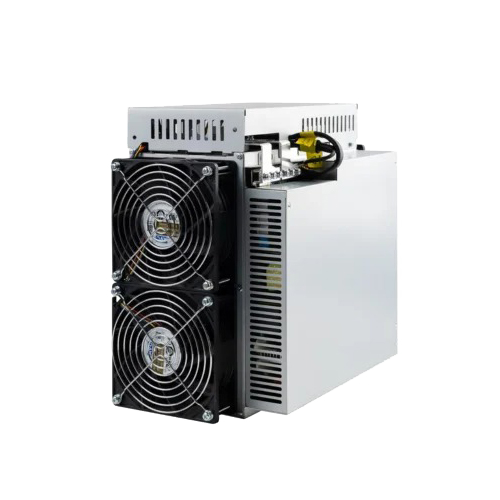
25 TH/s · 3,400 W
19 TH/s · 3,100 W
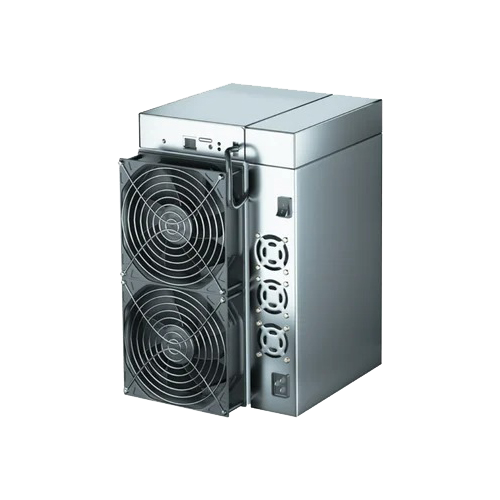
4.4 TH/s · 950 W
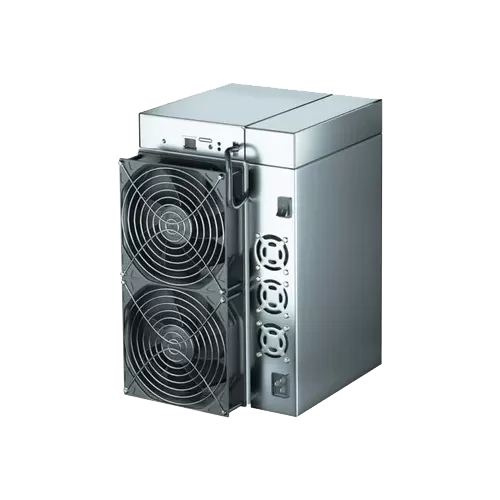
14 TH/s · 3,300 W
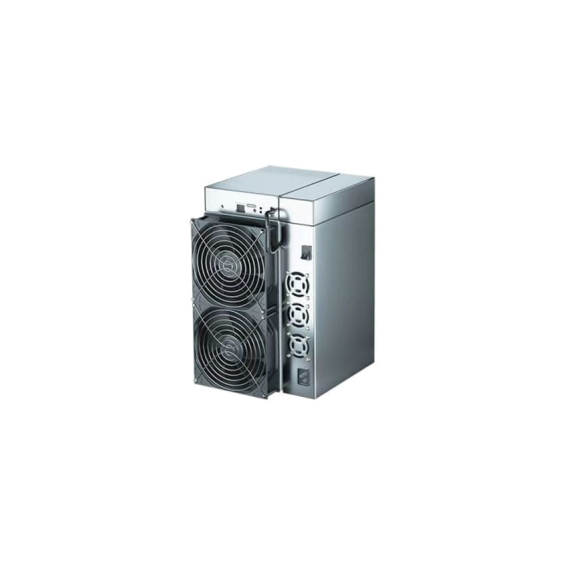
11 TH/s · 2,820 W
Product photos above are reproduced from the corresponding BT-Miners listings. Some listings share enclosure photography; images are illustrative and do not verify the exact batch, firmware, or BTCB2 compatibility. Ratings shown are nominal; follow each model link for current listing details.
Goldshell SC5 Pro II vs. SC5 Pro
The SC5 Pro II is rated at 14 TH/s and 3,300 W, compared with 11 TH/s and 2,820 W for the SC5 Pro in default mode. Calculated from those ratings, the Pro II offers about 27% more hashrate while drawing about 17% more power, with roughly 8% less energy consumed per terahash. These are specification-based comparisons, not measured results or a profitability forecast for this fork.
For a power-constrained setup, the SC5 Pro’s listed low-power mode is another option: 8.8 TH/s at 2,020 W, or approximately 230 J/TH calculated from those ratings. That reduces total power demand and slightly improves nominal efficiency versus the Pro II’s listed mode, at the cost of lower hashrate. Compare the exact operating mode, electricity cost, purchase price, and available circuit capacity before choosing.
Both product pages identify Blake2b-Sia hardware. The chain’s miner guide explicitly names the SC5 Pro, but we have not independently verified accepted shares or payouts from an SC5 Pro II on this fork. Treat the Pro II as a candidate pending confirmation from the pool and a small-scale test of the exact firmware, Stratum endpoint, accepted shares, and payout process. The Siacoin pool links on a product page do not establish support for this separate BIP-110 chain.
Which Bitcoin Miners Cannot Mine It?
Bitcoin ASICs such as the Antminer S19, S21, T21, and WhatsMiner M50 or M60 families use SHA-256d. They cannot mine the BLAKE2b fork through a firmware toggle. The hashing circuits are built for a different function.
Likewise, Blake2s and Blake256 machines are not automatically compatible. Similar names do not mean the same proof-of-work implementation. Confirm the exact algorithm and pool protocol before connecting any rented or owned hashrate.
BTCB2 Mining Pools: B2Pool vs. AlphaPool
As of the fact-check date, this review identified two public pool websites advertising support. This is a review of their published terms, not a hands-on mining or payout test, and it is not an exhaustive pool directory.
| Pool | Modes | Fee information | Strengths | Main concerns |
|---|---|---|---|---|
| B2Pool | Shared TIDES and solo; confirm the current endpoint | 1% of subsidy on shared mining | Clear documentation, hardware-specific ports, public block page, multiple regions | Small-chain risk; rolling-window payout variance; shared mining distributes subsidy only |
| AlphaPool | PPLNS; regional Stratum endpoints | 2.5% advertised fee | Regional endpoints and a dedicated Sia-firmware ASIC port | Confirm payout history and changing launch-stage documentation before scaling |
B2Pool now advertises TIDES for shared mining: rewards follow a rolling work window. Its published fee is 1% and only the subsidy is shared. This supersedes the earlier PROP description. The site retains some older round-based language; confirm its current accounting and completed payouts before scaling. Solo mining remains a separate, high-variance choice.
AlphaPool advertises PPLNS, a 2.5% fee, and a 0.01 BTCB2 minimum payout in its own ticker notation. It lists port 7777 for BM-S3+ and other Sia-firmware ASICs. Its page also retains older launch-stage wording. Therefore, confirm the live settings and a completed payout before directing meaningful hashrate. Pool ticker labels do not mean rewards are BTC on the SHA-256 network.
Historical BIP-110 signaling through OCEAN/DATUM does not establish current BLAKE2b pool support. The chain’s miner guide instead describes a BLAKE2b-capable node with CONVOY DATUM, including a solo-mining path. Verify an explicit current-chain endpoint before counting any pool as compatible.
Is BTCB2 Mining Profitable?
There is not enough mature market data to make a responsible blanket claim. The first question is not “Which miner earns the most?” It is “Can the mined asset be valued and sold without unacceptable risk?”
Before buying hardware, check these six items:
- Confirm that the chain tip is advancing and that an independent explorer agrees.
- Verify recent pool blocks, payout records, fees, and minimum payout rules.
- Identify actual markets, deposit support, withdrawal support, depth, and spread.
- Calculate power cost from wall consumption, not advertised hashrate alone.
- Use a fresh wallet and address dedicated to the forked chain.
- Start with a limited test and confirm a spendable payout before scaling.
A rough daily power formula is simple:
daily electricity cost = power in kW × 24 × electricity price per kWh
For example, a 950 W SC Lite costs $2.28 per day at $0.10 per kWh. A 3,400 W BM-S3+ costs $8.16. Those figures exclude cooling, pool fees, downtime, repairs, and capital cost.
Conclusion
The BIP-110 story now spans two different events. First came a temporary reduced-data soft-fork proposal that retained SHA-256d. After that effort failed to win meaningful miner support, an independent branch adopted BLAKE2b at block 961,640.
BTCB2 mining creates a possible second use for BLAKE2b-Sia ASICs. Among the five candidates compared here, the iBeLink BM-S3+ has the lowest rated energy consumption per terahash. The Goldshell SC Lite offers a lower-power way to test, while the SC5 Pro and SC5 Pro II provide additional options at higher total power levels, subject to model-specific compatibility checks.
For now, the largest risks are not hardware related. They are network security, software maturity, pool concentration, exchange support, liquidity, and rapid difficulty changes. Treat BTCB2 / BIP-110 fork mining as an experimental deployment until the chain and its markets establish a longer record.
Frequently Asked Questions (FAQs)
What is BTCB2, and is it the same as Bitcoin?
BTCB2 is a label for the independent BLAKE2b hard-fork chain discussed here; some services now call it XBT. See the dated name map for platform-specific usage. It is not BTC on Bitcoin’s SHA-256 network. The original BIP-110 document described a temporary soft fork; the later chain changed proof of work and became a separate hard-fork network. Always verify the supported network before using a wallet, pool, or trading service.
Can an Antminer S21 mine the BIP-110 fork?
No. The S21 computes SHA-256d. The current BIP-110 branch requires BLAKE2b proof of work.
Can Siacoin miners mine BTCB2?
Some exact models are named by pools or the project. Others remain pending verification. Algorithm matching alone does not verify firmware, accepted shares or payouts.
Which BTCB2 mining pool is best?
B2Pool and AlphaPool publish different fees and reward methods. Neither is ranked here on tested reliability. Compare latency, completed payouts, current hashrate, and fees before choosing.
Should I buy a miner only for this fork?
That is a high-risk decision. Confirm liquidity, payouts, live difficulty, electricity cost, and a fallback use for the hardware before purchasing.
Editorial disclaimer: This article is educational content, not financial or investment advice. Network status and mining economics can change without notice.
XBT vs. BTCB2: names used by mining services
Names checked September 16, 2026. Display labels can change independently of internal market codes. These observations do not establish one universal renaming date.
| Service | Observed label | Network context and source |
|---|---|---|
| AlphaPool | XBT | Homepage lists Bitcoin Knots BLAKE2b (ASIC); older subpages may retain BTCB2. |
| B2Pool | BTCB2 | Bitcoin BLAKE2b mining pool |
| SafeTrade | XBT/USDT | XBT market; its network status page identifies Bitcoin (BIP110). |
| Kraken | XBT in some interfaces | Bitcoin BTC ticker usage, not evidence of support for this BLAKE2b fork. |
Is XBT the same as BTCB2?
In the BLAKE2b-fork context documented above, these services use XBT or BTCB2 for the same chain. The ticker alone is not enough to identify a network; check the specific service’s documentation.
Is XBT the same as Bitcoin BTC?
It depends on the service. XBT can mean SHA-256 Bitcoin on some platforms. Here, XBT (BLAKE2b/BTCB2) means the separate BLAKE2b chain. Do not infer wallet or deposit compatibility from the letters XBT.
Which ASIC miners can mine XBT on the BLAKE2b chain?
Use the exact-model evidence table in this guide. A new ticker does not change hardware compatibility: pool/project-listed and pending-verification labels retain their original meaning. No BT-Miners physical miner test is claimed.
Why does my mining pool still show BTCB2?
Services update labels at different times; B2Pool still uses BTCB2 in the naming check above. A label change by itself does not demonstrate a new network or require a coin conversion. Confirm the recipient’s supported chain before any transfer.
Setup, sources and updates
Follow the pool setup and four-stage verification guide. Compare BTC, BTCB2 and SC networks.
Primary references checked September 8, 2026: Bitcoin BLAKE2b miner documentation; AlphaPool hardware and connection documentation; B2Pool current TIDES terms; B2Pool model list. Pool listings are claims by their operators, not BT-Miners test evidence.