Bitcoin BIP110 (BTCB2/XBT) vs Siacoin for BLAKE2b ASIC Owners
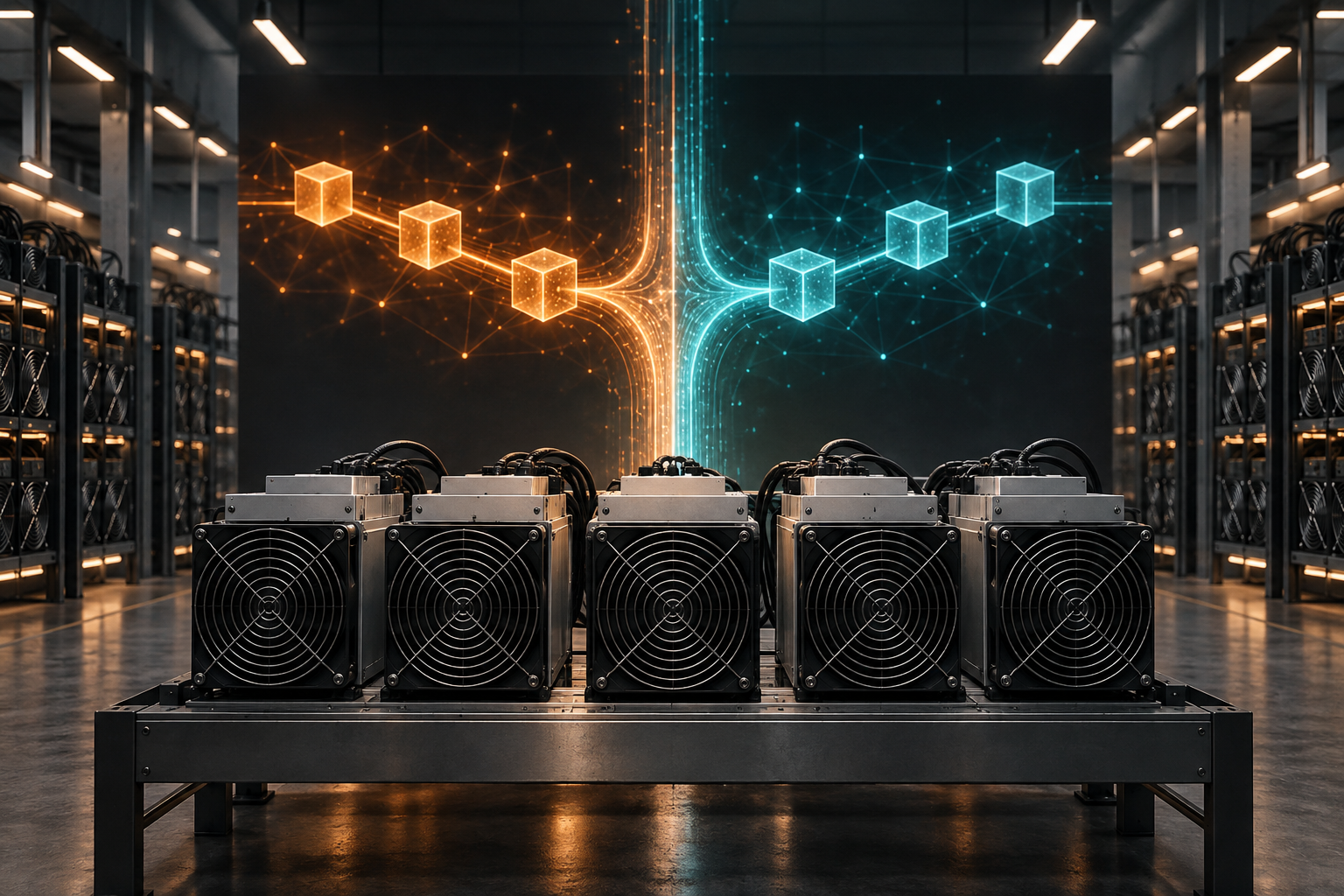
If you own a Siacoin ASIC, Bitcoin BIP110 creates an unusual choice. The same general class of BLAKE2b-Sia hardware may be able to mine two unrelated networks: the established Siacoin chain and a much newer Bitcoin-derived branch that moved to BLAKE2b at the end of August 2026.
That does not make the two coins interchangeable. They have different histories, wallets, pool infrastructure, markets and operational risks. A miner can submit valid shares and still discover that withdrawals are unavailable, the market is too thin to sell into, or the payout address belongs to the wrong network.
This comparison is for operators deciding whether to keep their hashrate on Siacoin, test Bitcoin BIP110 with a small allocation, or maintain both configurations. It is not a profitability forecast. Revenue, difficulty, pool performance and market access can change faster than a mining article can be updated.
First, What Should Miners Call the New Chain?
The safest primary name today is Bitcoin BIP110. The project’s technical reference lists “Bitcoin BIP110” as the preferred listing name and “BIP110” as the project-declared ticker.
That is not the only label miners will encounter:
- BIP110: the ticker used by the project and by SafeTrade for its BIP110/USDT market.
- BTCB2: the ticker used by NonKYC and by several mining-related services. It is also the keyword many miners already use when searching for pools and setup instructions.
- XBT: a label used by some services around the BLAKE2b chain. It is the most ambiguous choice because XBT has long been used as an alternative ticker for regular Bitcoin.
For that reason, BT-Miners will use Bitcoin BIP110 as the main name and keep BTCB2/XBT as service-specific aliases. A pool dashboard label is not enough to identify a network. Check the operator’s documentation, the supported proof-of-work algorithm, the wallet software and the deposit network before moving funds.
Bitcoin BIP110 and Siacoin Are Built for Different Purposes
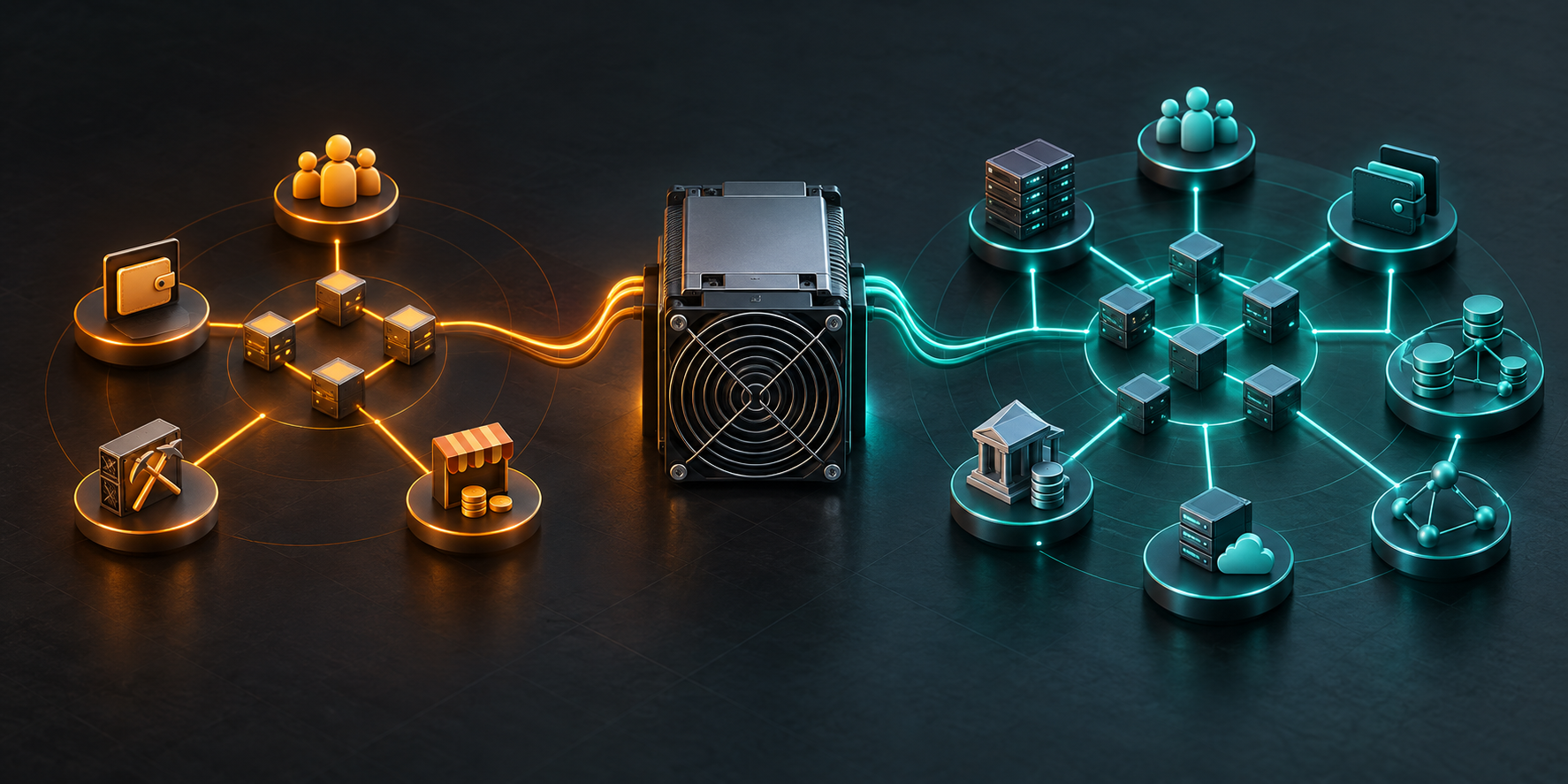
| Question | Bitcoin BIP110 (BTCB2/XBT on some services) | Siacoin (SC) |
|---|---|---|
| Network origin | Bitcoin-derived branch sharing history through block 961,631 | Independent Sia blockchain |
| Current role | New native UTXO coin and experimental network | Utility coin used for decentralized storage operations |
| Proof of work | BLAKE2b from block 961,640, with a new header format | BLAKE2b-Sia |
| Operational maturity | First production release published September 2, 2026 | Long-running ecosystem with established wallets, pools and exchanges |
| Main miner concern | Chain identity, pool concentration, thin markets and custody risk | Electricity cost, pool concentration and normal mining economics |
Bitcoin BIP110 shares Bitcoin’s history through block 961,631. Its branch used SHA-256d for eight more blocks and switched permanently to BLAKE2b at block 961,640 on August 30, 2026. The production reference client followed on September 2. This timing matters: the current BLAKE2b network is new, even though its ledger history begins with Bitcoin’s.
Siacoin is not a Bitcoin fork. SC is the utility coin of the Sia storage network. Renters use it to pay for storage, hosts receive it for providing capacity, and miners secure the chain. Sia also completed its v2 hard fork in June 2025, but its official documentation says the major pools and exchanges supported that upgrade.
So the choice is not simply “which BLAKE2b coin pays more today?” It is a choice between two networks with very different levels of infrastructure and different sources of demand.
Mining Pools: Established SC Infrastructure vs a Fast-Moving BIP110 List
Siacoin pools
Sia’s official ecosystem directory currently points miners to Luxor, f2pool and DxPool. That official directory is more useful than an old pool roundup because endpoints, payout rules and supported coins can change.
As one concrete example, f2pool’s current SC guide publishes a PPS payout method, a 3% fee and a 100 SC payout threshold. Those terms belong to f2pool and should be rechecked before connecting. BT-Miners has not independently measured its uptime, rejected-share rate or payouts.
Bitcoin BIP110 pools
The Bitcoin BIP110 pool landscape has expanded quickly. Operators currently publishing some form of mining or gateway information include AlphaPool, Lazarus, iohzrd, RIPTIDE, CONVOY and B2Pool. Some accept a direct ASIC Stratum connection; others use a node-and-DATUM route that lets the miner construct its own block template.
Those connection models should not be treated as equivalent. Direct Stratum is easier to deploy, while self-hosted DATUM introduces a Bitcoin BIP110 node and gateway that the operator must secure and maintain. Our Bitcoin BIP110 mining pool guide lists the current operator links and explains the setup differences.
A longer pool list does not automatically mean a decentralized network. Compare recent blocks, not just advertised endpoints. Also remember that switching from one regional server to another server owned by the same operator does not redistribute control between pool operators.
Liquidity Is the Largest Practical Difference
Siacoin has a broader and older market footprint. Sia’s own ecosystem page links to services including Kraken, Crypto.com, ChangeNOW and Upbit. Availability still depends on the user’s country, and an exchange listing does not guarantee deep liquidity at every hour, but SC has established wallet and exchange infrastructure around it.
Bitcoin BIP110 is much earlier in that process. The project announced:
- SafeTrade: BIP110/USDT under the BIP110 ticker.
- NonKYC: BTCB2/BTC and BTCB2/USDT under the BTCB2 ticker.
Those listings establish that markets were announced; they do not establish order-book depth, reliable withdrawals or a price at which a large mining operation can liquidate rewards. Before assigning serious hashrate, make a small test deposit or pool payout, verify that the exchange credits the correct network, inspect both sides of the order book, and test a withdrawal.
The naming issue makes this more dangerous. A service showing XBT may mean ordinary Bitcoin, not Bitcoin BIP110. The BIP110 chain also uses Bitcoin-like address encodings. An address that looks valid therefore does not prove that the receiving service supports the intended chain.
Which BT-Miners BLAKE2b ASICs Can Be Considered?
The machines below are sold primarily as Siacoin miners. Their store ratings describe Siacoin operation, not guaranteed Bitcoin BIP110 earnings. Compatibility also depends on the exact pool protocol and firmware, so test accepted shares and a payout before scaling up.
| Model | Rated hashrate | Rated power | Practical role |
|---|---|---|---|
| iBeLink BM-S3+ | 25 TH/s | 3,400 W | Highest hashrate and best nominal efficiency in this five-model group |
| iBeLink BM-S3 | 19 TH/s | 3,100 W | Industrial option with lower total load than the S3+ |
| Goldshell SC5 Pro II | 14 TH/s | 3,300 W | Verify exact-model pool support before committing production capacity |
| Goldshell SC5 Pro | 11 TH/s | 2,820 W | Named in the project’s current BLAKE2b mining guidance |
| Goldshell SC Lite | 4.4 TH/s | 950 W | Lower-load unit suited to a small compatibility and payout test |
If you are buying hardware, choose it on electrical efficiency, site capacity, condition, warranty and its proven use on Siacoin. Treat Bitcoin BIP110 compatibility as an additional operating option, not as the sole justification for the purchase. No reliable Bitcoin BIP110 revenue estimate is published on these product pages.
A Safer Way to Switch Hashrate
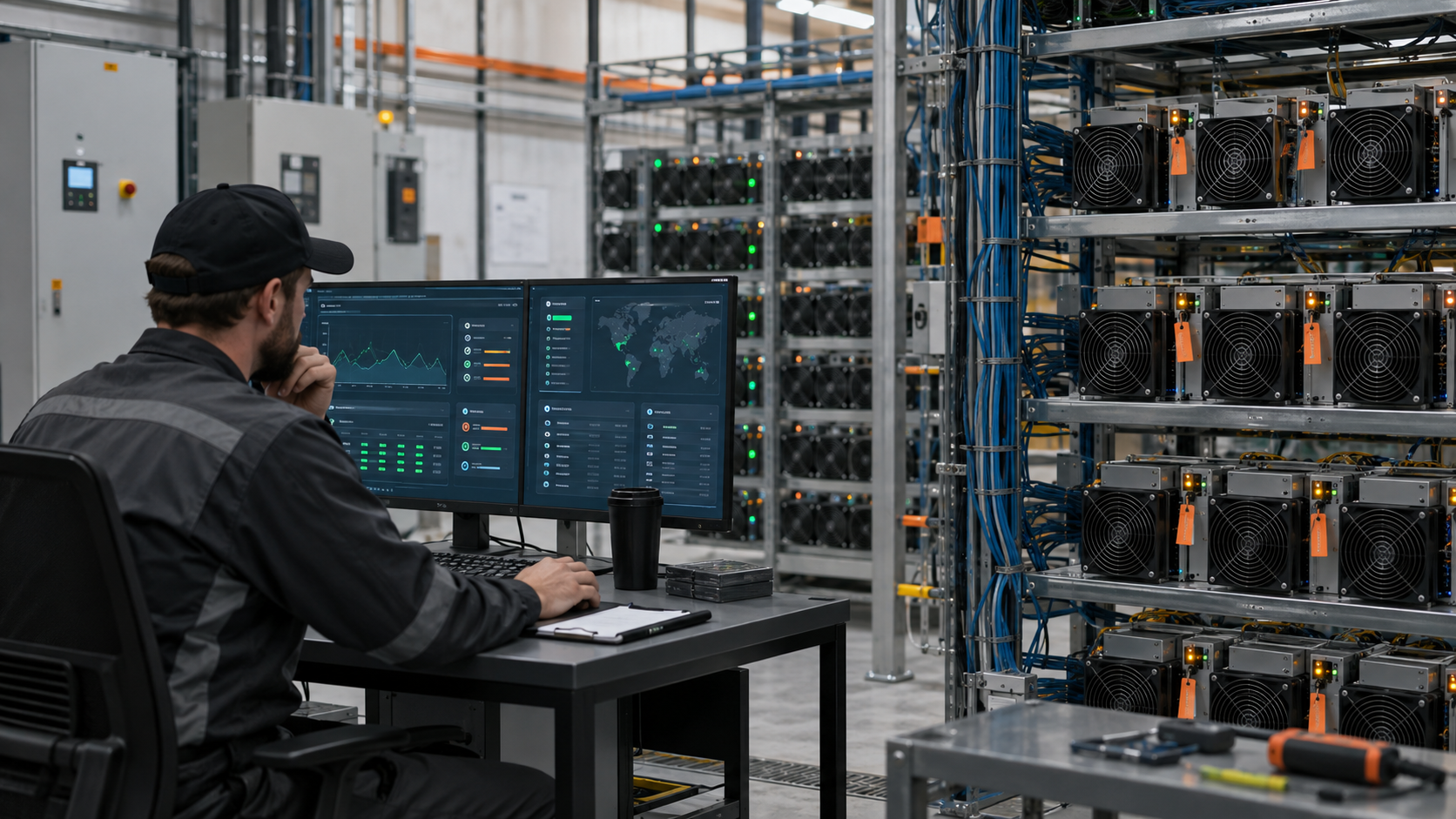
For most farms, the sensible decision is not an all-or-nothing move. Start with one machine or a small group and use a separate configuration profile.
- Confirm the exact network name. Match the pool, wallet and exchange to Bitcoin BIP110/BLAKE2b. Do not rely on BTCB2 or XBT alone.
- Keep BTC, BIP110 and SC operations separate. Use separate wallets, accounting labels and payout records. The project’s technical reference also recommends separate node processes, data directories and withdrawal systems for BTC and BIP110.
- Check the pool protocol. Confirm whether your ASIC connects directly by Stratum or through a local DATUM gateway.
- Watch accepted shares. A connected status does not prove valid work. Check accepted shares, rejected shares and pool-side hashrate.
- Wait for a real payout. Do not scale from a dashboard balance alone. Confirm that a payout reaches a wallet you control.
- Test the exit path. If selling is part of the plan, send a small amount to the correctly named market, trade only what the order book can absorb, and test the withdrawal.
- Keep a working Siacoin fallback. Save the previous SC pool configuration so the miners can return without rebuilding the setup during an incident.
Our earlier Bitcoin BIP110 mining guide covers the chain history and model-level evidence. The pool decentralization guide covers operator choices and connection methods. Use both as dated references; this network is changing quickly.
Which Network Fits Which Miner?
Stay primarily on Siacoin if:
- You need established pool operations and broader exchange access.
- You sell mining rewards regularly to cover electricity.
- You do not want to operate experimental wallet, node or gateway software.
- Your accounting and custody process is built around SC.
Test Bitcoin BIP110 with part of your hashrate if:
- You understand that it is a separate, young network.
- Your exact miner and chosen pool can produce accepted shares.
- You can hold rewards without depending on immediate liquidation.
- You are willing to verify wallets, payouts and market withdrawals manually.
- You want to contribute hashrate without concentrating the entire allocation on one operator.
Avoid switching for now if:
- The only evidence you have is a screenshot of a high displayed price.
- You cannot identify whether XBT means BTC or Bitcoin BIP110 on the receiving service.
- You need predictable daily conversion into fiat or stablecoins.
- You have not completed a small end-to-end payout and withdrawal test.
Bottom Line
Bitcoin BIP110 gives BLAKE2b-Sia ASIC owners a second network to evaluate, but it is not simply “another Siacoin pool.” It has a different chain, different wallet risks, a younger pool ecosystem and far thinner market infrastructure. Its current naming—BIP110, BTCB2 and sometimes XBT—adds another operational hazard.
Siacoin remains the more established route for miners who prioritize mature infrastructure and routine liquidation. Bitcoin BIP110 may be worth a controlled test for operators who can tolerate technical and market risk. The best first move is a small hashrate allocation, a wallet you control, a verified pool payout and a tested exit path—not a full-farm switch based on a quoted price.
BT-Miners carries the BM-S3+, BM-S3, SC5 Pro II, SC5 Pro and SC Lite. Contact us before ordering if you need help matching electrical capacity, firmware and the intended mining pool to an exact unit.
Disclosure: BT-Miners sells the hardware linked in this article and has a partnership with Lazarus Pool. The partnership does not establish guaranteed compatibility, uptime, payouts, profitability or a payback period. Pool and exchange details are based on operator or project documentation checked September 16, 2026, not on an independent BT-Miners earnings or withdrawal test.