Hashprice Explained: Why BTC Price Alone Doesn’t Tell You If Mining Is Profitable in 2026
⚠️ Disclaimer: Mining profitability fluctuates with electricity costs, cryptocurrency prices, and network difficulty. All figures reflect conditions as of June 2, 2026. Past performance does not indicate future results. Conduct your own due diligence before purchasing mining equipment.
Bitcoin is sitting at $73,452 today. On paper, that sounds like a good time to mine. But experienced operators know the number that actually determines whether mining is profitable is not the BTC spot price — it is hashprice. Buyers who confuse the two routinely buy hardware at the wrong time and overpay for ROI that does not materialise.
This guide explains what hashprice is, how to calculate it, why it diverges from BTC price, and how to apply it when evaluating ASIC miners in mid-2026.
Table of Contents
- What Is Hashprice?
- Why BTC Price and Hashprice Diverge
- Current Network Data: June 2, 2026
- Machine-Level Revenue at Current Hashprice
- How to Use Hashprice When Buying Hardware
- A Note on Non-BTC Miners
- Bottom Line
What Is Hashprice?
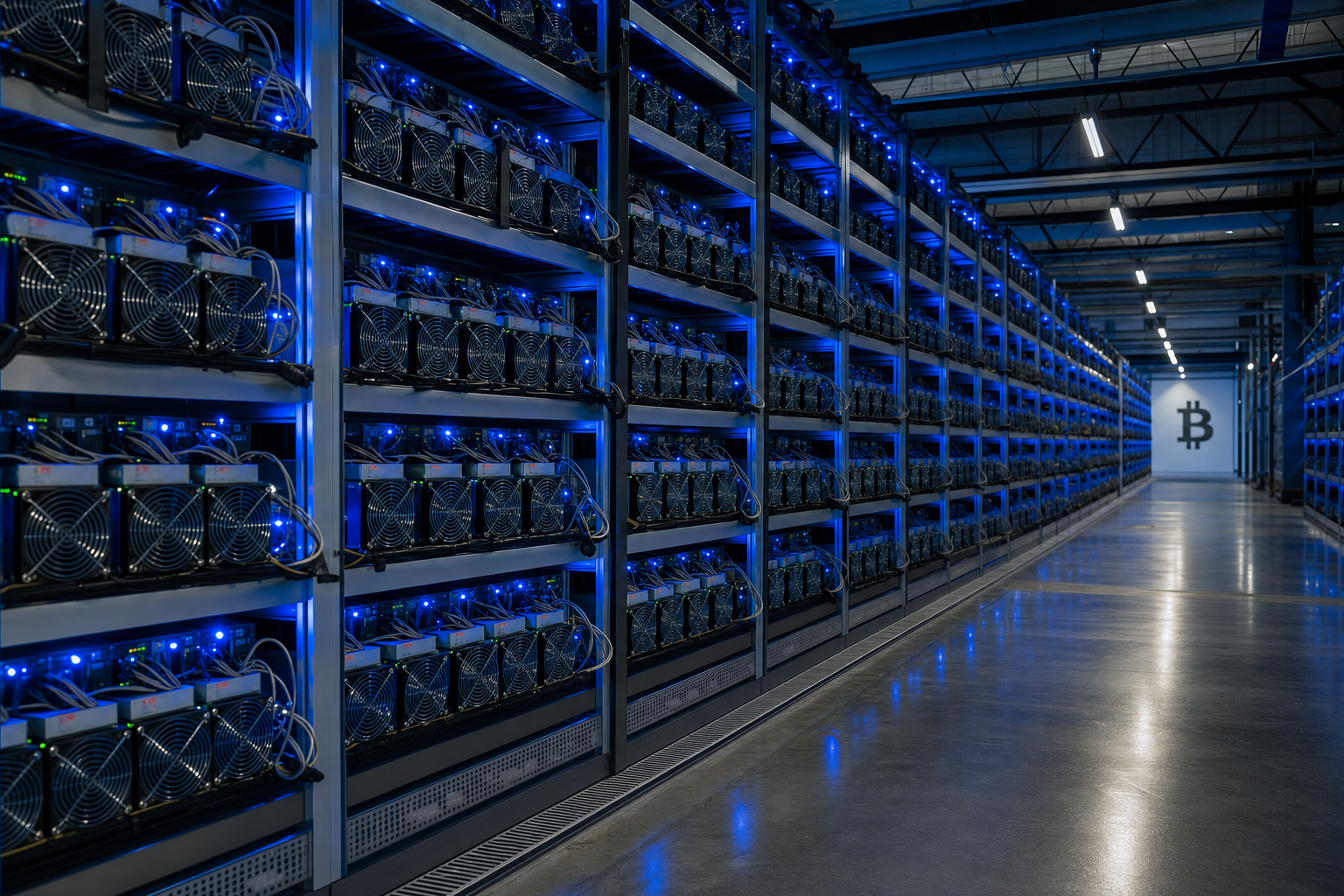
Hashprice is the gross revenue a miner earns per terahash of hashing power per day, expressed in USD. It is network-wide — it does not depend on which machine you run — and it captures the combined effect of BTC price, network hashrate, and block reward in a single number.
The formula:
Hashprice ($/TH/day) = (Block Reward × Blocks Per Day × BTC Price) ÷ Network Hashrate (TH/s)
Using live data for June 2, 2026:
- Block reward: 3.125 BTC
- Blocks per day: ~144
- BTC price: $73,452
- Network hashrate: 977,900,000 TH/s (977.9 EH/s)
Plugging in: (3.125 × 144 × 73,452) ÷ 977,900,000 ≈ $0.034 per TH per day.
A machine running 100 TH/s earns roughly $3.40/day gross before electricity. A machine running 1,160 TH/s (like the Antminer S23 Hyd 3U) earns roughly $39.40/day gross. The math is linear — hashprice is the conversion factor between your hashrate and your gross daily revenue.
The metric was developed and popularised by Luxor Mining, which maintains a daily hashprice index and a derivatives market that lets large miners hedge future revenue. It is now the standard benchmark used by institutional mining operations worldwide.
Why BTC Price and Hashprice Diverge
This is the point most retail buyers miss: hashprice does not move in lockstep with BTC price.
Hashprice has three inputs:
- BTC price — higher BTC price pushes hashprice up
- Network hashrate — more miners competing dilutes each miner’s share and pushes hashprice down
- Block reward — fixed at 3.125 BTC per block until the next halving (~2028)
When BTC price rises, the mining industry responds quickly. Warehoused hardware comes back online. Large operators accelerate equipment orders. Cloud mining contracts fill. Within weeks, hashrate surges — and the hashrate increase often outpaces the BTC price gain, compressing hashprice.
The result: miners who bought hardware while chasing a high BTC price often found that, by the time their machines arrived and came online, hashrate had grown enough to erase a large portion of the projected returns. The BTC price they modelled was $100K. The hashprice when they plugged in was 35% lower than expected.
The inverse also holds. When BTC price falls, marginal operators — those with high electricity costs or older, less efficient machines — shut down. Hashrate shrinks. The difficulty algorithm adjusts downward at the next epoch. Hashprice partially recovers even without BTC recovering. That window — after a difficulty decrease but before new hardware floods back in — is historically when miners with efficient setups buy.
Current Network Data: June 2, 2026
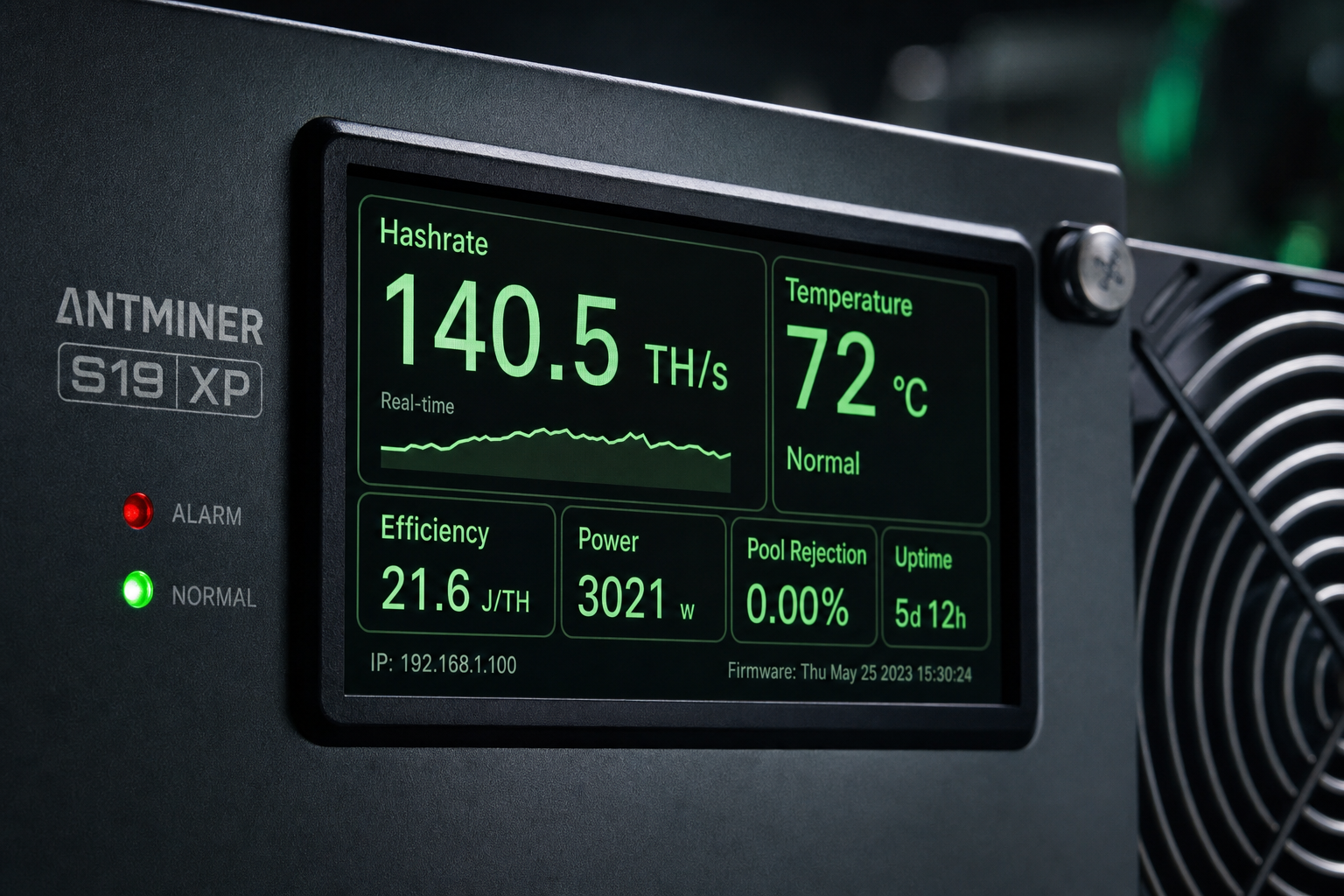
| Metric | Value |
|---|---|
| BTC Price | $73,452 |
| Network Hashrate | 977.9 EH/s |
| Block Height | 952,051 |
| Block Reward | 3.125 BTC |
| Last Difficulty Adjustment | −3.67% |
| Estimated Hashprice | ~$0.034/TH/day |
The −3.67% difficulty drop is the signal worth paying attention to. It confirms that a portion of the network’s hashrate has gone offline — operators with thin margins or older machines made the call to shut down rather than mine at a loss. That is a healthy market mechanism, and historically, confirmed difficulty declines create a window of improved hashprice for miners who remain online and for buyers who enter during the pause.
The next difficulty adjustment is estimated in roughly 10–12 days. Until then, those who are currently mining benefit from the reduced competition. Buyers who get hardware online before the next upward adjustment capture that window.
Note: Hashprice is calculated from block rewards only (3.125 BTC × 144 blocks/day). Transaction fees, which vary block to block, are excluded. Actual revenue will differ. Use the BT-Miners profitability calculator for a per-machine estimate including your specific electricity rate.
Machine-Level Revenue at Current Hashprice
Hashprice translates directly to machine-level revenue. Here is how two current BTC miners perform across a range of electricity rates at today’s hashprice of ~$0.034/TH/day:
Antminer S23 Hyd 3U — 1,160 TH/s, 11,020W, Price: ,800
| Electricity Rate | Daily Gross | Daily Power Cost | Net Daily Profit | ROI (months) |
|---|---|---|---|---|
| $0.04/kWh | $38.76 | $10.58 | $28.18 | 35.2 |
| $0.07/kWh | $38.76 | $18.51 | $20.25 | 49.0 |
| $0.10/kWh | $38.76 | $26.45 | $12.31 | 80.6 |
| $0.12/kWh | $38.76 | $31.74 | $7.02 | 141.5 |
| $0.15/kWh | $38.76 | $39.67 | −$0.91 | — |
Antminer S21e XP Hyd 3U — 860 TH/s, 11,180W, Price: ,500
| Electricity Rate | Daily Gross | Daily Power Cost | Net Daily Profit | ROI (months) |
|---|---|---|---|---|
| $0.04/kWh | $28.74 | $10.73 | $18.01 | 21.2 |
| $0.07/kWh | $28.74 | $18.78 | $9.96 | 38.4 |
| $0.10/kWh | $28.74 | $26.83 | $1.91 | 200.3 |
| $0.12/kWh | $28.74 | $32.20 | −$3.46 | — |
| $0.15/kWh | $28.74 | $40.25 | −$11.51 | — |
Two observations from these numbers:
- Electricity rate is the dominant variable at current hashprice. The difference between $0.04/kWh and $0.10/kWh is not marginal — it is the difference between a 35-month ROI and an 81-month ROI on the S23. Operators who have not secured low-rate electricity before buying industrial BTC hardware are taking on substantial risk.
- Machine efficiency matters more when hashprice is compressed. Both machines have comparable gross revenue per TH, but their power consumption per TH differs. At lower hashprice environments, the efficiency gap between a $0.025 J/TH machine and a $0.030 J/TH machine becomes the margin between profit and loss.
Note: Gross daily revenue = 1,160 TH/s (or 860 TH/s) × $0.034/TH/day. Power cost = watts × 24h ÷ 1,000 × $/kWh. ROI = price ÷ net daily profit ÷ 30.4 days. These are static snapshots — hashprice fluctuates daily. Model your scenario with the BT-Miners profitability calculator.
How to Use Hashprice When Buying Hardware
Here are four practical steps to apply hashprice analysis before signing a purchase order:
Step 1 — Calculate your break-even hashprice
The break-even hashprice is the minimum hashprice at which your machine covers electricity costs. The formula:
Break-even hashprice = (Power (W) × 24 ÷ 1,000 × Electricity Rate) ÷ Hashrate (TH/s)
For the S23 Hyd 3U at $0.07/kWh: (11,020 × 24 ÷ 1,000 × 0.07) ÷ 1,160 = $18.51 ÷ 1,160 = $0.0160/TH/day.
Current hashprice ($0.034) is 112% above that break-even. Even if hashprice were cut in half from today’s level, this machine would still be profitable at $0.07/kWh. That is a meaningful margin of safety.
Step 2 — Stress-test against a 30–50% hashprice decline
Based on post-halving market data and the 2024–2025 bull run cycle, hashprice has swung 30–60% in both directions within single calendar years — a volatility range that is worth modelling before committing to hardware. Before buying, ask: if hashprice falls 40% from today ($0.034 × 0.6 = $0.020/TH/day), is my machine still profitable at my electricity rate? If the answer is no — reconsider the purchase or negotiate a lower electricity rate before committing.
Step 3 — Pair hashprice with the difficulty trend
A confirmed difficulty decrease (like the −3.67% we just saw) signals that hashrate has pulled back. This is favourable for buyers entering now — the next upward adjustment has not yet happened, and the current reduced competition benefits new operators. The window between a difficulty decrease and the return of exited miners has historically been 2–4 weeks.
Step 3b — Account for electricity rate risk and hardware obsolescence
Two risks are often underweighted in hashprice calculations:
- Electricity rate changes: Industrial electricity contracts can reprice at renewal. A site that operates at $0.06/kWh today may face $0.09/kWh in 18 months. Re-run your break-even analysis at the higher rate before signing a purchase order for hardware with a multi-year payback horizon.
- Hardware obsolescence: ASIC manufacturers release new generations regularly. A machine that runs profitably today at a given hashprice may become economically marginal in 18–24 months if a new generation with significantly better J/TH efficiency captures market share and drives up network difficulty. Shorter projected payback periods reduce exposure to this risk.
Step 4 — Check hashprice across algorithms, not just BTC
BTC is not always the best current return. Hashprice exists for every ASIC-mined algorithm. Right now, Zcash and Monero miners show better near-term economics at current prices. Evaluate hashprice across algorithms before defaulting to Bitcoin simply because of name recognition.
A Note on Non-BTC Miners
BTC is not the only algorithm with a hashprice. Zcash and Monero miners are worth running through the same framework. The Antminer Z15 Pro (Zcash, Equihash) and the Antminer X9 (Monero, RandomX) both show different hashprice dynamics than BTC hardware — different network sizes, different difficulty curves, different coin price trajectories. Applying the same break-even and stress-test methodology to these machines gives a clearer comparison than relying on coin name or brand reputation alone.
The point is not which coin is “better” — it is that hashprice analysis is algorithm-agnostic. Calculate break-even hashprice, stress-test against downside scenarios, and compare across options before committing capital.
Bottom Line
BTC at $73,452 is a reasonable data point. But it is not enough to decide whether to buy mining hardware. Hashprice — currently ~$0.034/TH/day — is the number that matters. It combines BTC price, network hashrate, and block reward into a single figure that tells you exactly what each terahash is worth today.
The −3.67% difficulty drop that just happened is a signal, not a guarantee. It means marginal operators have stepped back. For buyers with access to sub-$0.10/kWh electricity and sufficient capital, current conditions represent a window before the next round of hardware comes online and difficulty adjusts upward again.
The methodology described here — break-even hashprice, stress-testing at −30% to −50% scenarios, and pairing the analysis with difficulty trend data — provides a more durable framework than reacting to spot BTC price alone. The BT-Miners profitability calculator lets you model specific machines and electricity rates against current hashprice inputs.