Broken ASIC Miner? Don’t Let It Sit — Here’s What to Do (Repair, Sell, or Part Out)
⚠️ Disclaimer: Mining profitability fluctuates with electricity costs, cryptocurrency prices, and network difficulty. All figures reflect conditions as of May 27, 2026. Repair cost estimates are industry averages and may vary by region and miner model. Conduct your own due diligence before making repair or resale decisions.
Your ASIC miner went silent — or worse, it’s hashing at half capacity with a blinking fault light. Before you panic or shove it in a closet, there’s a decision worth making carefully: repair it, sell it broken, or part it out? Each option has a time and place, and the wrong choice can cost you hundreds of dollars. This guide walks through the full decision framework with real numbers.
Step 1: Diagnose What’s Actually Wrong
Effective triage determines which path makes financial sense. Most ASIC failures fall into a handful of categories:
Hash Board Failure
The most common failure mode. Symptoms include reduced hashrate (e.g., a 3-board miner reporting output from only 2 boards), specific board errors in the miner’s dashboard, or a board that fails the built-in test. Hash boards can fail from dust buildup, thermal stress, bad solder joints, or water ingress. This is the most repairable failure — replacement boards are widely available for popular models like the Antminer S19 and S21 series.
Control Board Failure
The miner won’t connect to the network or shows no IP. Sometimes a firmware reflash fixes this; other times the board itself is dead. Replacement control boards cost $80–$200 depending on the model. If your miner is showing a completely blank web interface or fails to obtain a DHCP lease (an IP address assigned by your router), suspect the control board.
Power Supply (PSU) Failure
A dead PSU is the cheapest fix — replacement APW12 or APW13 units run $80–$150. Signs include the miner not powering on at all or random shutoffs under load. Test by swapping in a known-good PSU if you have one, or use a multimeter to check voltage rails.
Fan Failure
Individual fan replacements are inexpensive ($15–$40 per fan), but ignored fan failures cause thermal damage that cascades into hash board failures. Always replace dead fans immediately.
Thermal Damage / Overheating
If the miner ran hot for extended periods, you may see multiple chip failures across hash boards. Reapplying thermal paste ($10–$20) can recover some units; severe thermal damage often means the board is a write-off.
Note: Most modern Bitmain miners display fault codes in the web dashboard. Cross-reference these codes against the manufacturer’s service manual before deciding on a repair path.
Option 1: Repair It
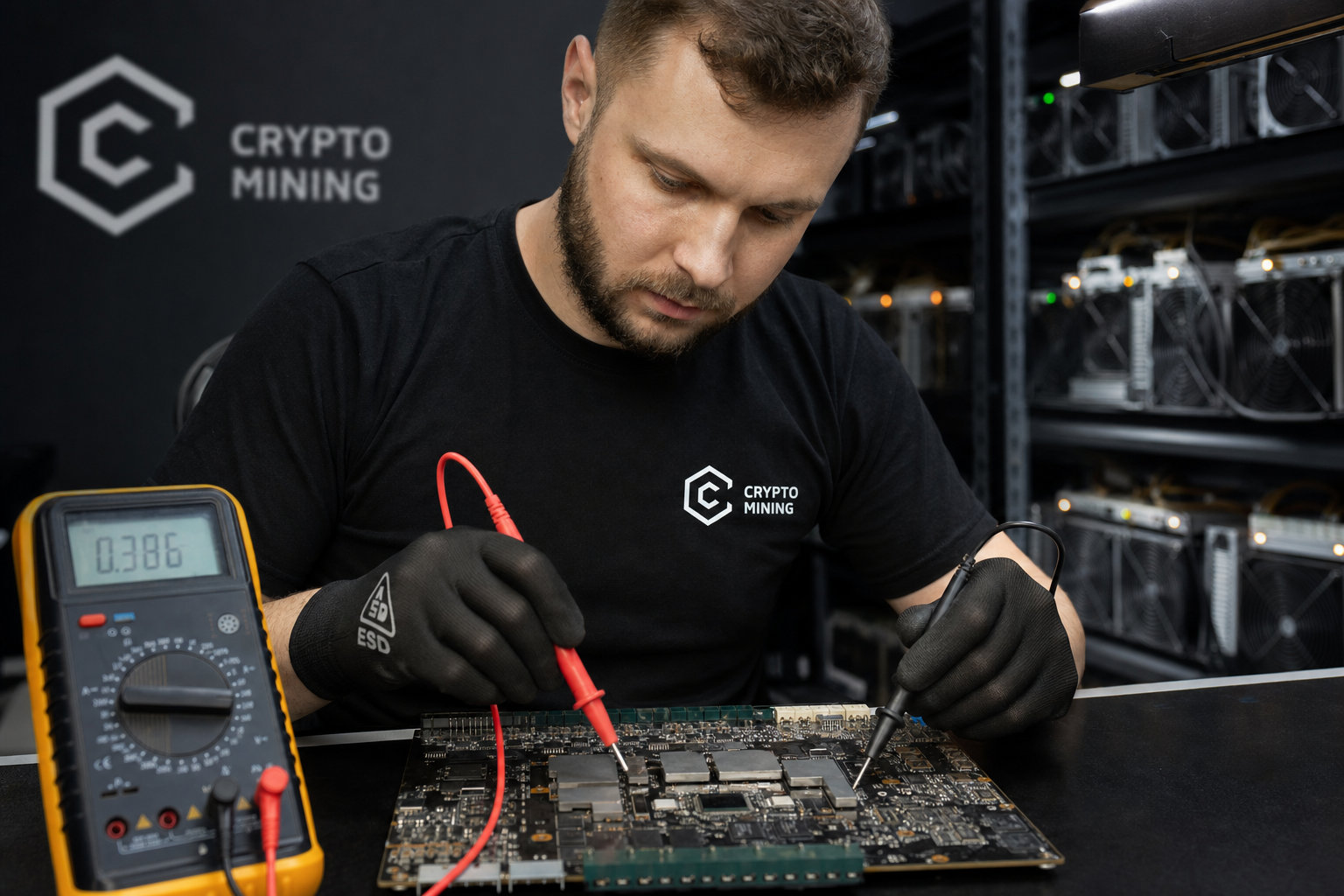
Repairing makes sense when the miner is still economically viable and the repair cost is proportionate to its value.
DIY Repair
If you’re comfortable with electronics, replacing hash boards and PSUs is straightforward. Bitmain and MicroBT sell spare hash boards directly; third-party boards are also available on eBay and Alibaba at 30–50% lower cost. A single S19j Pro hash board runs roughly $150–$250; an S21 series board is $300–$500. With hashrate restored, the arithmetic is usually favorable.
Warranty (Manufacturer RMA)
Bitmain offers a 180-day limited warranty on new units. MicroBT (Whatsminer) covers 365 days. If your miner is within warranty period, ship it back — don’t attempt DIY repair as it voids warranty. RMA turnaround is typically 4–8 weeks, which represents lost mining income to factor in.
Third-Party Repair Shops
Specialized ASIC repair shops can diagnose and fix hash board failures at the chip level using BGA rework (ball grid array soldering — a process that requires specialized hot-air equipment to replace individual chips on the board), which DIY typically cannot replicate. Prices range from $100–$300 per board for diagnostics and repair, depending on damage complexity. This is worth it for high-value miners; less so for older, low-margin units.
The Rule of Thumb
If total repair cost exceeds 40% of the miner’s current working market value, the economics become marginal. At 60%+, you’re better off selling broken or parting out.
| Miner Model | Approx. Working Value | Max Sensible Repair Budget | Typical Hash Board Cost |
|---|---|---|---|
| Antminer S19j Pro | $400–$600 | $160–$240 | $150–$250 |
| Antminer S21 / S21 Pro | $1,500–$2,200 | $600–$880 | $350–$550 |
| Antminer Z15 Pro | $3,500–$4,500 | $1,400–$1,800 | $500–$800 (est.) |
| Antminer X9 (XMR) | $4,500–$5,800 | $1,800–$2,300 | $600–$900 (est.) |
Note: Working market values are estimates based on secondary market activity in May 2026. Repair costs are industry averages and vary by shop and failure severity.
Option 2: Sell It Broken
A broken miner still has value — often 40–65% of its working price, depending on model and failure type. There is a healthy secondary market of repair shops, hobbyists, and data centers that buy broken units.
Where to Sell
- eBay: Best for visibility and buyer protection. Broken miners sell regularly; be specific about symptoms to attract the right buyers and avoid disputes.
- Telegram groups: Specialized mining groups (search “ASIC miners buy sell”) often have active traders who know exactly what broken units are worth.
- Mining forums (Bitcointalk, Reddit r/BitcoinMining): Smaller audience but knowledgeable buyers; lower fees than eBay.
- Local listings (Craigslist, Facebook Marketplace): Useful for heavy units to avoid shipping costs.
What to Disclose
Always disclose the specific fault — which board failed, what the dashboard shows, whether you’ve attempted repair. Accurate listings attract serious buyers and prevent chargebacks. Vague listings of “for parts or not working” with no detail get lower bids.
Realistic Pricing
Expect 40–65% of working market value for a single-board failure on a popular model. Multi-board failures or control board issues typically fetch 25–45%. Rare or discontinued models can hold value better if the failure is simple to fix.
Option 3: Part It Out
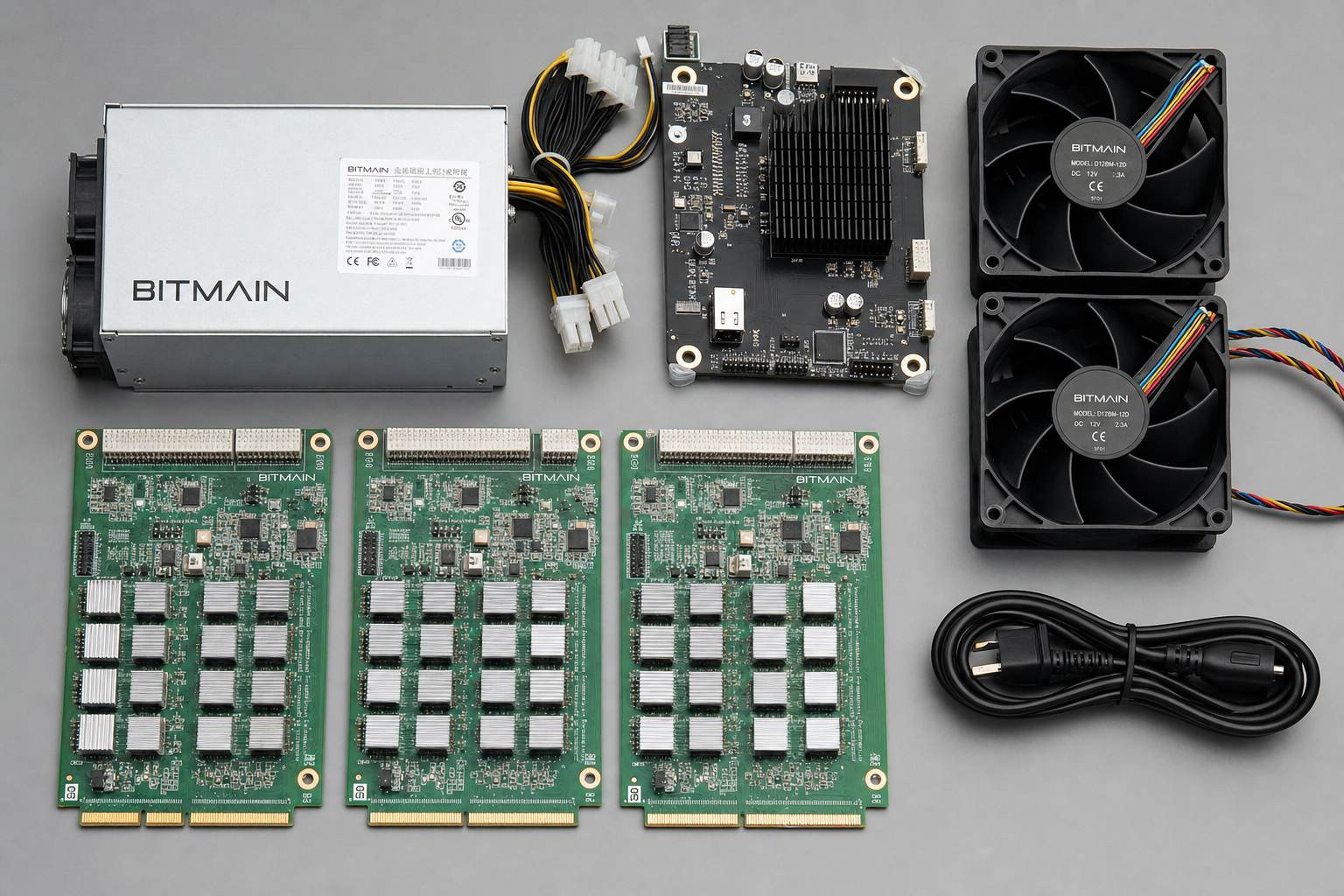
Parting out beats selling whole when individual components are worth more than the broken unit as a package — common for older or lower-demand models.
Hash Boards
Working hash boards from popular models have strong standalone demand. A functioning Antminer S19j Pro hash board sells for $150–$250; an S21 series board for $400–$600. If two out of three boards are working, selling them individually often outpaces the broken-unit price.
Power Supply Units
Bitmain APW12 and APW13 PSUs (3,472W rated) sell for $80–$150 in working condition. If your PSU is functional but the miner itself is dead, pull it and sell separately.
Fans and Control Boards
Individual fans ($15–$40 each) and control boards ($80–$200) have consistent demand from miners doing repairs. Strip and list individually if the effort is worth your time.
When Parting Out Makes Sense
- The miner model has low secondary market demand (old generation, obscure algorithm)
- Multiple hash boards are dead but the PSU and fans are in good condition
- You have time to manage multiple listings
- The complete broken-unit price is below what working components add up to individually
Full Decision Framework
| Failure Type | Miner Still Profitable? | Recommended Path |
|---|---|---|
| Single hash board failure | Yes (high-ROI model) | Repair — board replacement cost-effective |
| Single hash board failure | No (old/low-ROI model) | Sell broken or part out boards |
| PSU failure | Any | Repair — cheapest fix, almost always worth it |
| Fan failure | Any | Repair immediately — cascades to board damage if ignored |
| Control board dead | Yes (valuable miner) | Repair if replacement available; else sell broken |
| Multi-board failure | No | Part out — working boards + PSU often exceed broken-unit price |
| Severe thermal damage | No | Part out salvageable components or sell for scrap |
When a Breakdown Is a Buying Signal
Sometimes a broken miner is the market telling you it’s time to upgrade. If repair costs approach 50%+ of a unit’s working value, and that unit was already generating thin margins, replacing it with current-generation hardware is worth modeling.
In the current market (May 2026, BTC at $75,791, network hashrate at 993 EH/s), altcoin ASICs are delivering shorter payback periods than most air-cooled Bitcoin miners — a pattern reflected in current bt-miners.com product data. The Antminer Z15 Pro earns $42.57/day net at $0.07/kWh with a sub-3-month payback — a rate that makes repairing a lower-ROI unit look unattractive by comparison. The Antminer X9 for Monero mining returns $21.50/day net with an 8.7-month ROI at $5,600.
Before spending $400 repairing a miner earning $1.50/day, model your scenario with the BT-Miners profitability calculator to see what a current replacement unit would earn instead.
Quick Pre-Decision Checklist
- ☑ Identify the specific failure (board, PSU, fans, control board) — don’t guess
- ☑ Get a repair quote or forum estimate before committing
- ☑ Check the miner’s current working value on eBay (completed listings tab)
- ☑ Calculate post-repair daily income and payback on the repair cost itself
- ☑ Compare that against what a current high-ROI miner would earn
- ☑ If selling broken, list with specific fault details to attract higher bids
- ☑ If parting out, price individual components before dismantling
Final Thought
A broken ASIC sitting idle is dead capital — it earns nothing while its mining opportunity evaporates. The decision between repair, sell, and part out comes down to three variables: what broke, what the unit is worth working, and what better hardware would earn in its place. Run those numbers honestly and the right path becomes clear.
If replacement makes sense after running the numbers, BT-Miners carries current-generation units including the Antminer Z15 Pro. The profitability calculator can help you model what any specific replacement unit earns at your electricity rate.