Alephium Mining Profitability 2026: Honest ROI Analysis Before You Buy an ALPH Miner
⚠️ Disclaimer: Mining profitability fluctuates with electricity costs, cryptocurrency prices, and network difficulty. All figures reflect conditions as of May 28, 2026 (ALPH: $0.0392, ZEC: $579.27, XMR: $393.47). Past performance does not indicate future results. Conduct your own due diligence before purchasing mining equipment.
A competing mining retailer published a beginner’s guide to Alephium (ALPH) mining this week. It covers hardware selection and pool setup. What it does not cover is whether ALPH mining is currently profitable — and at today’s prices, that is the only question that matters before committing capital.
This article provides the numbers. All profitability data is pulled from the BT-Miners live feed as of May 28, 2026.
What Is Alephium (ALPH)?
Alephium is a proof-of-work blockchain using the Blake3 hashing algorithm (a cryptographic hash function, similar in role to SHA-256 in Bitcoin). It combines Ethereum-style smart contract functionality with a UTXO-based security model (UTXO, or Unspent Transaction Output, is the accounting method Bitcoin pioneered) through a sharding architecture called BlockFlow (a technique that splits transaction processing across parallel chains to increase throughput). The ALPH coin launched in 2021 and reached peak prices in 2024 before declining sharply through early 2026.
As of May 28, 2026, ALPH trades at $0.0392 — roughly 90% below its all-time high. This price level is the central issue for miners evaluating hardware today.
Current ALPH Mining Profitability: The Real Numbers
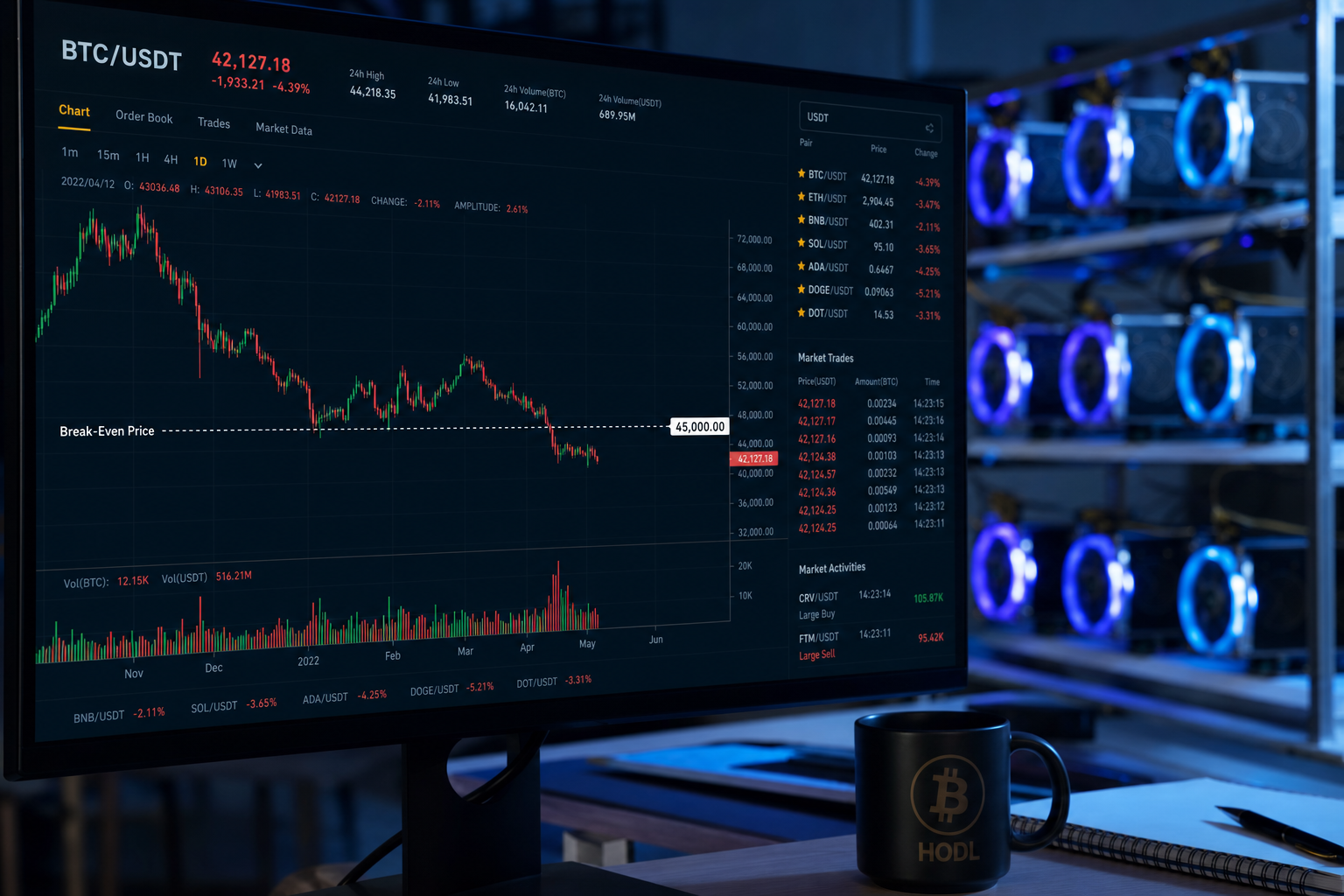
There are 14 Alephium miners currently available from brands including Goldshell, IceRiver, DragonBall, and Bitmain. At ALPH $0.0392, every single one operates at a net loss across all standard electricity rate brackets. This is not a marginal situation — the gap between mining revenue and electricity cost is significant.
Below are three of the most commonly considered ALPH miners and their daily net income at five electricity rates:
| Miner | Hashrate | Power | Price | $0.04/kWh | $0.07/kWh | $0.10/kWh | $0.12/kWh | $0.15/kWh |
|---|---|---|---|---|---|---|---|---|
| IceRiver AL3 | 15 TH/s | 3,500W | $1,199 | -$1.94 | -$4.46 | -$6.98 | -$8.66 | -$11.18 |
| Goldshell AL Box III | 1.25 TH/s | 600W | $480 | -$0.46 | -$0.89 | -$1.32 | -$1.61 | -$2.04 |
| Antminer AL1 Pro | 16.6 TH/s | 3,730W | $10,599 | -$2.01 | -$4.70 | -$7.38 | -$9.17 | -$11.86 |
Note: Daily net = gross mining revenue minus electricity cost at the stated rate. Gross revenue based on ALPH $0.0392 and Blake3 network difficulty as of May 28, 2026. Model your specific scenario with the BT-Miners profitability calculator.
At 15 TH/s, the IceRiver AL3 has the highest hashrate among currently available ALPH miners — yet even at $0.04/kWh electricity (below typical US industrial rates), it loses nearly $2 per day in net terms. The compact Goldshell AL Box III loses less in absolute dollars, but its lower hashrate means slower accumulation, and the ROI picture is comparably poor.
What ALPH Price Is Needed for Break-Even?
The break-even price calculation: divide the daily electricity cost at a given rate by the miner’s current gross daily revenue, then multiply by today’s ALPH price. The result is the coin price at which electricity costs are exactly covered — hardware recovery requires the coin to remain above that threshold for months.
Using the IceRiver AL3 (most efficient ALPH miner by hashrate) as the benchmark:
| Electricity Rate | Operational Break-Even ALPH Price | Multiple of Current ($0.0392) |
|---|---|---|
| $0.04/kWh | ~$0.09 | 2.4× |
| $0.07/kWh | ~$0.16 | 4.1× |
| $0.10/kWh | ~$0.23 | 5.9× |
| $0.12/kWh | ~$0.28 | 7.1× |
| $0.15/kWh | ~$0.35 | 8.9× |
Note: Break-even prices cover electricity only, not hardware cost. Compact miners like the AL Box III require higher ALPH prices for operational break-even due to lower gross output per watt. Hardware recovery requires sustained prices above these thresholds.
At a standard US residential rate of $0.12/kWh, ALPH would need to reach approximately $0.28 — a 7× increase from current levels — just for the IceRiver AL3 to cover its daily electricity bill. Full hardware recovery requires the coin to sustain that level for an extended period beyond that.
Why Is ALPH Profitability So Compressed?
Two factors compound each other. First, ALPH price has fallen sharply from 2024 highs, reducing gross mining revenue proportionally. Second, network hashrate expanded significantly as miners deployed hardware during the profitable period, keeping difficulty elevated even as the coin price dropped. The result is a classic squeeze: low revenue, high electricity cost relative to earnings.
The Case for Buying ALPH Miners Anyway
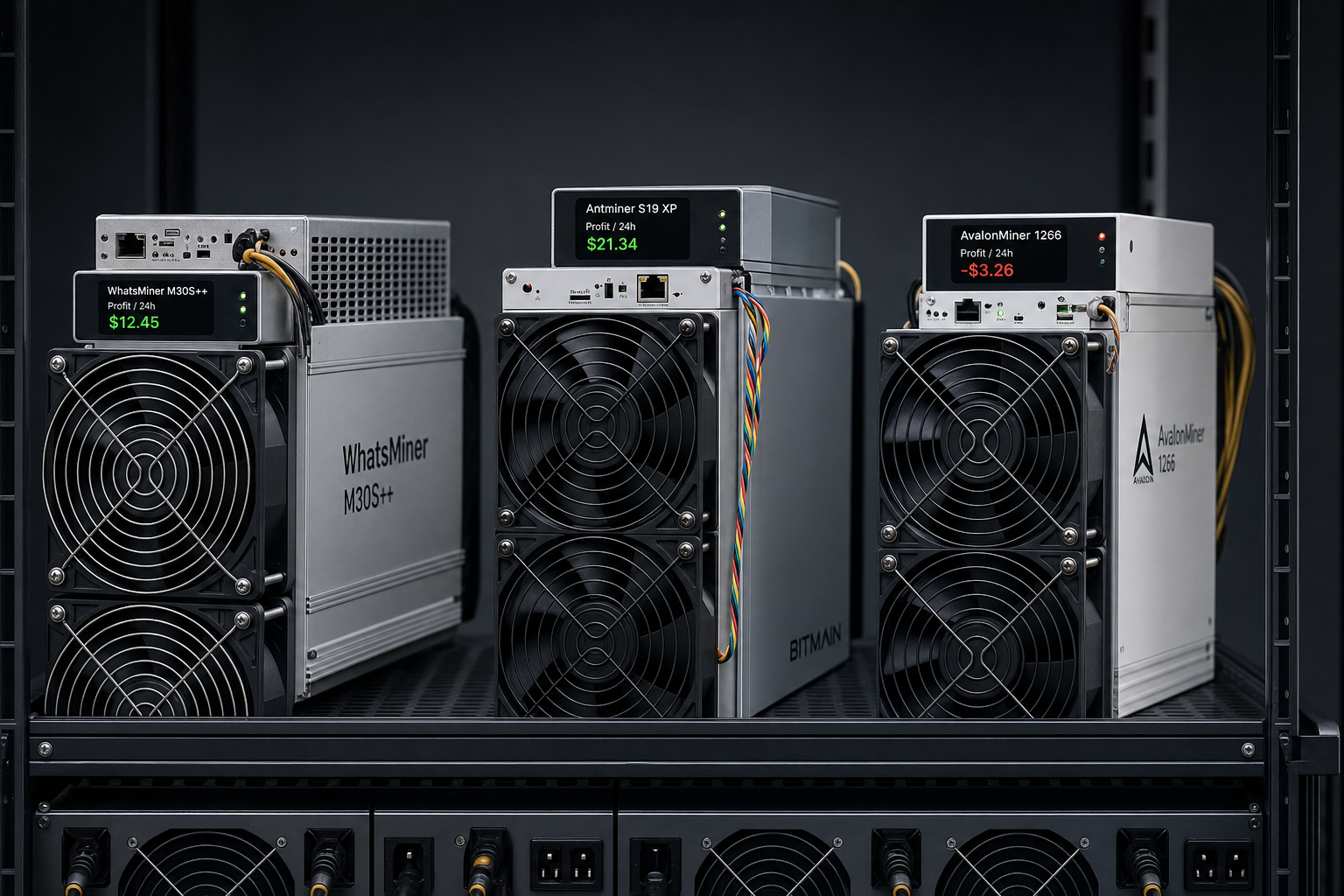
Some buyers are not primarily motivated by immediate cash flow. They purchase ALPH miners to accumulate the coin at cost, treating the process as a form of dollar-cost averaging into a long-term position. This is a coherent strategy with defined tradeoffs:
- Continuous accumulation: Mining distributes ALPH acquisition cost over time rather than concentrating it at a single purchase price point.
- Alephium’s fundamentals are active: The BlockFlow sharding system is operational, development is ongoing, and ALPH is listed on major exchanges. The project is not abandoned.
- Network participation: Some holders value contributing to network security independently of short-term income.
The downside is quantifiable. At $0.12/kWh and ALPH $0.0392, the IceRiver AL3 accumulates approximately $8.66 per day in net losses. Over 12 months, that is roughly $3,161 in electricity absorbed — on top of the $1,199 hardware cost. Total at-risk capital approaches $4,360 before any ALPH appreciation is factored in.
Whether that exposure is rational depends on an individual buyer’s ALPH price outlook and conviction. This analysis does not make that prediction.
Miners That Generate Positive Cash Flow Today
For buyers who require positive net income rather than speculative coin accumulation, the current market offers alternatives with confirmed positive returns. The following three miners are the top performers by net daily income at standard electricity rates as of May 28, 2026:
| Miner | Coin | Price | Net @$0.07/kWh | Net @$0.10/kWh | Net @$0.12/kWh | ROI @$0.07 |
|---|---|---|---|---|---|---|
| Antminer Z15 Pro | ZEC ($579) | $4,900 | +$43.03 | +$41.03 | +$39.69 | 3.8 months |
| Antminer Z15 | ZEC ($579) | $3,600 | +$21.31 | +$20.23 | +$19.50 | 5.6 months |
| Antminer X9 | XMR ($393) | $5,600 | +$24.98 | +$23.21 | +$22.02 | 7.5 months |
Note: ZEC at $579.27, XMR at $393.47 as of May 28, 2026. ROI assumes constant coin price and difficulty — actual returns will vary with market conditions. ZEC and XMR carry their own price risk profiles distinct from ALPH.
At current ZEC prices and $0.07/kWh electricity, the Antminer Z15 Pro’s modeled payback period is under four months. The standard Z15 offers a $3,600 entry point with a modeled 5.6-month payback. The Antminer X9 mines Monero — a privacy coin with a separate price trajectory — and shows a modeled payback of approximately 7.5 months at current XMR prices.
The core difference versus ALPH is not that these miners are risk-free. ZEC and XMR prices can fall, and difficulty can rise. The difference is that they are currently cash-flow positive, while every ALPH miner available today is not.
Summary: Three Buyer Profiles for ALPH Hardware
Based on this data, buyers considering Alephium hardware generally fit one of three profiles:
- Ultra-cheap power (<$0.04/kWh): The IceRiver AL3 approaches operational break-even if ALPH recovers to ~$0.09. This requires both very cheap electricity and meaningful price appreciation from current levels.
- Long-term ALPH accumulators: Buyers willing to absorb operating losses in exchange for sustained coin acquisition. The ALPH appreciation required to justify this is substantial at standard electricity rates.
- Income-focused buyers: ALPH hardware is not suited to this goal at current prices. ZEC and XMR alternatives offer positive daily cash flow with payback periods under eight months.
Based on the data presented above, Alephium mining is currently better characterized as a speculative position on ALPH price recovery than an income-generating activity at standard electricity rates. Whether ALPH will recover to levels that make mining profitable is a market prediction this analysis cannot make. Understanding that distinction — and the numbers behind it — is the starting point for any purchase decision.
Use the BT-Miners profitability calculator to model any miner at your specific electricity rate and target coin price. If current positive returns are the priority, the Antminer Z15 Pro and Antminer Z15 show the highest net daily income figures among miners currently in stock at standard electricity rates.