ASIC Miner Firmware Security in 2026: What Operators Should Check Before Updating

Data note: This article was prepared on May 28, 2026 after reviewing recent public research on ASIC miner firmware distribution and current Stratum V2 protocol documentation. It is an operational security guide, not financial advice.
ASIC miner firmware security is becoming a practical buying and operations issue, not just a research topic. A May 2026 arXiv paper, Firmware Distribution as Attack Surface: A Security Study of ASIC Cryptocurrency Miners, analyzed 134 publicly distributed firmware images across major miner manufacturers and argued that firmware distribution itself has become a primary attack surface for the mining ecosystem. For BT-Miners customers, the important point is simple: a profitable ASIC can still become a liability if the control software is untrusted, outdated, or installed from the wrong source.
This matters most when operators buy used machines, move miners between pools, update firmware before deployment, or manage a mixed fleet of models such as the Antminer S21 Pro, Antminer S19 XP, Scrypt miners, Zcash miners, and newer hydro units. The hardware does the hashing, but firmware decides how the miner boots, connects, tunes chips, reports hashrate, and sends work to the selected pool.
Why Firmware Is Now Part Of Miner Due Diligence
The study is useful because it focuses on publicly available firmware artifacts, not exotic physical attacks. The researchers show that firmware images can expose architecture, weaknesses, and potential attack paths without needing direct access to a machine. That lowers the barrier for attackers and raises the bar for operators.
In practice, miners should treat firmware like a revenue-critical component. A compromised or poorly matched firmware image can create several operational problems:
- Hashrate redirection: Pool credentials or wallet addresses can be changed so shares benefit another operator.
- Stability loss: Incorrect voltage, fan, or frequency settings can reduce uptime or trigger thermal faults.
- Recovery risk: A bad update can make a control board harder to recover without technical support.
- Monitoring gaps: Modified firmware can hide errors or report misleading performance data.
What The Research Means For ASIC Buyers
The main buying takeaway is not to avoid firmware updates. Updates are often necessary. The right takeaway is to make firmware provenance part of the purchase checklist. Before buying a used ASIC or deploying a new batch, ask where the firmware came from, whether the machine can be reset cleanly, and whether the seller can verify the exact model and control board version.
For buyers comparing machines on BT-Miners, the same logic applies across algorithms. A Bitcoin ASIC, a Scrypt LTC and DOGE miner, and a ZEC Equihash miner each need the correct firmware path for that specific model. Do not flash firmware just because the product name sounds close. A small model mismatch can create a large repair problem.
Stratum V1, Stratum V2, And Pool Connection Risk
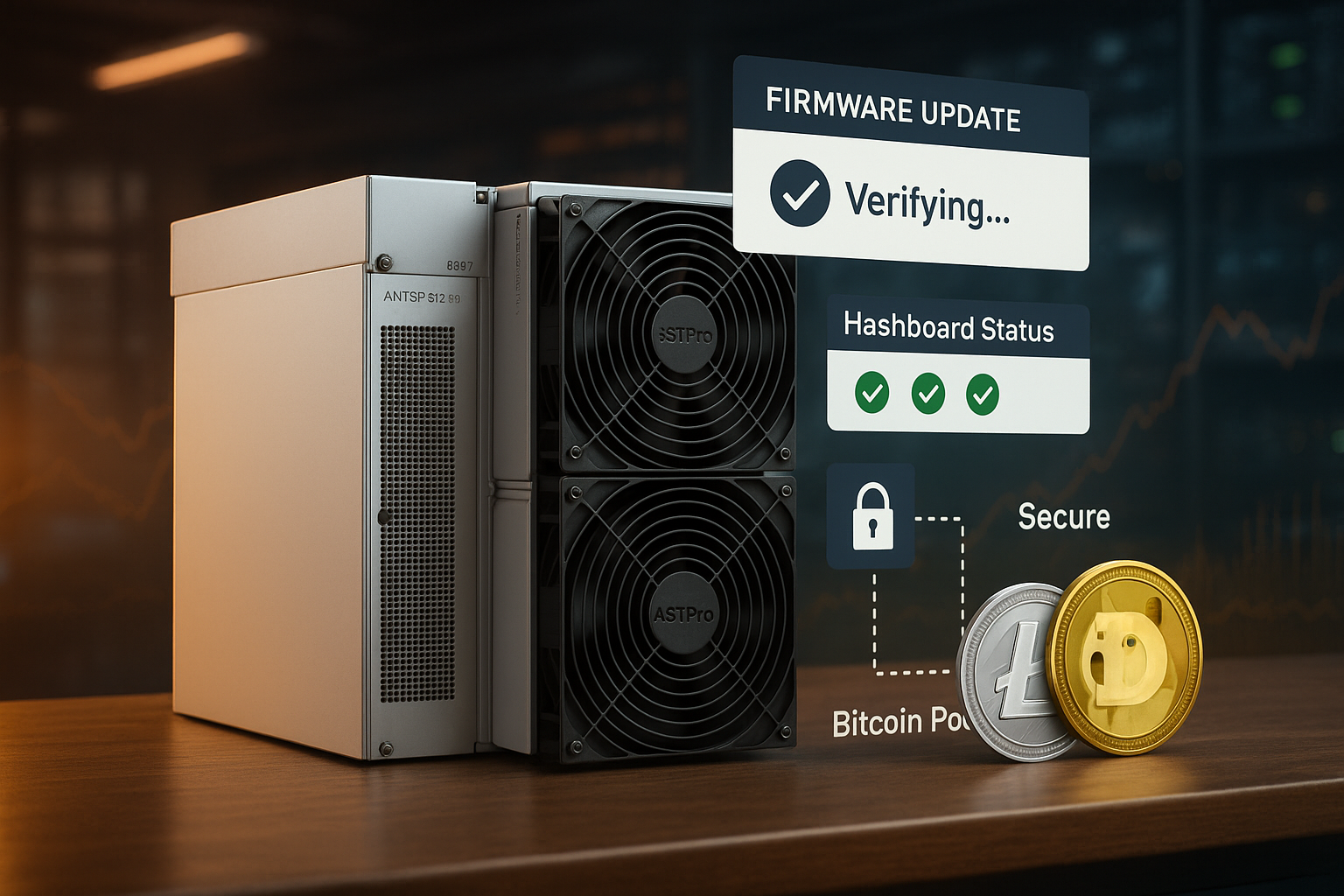
The paper also highlights miners still operating over Stratum V1 as part of realistic attack scenarios. Stratum V1 remains widely used, but it was designed in an older mining era. The official Stratum V2 project describes Stratum V2 as a protocol upgrade that adds encryption and authentication for miner-to-pool traffic, with the goal of reducing man-in-the-middle risk and improving privacy.
Operators should not assume that changing protocol versions is a one-click fix. Pool support, firmware support, proxy setup, monitoring tools, and rollback procedures all matter. The practical path is to review pool compatibility first, test on one machine or one rack, and only then move production hashrate.
Firmware Checklist Before Updating A Miner
| Checkpoint | What To Verify | Why It Matters |
|---|---|---|
| Model match | Exact miner model, control board, and firmware version | Prevents flashing the wrong image |
| Source | Manufacturer, trusted vendor, or verified support path | Reduces phishing and malware risk |
| Backup | Current pool settings, worker names, and network config | Speeds recovery after update |
| Test scope | One miner before the full batch | Limits downtime if the update fails |
| Post-update logs | Hashrate, fan speed, chip temperature, rejected shares | Confirms stability and real performance |
Used Miner Security Checks

Used miners deserve extra attention because the buyer does not control the previous firmware history. Before the machine enters production, reset credentials, confirm pool configuration, inspect network settings, and verify that the firmware matches the hardware. If anything looks inconsistent, use the BT-Miners firmware download page or contact BT-Miners tech support before flashing unknown files.
This is especially important for buyers who plan to send machines directly into BT-Miners hosting. A hosted machine should arrive clean, documented, and ready for controlled deployment. The cost of a delayed or unstable setup can erase part of the savings from buying used equipment.
What BT-Miners Customers Should Do Next
For a new purchase, ask for model-specific setup guidance and use the ASIC miner setup guide before changing firmware. For a used miner, treat firmware verification as part of the intake process. For a fleet, keep a version log so you know which machines are running which firmware and when each update was applied.
The broader lesson is that ASIC security is no longer only about physical access and power infrastructure. Firmware, pool protocol, monitoring, and update discipline now sit directly inside the profitability model. If the machine cannot be trusted, the ROI calculation is incomplete.
Bottom Line
ASIC miner firmware security in 2026 should be treated as a normal part of mining operations. The latest research does not mean every miner is unsafe. It means the update path, firmware source, and pool connection method deserve the same attention as hashrate, power draw, and price.
Before flashing a miner or deploying a used unit, verify the model, use trusted firmware sources, test one machine first, and monitor performance after the update. That discipline protects hashrate, reduces downtime, and gives operators a more accurate view of real mining profitability.
Sources Checked
- Firmware Distribution as Attack Surface: A Security Study of ASIC Cryptocurrency Miners
- Stratum V2
- BT-Miners firmware download page
- ASIC miner setup guide
- BT-Miners tech support
FAQ: ASIC Miner Firmware Security
Should miners install firmware from Telegram or random file mirrors?
No. Firmware should come from the manufacturer, a trusted vendor, or a support team that can verify the model, checksum, and update path. Random firmware files can redirect hashrate, change pool settings, damage stability, or make recovery harder.
Does ASIC firmware security only matter for large farms?
No. A single miner can still lose revenue if firmware changes the pool address, lowers hashrate, disables monitoring, or makes the machine unstable. The risk scales with fleet size, but the checklist applies to home miners too.
Is Stratum V2 a firmware replacement?
Not necessarily. Stratum V2 is a mining protocol. Some deployments can use proxies or compatible firmware paths, so operators should check pool, firmware, and management software support before changing production machines.
What should be checked before buying a used ASIC miner?
Check the control board, firmware source, pool configuration, fan and temperature logs, uptime history, and whether the seller can reset the machine to a clean known-good state before shipment.