Litecoin Hashrate Near 3.1 PH/s: What Scrypt ASIC Miners Should Watch in 2026
Data note: Network figures in this article were checked on May 27, 2026. Mining economics change with coin prices, network difficulty, uptime, pool fees, and electricity cost. Treat the examples below as decision inputs, not financial advice.
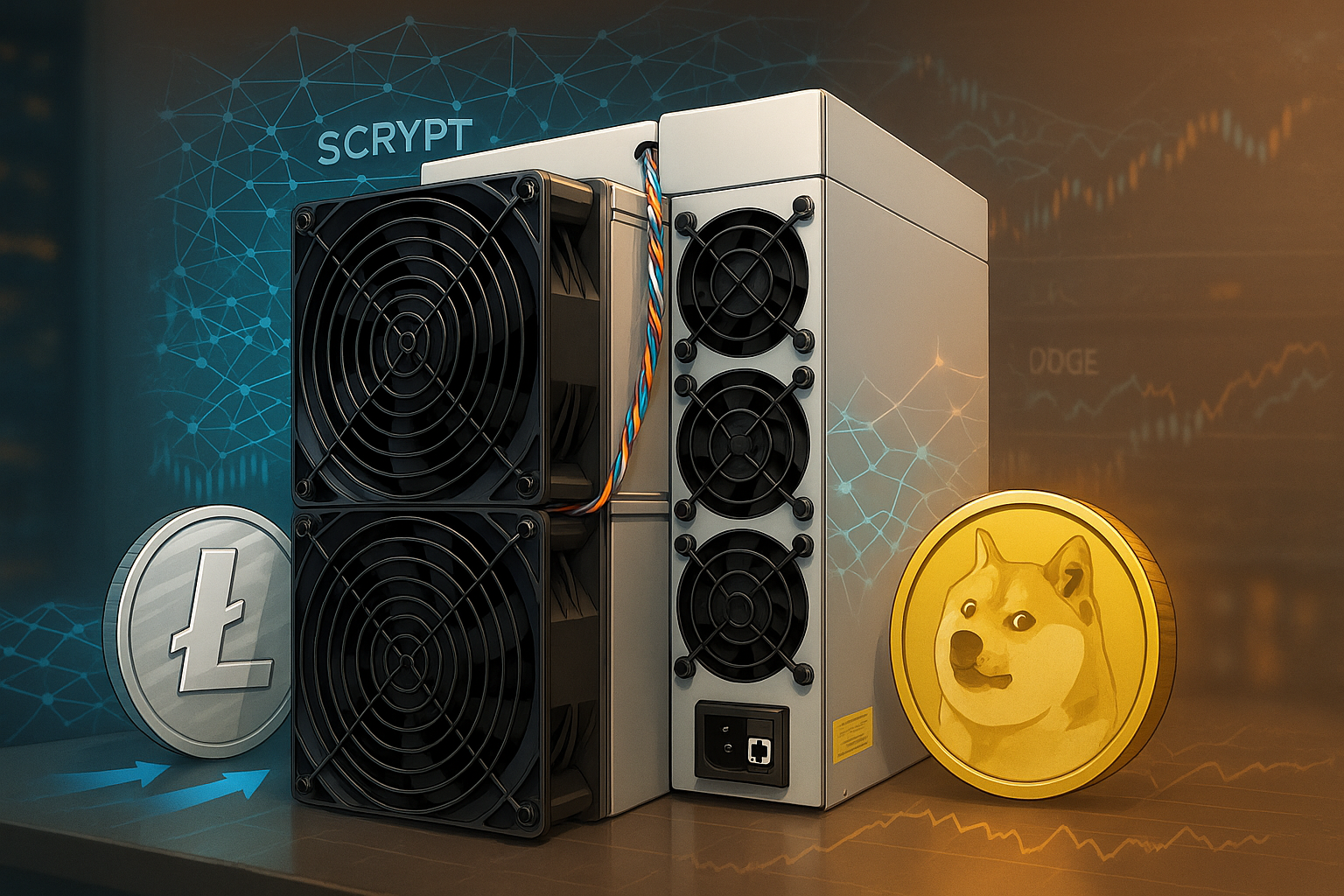
Litecoin network hashrate is sitting near 3.12 PH/s, with Litecoin difficulty around 103.27 M at the time of review. Dogecoin, which is commonly merge-mined with Litecoin through Scrypt pools, shows network hashrate near 3.41 PH/s and difficulty around 50.07 M. That combination matters for Scrypt ASIC buyers because it shows two things at once: competition is elevated, but miners are still deploying meaningful Scrypt hashrate into the LTC and DOGE reward stack.
The practical takeaway is not that every miner should rush into Scrypt hardware. The takeaway is that Scrypt ASIC decisions in 2026 need to be modeled as a combined Litecoin and Dogecoin mining business, not as a simple one-coin bet. For buyers comparing machines like the Antminer L11, Antminer L11 Pro, and VolcMiner D3, the hashrate trend is a signal to pay closer attention to efficiency, power rate, and pool setup.
Why The Litecoin Hashrate Level Matters
Hashrate is the amount of computing power pointed at the network. When Litecoin hashrate rises, each individual miner is competing against more Scrypt capacity for the same block reward schedule. In simple terms, more hashrate means a miner needs better efficiency, lower electricity cost, or stronger coin prices to keep the same margin.
At the same time, a high hashrate can also be a constructive signal. Miners do not usually add industrial Scrypt capacity unless they expect the LTC and DOGE reward stream to justify power, cooling, pool, and hardware costs. For BT-Miners customers, the key question is therefore not whether hashrate is high. The key question is whether a specific machine, at a specific electricity rate, can still produce acceptable net revenue.
The DOGE Factor In Scrypt Mining
Litecoin mining cannot be evaluated in isolation because Dogecoin is commonly merge-mined with Litecoin. A Scrypt ASIC can contribute work to a compatible pool and receive exposure to both reward streams, depending on pool rules and payout settings. This is why many buyers search for Litecoin and Dogecoin miners as one hardware category rather than two separate markets.
Dogecoin network data adds useful context. With Dogecoin hashrate also near the multi-PH/s range, the market is showing sustained interest in merged-mining economics. For operators, DOGE rewards can materially affect payback assumptions even when the purchase decision starts with Litecoin hashrate data.
What This Means For Scrypt ASIC Buyers
The current setup favors disciplined buyers. Scrypt ASICs can still make sense, but the margin is increasingly determined by execution. A buyer with low-cost power, stable cooling, and reliable uptime has a very different outcome from a buyer paying high residential electricity rates.
Before selecting a machine from the Litecoin and Dogecoin miner collection, focus on four variables:
- Efficiency: Lower joules per gigahash gives the machine more room to survive difficulty increases.
- Power rate: A difference of a few cents per kWh can change ROI more than small differences in pool fee.
- Pool setup: Use a reliable Scrypt pool that supports the payout style and coin mix you want.
- Hardware availability: A miner that ships sooner can capture current economics faster than a delayed batch.
Three Scrypt ASICs To Compare
| Miner | Hashrate | Power | Efficiency | Use Case |
|---|---|---|---|---|
| Antminer L11 | 20 GH/s | 3,680W | 184 J/G | High-output Scrypt mining for LTC and DOGE |
| Antminer L11 Pro | 21 GH/s | 3,612W | 172 J/G | Higher-efficiency Scrypt deployment |
| VolcMiner D3 | 20 GH/s | 3,580W | 179 J/G | Alternative 20 GH/s Scrypt option |
How To Read The Current Market
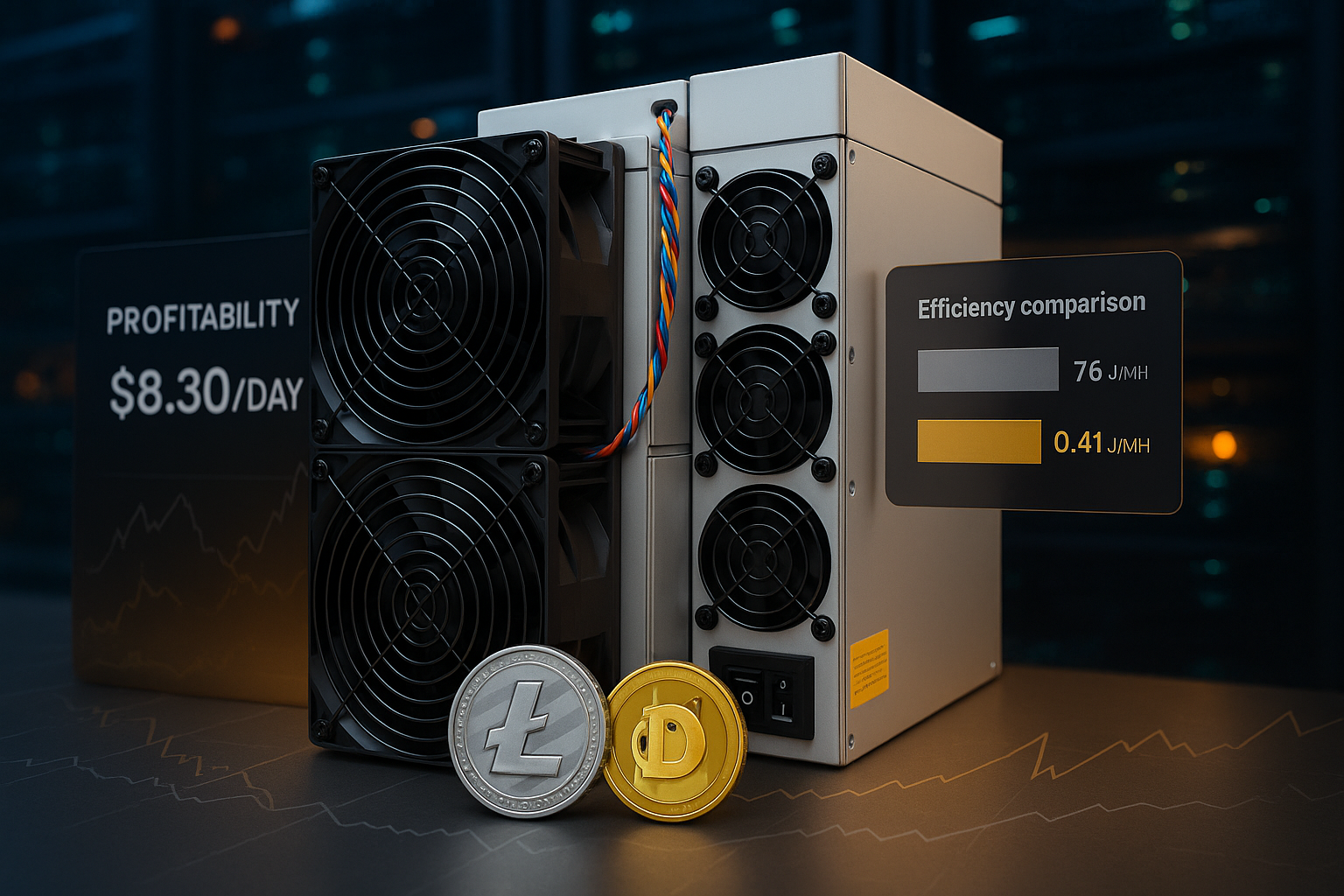
A near 3 PH/s Litecoin hashrate environment means weak machines and expensive power are less forgiving. It also means demand for efficient Scrypt ASICs is not disappearing. Buyers should avoid reading hashrate as a simple buy or sell signal. Instead, use it as a stress test for the model.
If your ROI only works when difficulty drops, that is a fragile setup. If the model still works after increasing difficulty, adding pool fees, and using a conservative DOGE price assumption, the setup is more defensible. That is why the BT-Miners profitability calculator should be part of the buying process before committing to a machine or hosting slot.
Best Fit By Buyer Type
- Lowest power cost operators: Compare higher-output machines first because more hashrate can compound faster when electricity is cheap.
- Efficiency-focused buyers: Prioritize joules per gigahash and real uptime over headline hashrate alone.
- New Scrypt miners: Start with a conservative ROI model and confirm pool payout rules before hardware arrives.
- Hosted deployments: Compare all-in hosting cost, not just miner sticker price.
Bottom Line
Litecoin hashrate near 3.12 PH/s is a clear reminder that Scrypt mining in 2026 is competitive. It does not eliminate opportunity, but it raises the bar for hardware selection. Efficient Scrypt ASICs, low power cost, stable operation, and the combined LTC and DOGE reward stream matter more than ever.
For buyers evaluating a Scrypt deployment, the practical next step is to compare current machines in the Litecoin and Dogecoin miner collection, run the expected power rate through the BT-Miners profitability calculator, and choose hardware based on net margin rather than hashrate alone.
Sources Checked
- CoinWarz Litecoin hashrate chart
- CoinWarz Litecoin difficulty chart
- CoinWarz Dogecoin hashrate chart
- CoinWarz Dogecoin difficulty chart
- BT-Miners Antminer L11 product page
- BT-Miners Antminer L11 Pro product page
- BT-Miners VolcMiner D3 product page
FAQ: Litecoin Hashrate and Scrypt ASIC Mining
Why does Litecoin hashrate matter for Scrypt ASIC buyers?
Litecoin hashrate shows how much Scrypt computing power is competing for LTC block rewards. A higher hashrate usually means stronger competition, so buyers should model electricity cost, hardware efficiency, pool fees, and merged-mined DOGE revenue before purchasing.
Can one Scrypt ASIC mine both Litecoin and Dogecoin?
Yes. Litecoin and Dogecoin use Scrypt and are commonly mined together through merged mining pools. The miner points hashrate at a compatible Scrypt pool, and the pool handles the merged-mining reward accounting.
Which Scrypt ASIC specs matter most in 2026?
Hashrate, power draw, efficiency in joules per gigahash, purchase price, warranty, and hosting cost matter most. Higher hashrate is useful only when the power cost and acquisition cost still support a realistic payback period.
Should miners buy Scrypt ASICs when network hashrate is high?
A high network hashrate is not automatically bearish. It signals competition, but it can also show that professional miners still see value in the LTC and DOGE reward stack. The practical answer depends on electricity price, machine efficiency, and expected coin prices.