ASIC Miner Hosting Checklist 2026: What to Verify Before You Ship Your Hardware
⚠️ Disclaimer: Mining profitability fluctuates with electricity costs, cryptocurrency prices, and network difficulty. All ROI figures reflect conditions as of May 31, 2026 (BTC $73,300, ZEC $540, XMR $356). Past performance does not indicate future results. Conduct your own due diligence before purchasing or shipping mining equipment.
Shipping an ASIC miner to a colocation facility is not the same as plugging one in at home. A 2,780W machine like the Antminer Z15 Pro draws more continuous power than most residential circuits can supply, and a 20,000W hydro-cooled rig cannot operate without a dedicated liquid-cooling loop that most hosting sites need to configure in advance. Errors discovered after arrival — a mismatched voltage, an incompatible cooling type, or a fee structure that quietly erodes projected ROI — are expensive to resolve remotely. This checklist covers the five areas most frequently overlooked before hardware ships.
1. Verify Power Availability and Circuit Specifications
The first question to confirm with any hosting provider is the per-rack power specification. Most air-cooled ASIC miners operate on 200–240V single-phase circuits. Some higher-output hydro-cooled and immersion-cooled models require 3-phase power. Sending a 3-phase miner to a facility that only offers single-phase service means non-operational hardware until the facility reconfigures — which may not be possible, or may come with additional cost.
Power draw varies significantly across the current hardware generation:
| Miner | Algorithm | Coin | Rated Power | Typical Voltage |
|---|---|---|---|---|
| Antminer Z15 Pro | Equihash | ZEC | 2,780W | 200–240V single-phase |
| Antminer X9 | RandomX | XMR | 2,472W | 200–240V single-phase |
| Antminer Z15 | Equihash | ZEC | 1,510W | 200–240V single-phase |
| Antminer S21 Pro+ 234TH | SHA-256 | BTC | 3,510W | 200–240V single-phase |
| Antminer S23 318TH | SHA-256 | BTC | 3,498W | 200–240V single-phase |
| Antminer S23 Hyd 3U (1.16PH) | SHA-256 | BTC | 11,020W | 3-phase (commercial) |
| Whatsminer M79S Hydro (1.35PH) | SHA-256 | BTC | 20,000W | 3-phase (commercial) |
Note: Power figures are manufacturer-rated maximums under full load. Actual draw varies with firmware tuning and ambient temperature. Confirm against the official datasheet before provisioning circuits.
Items to confirm with your host before shipping:
- Available voltage per shelf (208V, 220V, or 240V single-phase; or 3-phase)
- Amperage per circuit and how many units share it
- PDU connector type — a PDU (power distribution unit) is the strip of outlets in a rack row; confirm your miner’s plug type matches, or source an adapter in advance
- Whether the facility enforces a per-unit power cap (some operators limit draw to 90% of rated maximum)
2. Match Your Miner’s Cooling Type to Facility Infrastructure
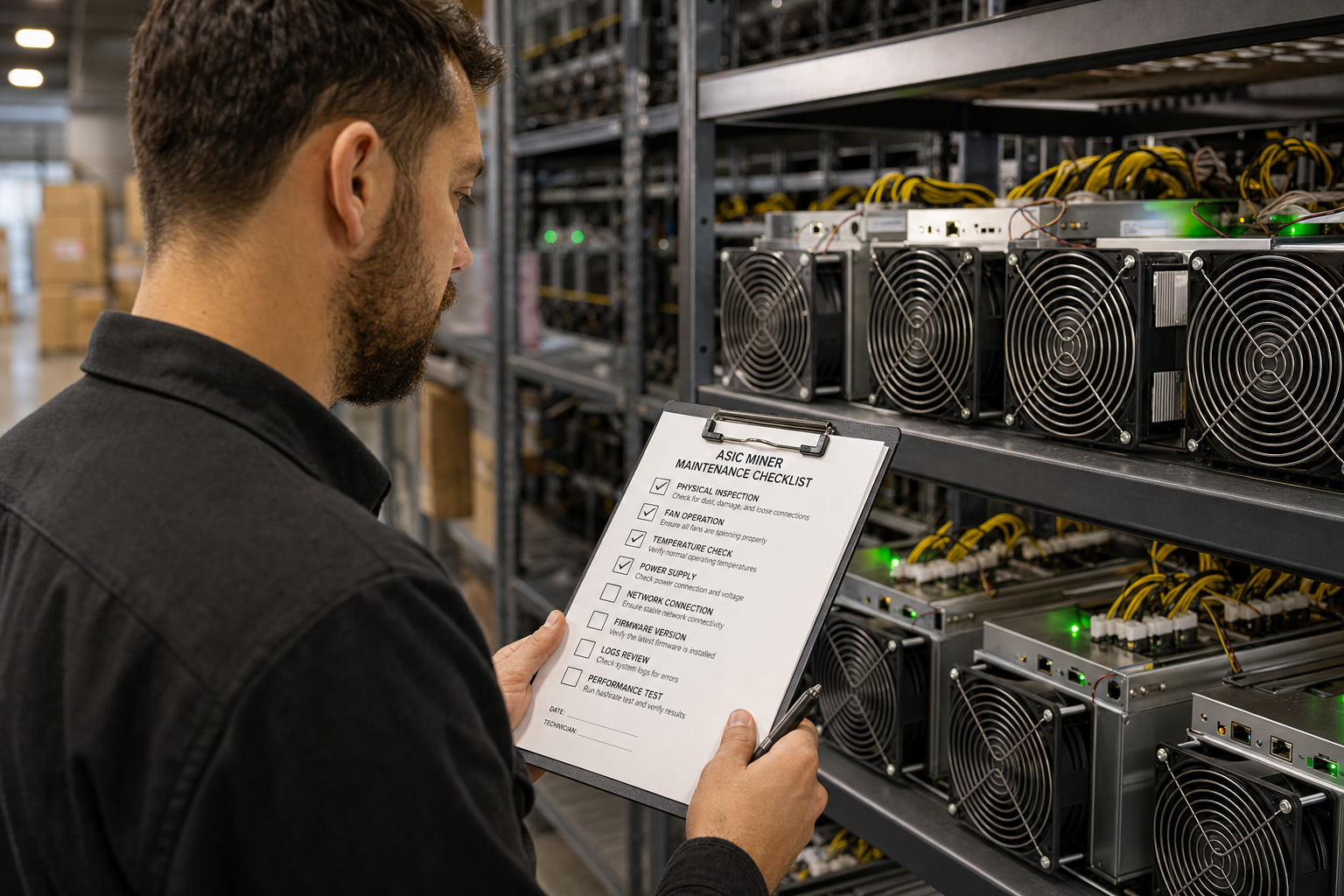
Cooling compatibility is the most common source of costly surprises in hosting arrangements. Three cooling categories exist in the current ASIC generation, and they are not interchangeable.
Air-Cooled (fan-based)
The majority of ASICs — including the Antminer Z15 Pro, X9, Z15, S21 series, and most Whatsminer M-series units — use integrated axial fans and require only adequate airflow through the row. Hosting facilities typically manage this through hot-aisle/cold-aisle separation. Standard colocation providers can accommodate air-cooled units without special pre-arrangement, though it is still worth confirming rated airflow per rack position.
Hydro-Cooled (liquid-cooled)
Hydro-cooled units such as the Antminer S23 Hyd 3U (11,020W), Whatsminer M79S Hydro (20,000W), and Antminer L11 Hyd 2U (5,775W) require a dedicated water-cooling loop with specific inlet temperature, flow rate, and pressure specifications. These are commercial and industrial data center installations — they cannot run in a standard rack without the facility providing compatible coolant distribution infrastructure.
Before shipping a hydro unit, obtain written confirmation of:
- CDU compatibility — a CDU (coolant distribution unit) pumps temperature-controlled water to each rack position; confirm it supports your miner’s quick-connect fitting standard
- Required inlet temperature range (manufacturers typically specify 25–35°C)
- Minimum flow rate (L/min per unit, varies by model)
- Who is responsible for leak detection, pressure monitoring, and coolant maintenance
Immersion-Cooled
Models like the Antminer S23 Imm (5,304W) are designed to run submerged in dielectric fluid — an electrically non-conductive liquid that absorbs heat directly from the hardware — inside a dedicated immersion tank. Not all hosting facilities offer immersion bays, and adding them is capital-intensive. Verify tank availability and capacity before purchasing an immersion-designed unit if you plan to use third-party hosting.
3. Audit the Full Fee Structure Before You Sign
The electricity rate advertised in a hosting proposal is rarely the total operating cost. A realistic model should account for every line item. Request these components in writing before signing a contract:
- Electricity rate ($/kWh): The headline figure. Facilities serving retail customers typically range from $0.05 to $0.08/kWh; large industrial sites in low-cost power regions may offer $0.03–$0.05. Ask whether the rate is fixed or subject to pass-through adjustments tied to grid pricing fluctuations.
- Setup or onboarding fee: Often charged per miner or per rack on intake. Some facilities waive this above a certain number of units.
- Monthly management fee: Covers remote monitoring, basic troubleshooting, and sometimes firmware management. Typically charged per unit per month.
- Insurance: Coverage for physical damage, theft, or fire. Ask whether it is included, optional, or not available — and what the per-unit replacement value ceiling is.
- Exit and de-racking fees: Some providers charge for packing and palletizing hardware at contract end. This should be confirmed before signing, not at departure.
The table below shows how electricity cost alone reshapes daily profit and payback period for three representative miners. Add management and setup fees to your calculation for the true all-in cost:
| Miner | Net @$0.04 | ROI | Net @$0.07 | ROI | Net @$0.10 | ROI | Net @$0.12 | ROI |
|---|---|---|---|---|---|---|---|---|
| Z15 Pro ($4,100) | $41.29 | 3.3 mo | $39.29 | 3.5 mo | $37.29 | 3.6 mo | $35.95 | 3.7 mo |
| Antminer X9 ($5,600) | $26.03 | 7.1 mo | $24.25 | 7.7 mo | $22.47 | 8.2 mo | $21.28 | 8.6 mo |
| S21 Pro+ 234TH ($2,070) | $4.57 | 14.9 mo | $2.04 | 33.3 mo | — | — | — | — |
Note: Gross income figures sourced from bt-miners.com knowledge base (ZEC $540, XMR $356, BTC $73,300 as of 2026-05-31). ROI = payback period at listed electricity rate based on current hardware prices. Profitability changes as coin prices and difficulty shift. Use the BT-Miners profitability calculator to model your specific scenario.
For BTC miners like the S21 Pro+, the all-in hosting rate matters significantly. Above $0.09/kWh, this unit generates negative net income at current BTC prices. Adding a $15/month management fee to a $0.07/kWh electricity contract changes the effective rate — factor that into your breakeven calculation before signing.
4. Review the SLA and Uptime Commitment
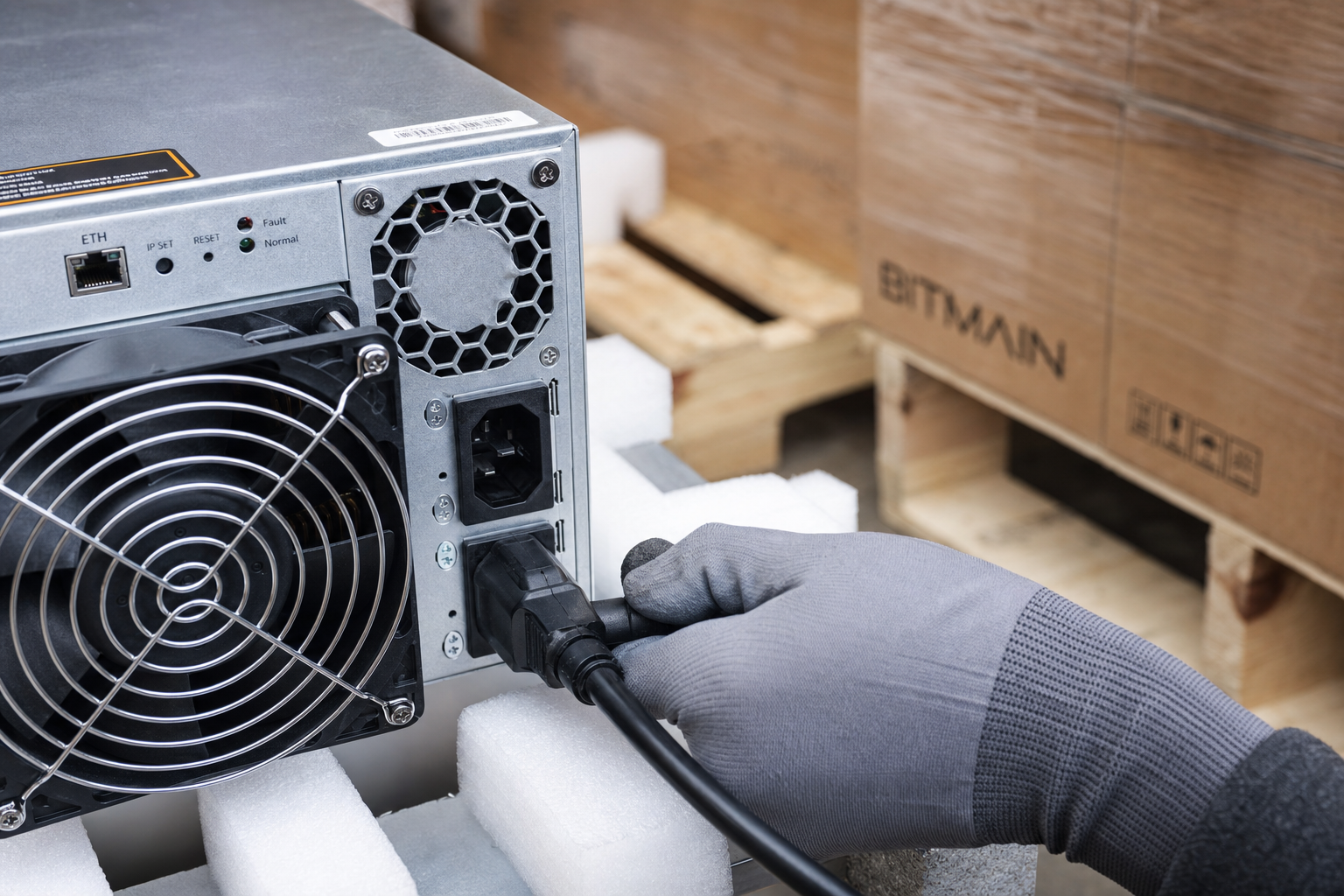
An SLA (service-level agreement) defines what the facility guarantees and what remedies exist when it fails to deliver. For mining, every hour of unplanned downtime is direct lost revenue. A miner earning $39/day that sits offline for 72 hours loses approximately $117 in gross income. Terms worth examining closely:
- Uptime guarantee: Reputable facilities typically quote 99% or higher. Clarify whether the guarantee covers facility power only (PDU to miner plug) or includes network connectivity as well.
- Planned maintenance windows: Confirm these are scheduled in advance and that total planned downtime per month is capped at a defined number of hours.
- Response time for hardware faults: Ask how long it takes staff to physically inspect and restart a crashed unit, and what the escalation process looks like for repeated failures.
- Breach remedies: Most contracts offer billing credits, not cash reimbursement. Check the credit formula and whether there is a cap on total credits per billing cycle.
- Termination clause: Confirm the minimum contract length, early termination fee structure, and required notice period. Some facilities lock customers into 12-month agreements; others offer month-to-month at a rate premium.
Ask whether the facility provides a monitoring dashboard showing per-unit power draw and uptime. Remote visibility eliminates the need to contact support to confirm your hardware is running.
5. Hardware Preparation Before Shipping
Arriving at a facility with improperly configured hardware delays commissioning and can create friction with hosting staff. These steps reduce the chance of problems at intake.
Firmware and Pool Configuration
- Flash the latest stable firmware for your miner model before shipping. Facilities generally prefer hardware that arrives ready to hash, not requiring updates on intake.
- Configure your mining pool address and worker name in the miner’s web interface before it leaves your hands. Confirm with the host whether they manage pool configuration centrally or expect pre-configured hardware.
- Use a unique worker name per unit (e.g.,
yourwallet.z15pro_unit01) so you can track individual unit performance in the pool dashboard independently of the host’s reporting.
Physical Condition and Documentation
- Inspect all fan screws, heatsink mounts, and PCIe connections before packing. Shipping vibration can loosen components that were secure on the bench.
- Photograph the physical condition of each unit before handoff. This creates a baseline for any damage claim filed after arrival.
- Pack with anti-static foam and hard-sided outer packaging. Many commercial hosting facilities decline to accept miners shipped only in cardboard.
- Record the serial number of each unit and keep a copy separate from the hardware. Some warranty and insurance claims require serial numbers alongside proof of purchase.
Warranty Validity at Third-Party Locations
Using a third-party hosting provider may or may not affect your hardware warranty depending on the specific terms the manufacturer applies. As a general practice, before shipping: review the warranty documentation that came with your hardware, and contact the manufacturer directly to ask whether third-party colocation voids or limits coverage. Some manufacturers require that operating conditions (temperature, voltage, airflow) remain within rated specifications; a facility that consistently runs hardware outside those parameters could affect warranty standing. This is not a reason to avoid hosting, but it is worth confirming in writing before you ship.
Pre-Ship Checklist Summary
| Category | Item to Verify |
|---|---|
| Power | Facility voltage matches miner spec (single-phase vs 3-phase); amperage and PDU connector type confirmed |
| Cooling | Cooling type (air / hydro / immersion) compatible with facility; hydro: CDU fittings, flow rate, inlet temp confirmed in writing |
| Fees | All-in effective rate calculated (electricity + management + setup amortized over contract term); exit fee confirmed |
| SLA | Uptime guarantee percentage and scope confirmed; termination clause and notice period reviewed |
| Hardware | Latest firmware flashed; pool address and unique worker name configured before shipping |
| Documentation | Serial numbers recorded; pre-ship condition photos taken; warranty validity at third-party location verified |
Final Notes
Third-party hosting introduces risks beyond the checklist items above. Hosting facilities can experience unplanned outages, ownership changes, or — in rare cases — shut down entirely. Contract terms can change at renewal. Regulatory changes in the facility’s jurisdiction (zoning, energy use regulations, or power import restrictions) can affect operations in ways the contract does not cover. These risks are not unique to any particular provider; they apply to the model itself. Distributing hardware across more than one facility, reviewing a provider’s operational track record before committing, and keeping contract duration proportionate to your payback period are reasonable mitigating steps.
Hosting can extend the operational life of an ASIC miner by placing it in a lower-cost electricity environment, but a poorly managed handoff introduces delays, damage exposure, and contract terms that are difficult to exit. The checklist above covers the verification steps most commonly skipped in practice. An hour spent confirming power specs, cooling compatibility, the full fee structure, and SLA terms before shipping reduces the probability of operational problems once hardware is at a remote facility.
For current ROI projections at your target electricity rate, use the BT-Miners profitability calculator. To review current hardware specifications and pricing, see the Antminer Z15 Pro and Antminer X9 product pages.