Late April 2026 Crypto Mining Market Update: Bitcoin Hashrate Falls to 941 EH/s, XMRig Launches RandomX v2, Altcoin ASICs Lead ROI
⚠️ Disclaimer: Mining profitability estimates are based on current coin prices, network difficulty, and $0.07/kWh electricity cost as of April 25, 2026. These figures change daily. Always conduct your own research before purchasing mining equipment.
The final week of April 2026 has delivered two significant developments that every serious miner should have on their radar. First, Bitcoin’s network hashrate has slipped to 941.6 EH/s — down approximately 5.4% from the 995 EH/s recorded just eight days ago — following the latest −3.22% difficulty adjustment. Second, the XMRig team released version 6.26.0, adding official software support for the incoming RandomX v2 protocol upgrade on the Monero network. Together, these shifts are reshaping which machines make economic sense heading into May. In this crypto mining market update for late April 2026, we break down the numbers, the protocol news, and what the profitability charts look like across the top altcoin and Bitcoin ASICs right now.
Bitcoin Network Update: Hashrate Falls to 941 EH/s After Difficulty Adjustment
The most recent Bitcoin difficulty adjustment printed at −3.22%, confirming that fewer machines are actively hashing compared to the previous epoch. The network now sits at 941.6 EH/s (block height 946,520), with the block reward holding at 3.125 BTC post-halving and BTC trading at approximately $77,722 at the time of writing.
This is a measurable step down from the 995 EH/s reported earlier this month. The underlying reason is straightforward: marginal operators running older or less efficient hardware on electricity rates above $0.055–$0.060/kWh are finding it difficult to sustain positive margins, and they are switching machines off rather than mining at a loss. When hashrate exits the network, the remaining miners capture a proportionally larger share of block rewards — a natural self-correcting mechanism built into Bitcoin’s design.
The next difficulty adjustment is approximately 1,000 blocks away, or roughly seven days from today. If hashrate continues declining or holds flat, the next print could be another downward adjustment — a modest positive for operators who remain active on the network. For anyone evaluating a new BTC ASIC purchase, the key variable remains electricity cost. At $77,722 BTC and current difficulty, most machines require sub-$0.055/kWh power to generate positive net margins — a threshold we cover in detail below.
XMRig v6.26.0 and RandomX v2: What the Protocol Upgrade Means for Monero Miners
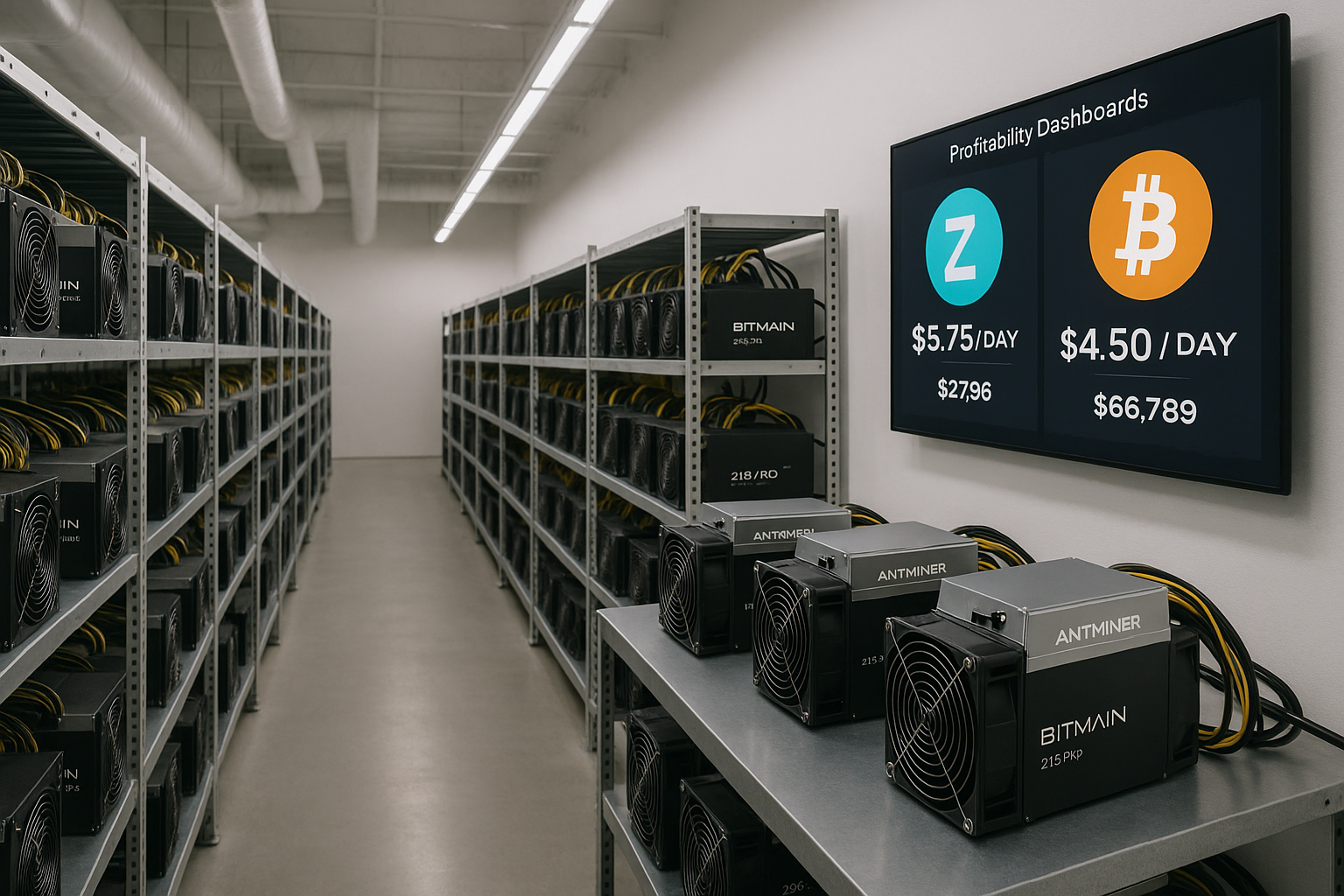
The biggest protocol news of the week came from the Monero mining ecosystem. XMRig — the industry-standard mining client used by the vast majority of Monero miners — released version 6.26.0 with official support for RandomX v2, a planned upgrade to Monero’s proof-of-work algorithm. The release generated substantial discussion in the XMR mining community, and for good reason: RandomX v2 is designed to further refine CPU mining efficiency while reinforcing resistance to specialized hardware.
There is an important distinction that every operator should understand: XMRig releasing software readiness for RandomX v2 is not the same as the Monero network activating the new protocol. The current live Monero network still runs the original RandomX algorithm, and no formal activation date for RandomX v2 has been announced by the Monero core development team.
For operators running the Antminer X9 — currently the most profitable XMR-focused hardware available — near-term operations are unaffected. The X9 continues to mine on the live RandomX v1 network, generating approximately $20.75/day net at $0.07/kWh with XMR holding at $382.06. Operators planning multi-year positions on X9 hardware should monitor the official Monero project roadmap for any hard fork schedule announcements. When the upgrade activates, operators should assess how the algorithm change affects hardware performance on the updated protocol.
The broader signal from the XMRig 6.26.0 release is that the Monero development community is actively investing in the protocol — a positive indicator for the long-term legitimacy and network stability of XMR as a mineable asset.
This Week’s Top Miners by Net Profitability — April 25, 2026
The table below shows verified net daily profit after deducting electricity costs at $0.07/kWh. All figures are calculated from live BT-Miners API data collected this morning and use the net profit formula: gross income − (power × 24h ÷ 1,000 × $0.07).
Data as of April 25, 2026. Coin prices: XMR $382.06 | ZEC $342.56 | INITVERSE (INI) at live market rate. Gross = total mining revenue before electricity. Net profit = Gross − (power × 24h ÷ 1,000 × $0.07). Hardware prices subject to change.
| Miner | Algorithm / Coin | Gross/Day | Power | Electric/Day @$0.07 | Net/Day | Price | Est. ROI |
|---|---|---|---|---|---|---|---|
| Matches INIBOX PRO | VersaHash / INITVERSE | $53.35 | 1,280W | $2.15 | $51.20 | $7,300 | ~4.8 months |
| Antminer Z15 Pro | Equihash / ZEC | $29.86 | 2,780W | $4.67 | $25.19 | $3,700 | ~4.9 months |
| Antminer X9 | RandomX / XMR | $30.83 | 2,472W | $4.15 | $26.68 | $5,600 | ~7.0 months |
| Antminer Z15 | Equihash / ZEC | $14.93 | 1,510W | $2.54 | $12.40 | $2,800 | ~7.5 months |
The Matches INIBOX PRO continues to lead all hardware tracked by BT-Miners in dollar-per-day terms, with a 5.1-month estimated payback at current rates. Its relatively low 1,280W draw means electricity overhead is minimal compared to gross output — a significant structural advantage. The Antminer Z15 Pro delivers the most accessible ZEC entry point at $3,700 with a competitive 6.7-month ROI. The Antminer X9 holds steady at 9.0 months, backed by XMR’s persistent price strength above $380.
Use the BT-Miners profitability calculator to model these figures against your specific electricity rate and hardware configuration.
BTC Mining Reality Check: Profitable at BTC Mining Reality Check: Profitable at $0.07/kWh — But ROI Is Measured in Years
.07/kWh — But ROI Is Measured in Years
Bitcoin mining at $0.07/kWh is currently profitable — but the capital efficiency gap between BTC and altcoin ASICs is striking. Consider the leading machines currently available at BT-Miners:
Data as of April 25, 2026. BTC: $77,722. Net profit = Gross − (power × 24h ÷ 1,000 × $0.07).
| Miner | Hashrate | Power | Gross/Day | Net/Day @$0.07 | Price | ROI |
|---|---|---|---|---|---|---|
| Antminer S21e XP Hyd 3U | 860 TH/s | 11,180W | $31.16 | $12.38 | $10,000 | ~26.9 months |
| Antminer S23e U2H | 865 TH/s | 8,650W | $31.35 | $16.82 | $19,030 | ~37.7 months |
| Antminer S23 Hyd 3U | 1,160 TH/s | 11,020W | $42.04 | $23.52 | $29,800 | ~42.2 months |
| Antminer S23 Hyd 580TH | 580 TH/s | 5,510W | $21.02 | $11.77 | $15,080 | ~42.7 months |
BTC mining generates positive net returns at $0.07/kWh across all major hydro-cooled machines currently in inventory. The best ROI currently available — the Antminer S21e XP Hyd 3U at $10,000 — returns capital in approximately 26.9 months. That is more than three times slower than the Antminer Z15 Pro (ZEC, ~4.9 months) or the Matches INIBOX PRO (INITVERSE, ~4.8 months).
The structural reason: all top-tier BTC ASIC miners consume 5,000–20,000W. At $0.07/kWh, a 11,000W machine spends $18.50/day on electricity alone. Even with $42/day gross revenue (as the S23 Hyd 3U achieves), the margin narrows significantly compared to efficient altcoin miners drawing 1,280–2,780W.
BTC mining makes the most sense for operators who are specifically seeking BTC exposure rather than maximizing capital efficiency — and who have access to sub-$0.07/kWh power to improve those margins further. Operators who want to reach break-even in under 12 months should consider the ZEC or XMR ASIC alternatives above. If you operate a large facility with competitive power rates, contact BT-Miners to discuss current BTC ASIC inventory and co-location hosting options.
Key Market Signals to Watch Heading Into May 2026
Five developments are worth tracking closely over the next 30 days:
- BTC difficulty — next adjustment in ~7 days: With 1,000 blocks remaining in the current epoch, if hashrate continues declining, another downward adjustment is plausible. Each successive negative adjustment slightly improves the margin picture for surviving BTC miners without requiring a price increase.
- Monero RandomX v2 hard fork schedule: The XMRig 6.26.0 release signals active development toward a protocol change. X9 operators should watch the Monero core team’s communication channels for any announcement of an activation block height or date.
- ZEC at $342.56 — holding strong: Zcash has sustained elevated pricing this month, supporting the Z15 Pro’s 6.7-month ROI case. Any further price appreciation compresses payback timelines toward the 5–6 month range.
- Seasonal home mining patterns: Warm weather is prompting home miners in temperate climates to voluntarily shut down garage and basement rigs due to heat management constraints. This seasonal pressure could contribute to additional BTC hashrate decline through May and June, creating progressively better conditions for operators in climate-controlled facilities.
- INITVERSE (INI) network economics: The INIBOX PRO’s dominant position ($48.13/day net) is driven by INI coin economics. As a newer network, INITVERSE carries higher volatility than established assets. Monitor INI price and network difficulty on a weekly basis, and use the profitability calculator to track how shifts affect payback timelines.
Frequently Asked Questions
Is Bitcoin mining profitable in late April 2026?
Yes — BTC mining at $0.07/kWh is currently profitable for the leading hydro-cooled machines. The Antminer S21e XP Hyd 3U earns $12.38/day net (26.9-month ROI), the S23e U2H earns $16.82/day net (37.7-month ROI), and the S23 Hyd 3U earns $23.52/day net (42.2-month ROI). However, these ROI timelines are 4–6x longer than leading altcoin ASIC miners (ZEC/XMR at 5–9 months). BTC mining makes sense for operators seeking BTC exposure with access to $0.05–$0.07/kWh power, but faster capital return is available through altcoin hardware. Positive net margins require electricity rates below approximately $0.055–$0.060/kWh, depending on hardware model. Operators with access to sub-$0.05/kWh industrial or co-location power can generate positive returns, though ROI timelines on new hardware currently exceed 18 months under these conditions.
What does XMRig v6.26.0 with RandomX v2 support mean for Antminer X9 operators?
XMRig 6.26.0 adds software readiness for the upcoming RandomX v2 protocol — it does not activate a new algorithm on the live network. The Monero network currently runs the original RandomX protocol, and X9 operations are unaffected today. If and when Monero activates RandomX v2 via a hard fork, operators should assess how the algorithm change affects hardware performance on the new version.
Which ASIC miner offers the fastest ROI right now?
Based on April 25, 2026 data at $0.07/kWh, the Matches INIBOX PRO leads at approximately 5.1 months payback (INITVERSE coin), followed by the Antminer Z15 Pro at 6.7 months (ZEC). Both are altcoin-focused miners. BTC miners require significantly lower electricity rates to achieve competitive payback timelines at current BTC prices.
Why is Bitcoin network hashrate falling?
Marginal miners operating older or less efficient hardware on electricity rates above $0.055–$0.060/kWh are switching machines off as current BTC prices no longer support positive margins. The recent −3.22% difficulty adjustment reflects this exit. This is normal market behavior: unprofitable machines exit, difficulty adjusts downward, and the remaining fleet benefits from a proportionally larger share of block rewards.
Should I buy a ZEC or XMR miner instead of a BTC miner right now?
Both ZEC and XMR altcoin miners currently offer sub-12-month ROI at $0.07/kWh — a threshold BTC hardware cannot match at current prices without sub-$0.05/kWh electricity. The Antminer Z15 Pro (ZEC) and Antminer X9 (XMR) are the leading options. Always model profitability against current prices before committing capital. Contact BT-Miners for current inventory and pricing.