How to Mine Dogecoin: A Complete Beginner’s Guide (2026)
⚠️ Disclaimer: Mining profitability estimates are based on current coin prices (DOGE $0.0977, LTC $56.08), network difficulty, and stated electricity rates as of April 25, 2026. These figures change daily. Always conduct your own research before purchasing mining equipment.
Dogecoin started as a meme in 2013. It now processes millions of transactions per day, carries a multi-billion dollar market cap, and is secured by some of the most powerful Scrypt mining hardware ever built. Whether you are new to ASIC mining or exploring alternatives to Bitcoin, this guide walks you through how to mine Dogecoin from scratch — hardware selection, wallet setup, pool configuration, and a clear-eyed look at what the numbers actually say in 2026.
What Is Dogecoin Mining, and Why Does It Matter?
Dogecoin (DOGE) is a proof-of-work cryptocurrency that uses the Scrypt hashing algorithm. Like Bitcoin, it relies on a global network of miners to validate transactions and add new blocks to its blockchain. Miners compete to solve a cryptographic puzzle, and the winner earns the block reward — 10,000 DOGE per block, paid approximately every one minute.
Unlike Bitcoin, Dogecoin has no hard supply cap. Approximately 5.26 billion DOGE are added to the supply each year, making it intentionally inflationary. This design choice was deliberate: the founders wanted DOGE to function as a spending coin rather than a store of value, keeping transaction fees low and new coins flowing to miners indefinitely.
Mining DOGE matters for several reasons:
- Network security: Miners validate every DOGE transaction. Without them, the network would be vulnerable to attacks.
- Coin acquisition: Mining earns DOGE directly, without buying through an exchange.
- Merged mining: Dogecoin uses a protocol called Auxiliary Proof of Work (AuxPoW) that allows miners to simultaneously mine Litecoin and Dogecoin — plus several smaller coins — with the same hardware and energy. You do not divide your hashrate between coins; you earn rewards from multiple networks at once.
This merged mining relationship with Litecoin is what gives Dogecoin its network security. The Litecoin network (and by extension the DOGE network) is protected by over 750 TH/s of Scrypt hashrate as of April 2026 — far too much for any attacker to replicate cost-effectively.
How Dogecoin Mining Works: The Scrypt Algorithm and Merged Mining
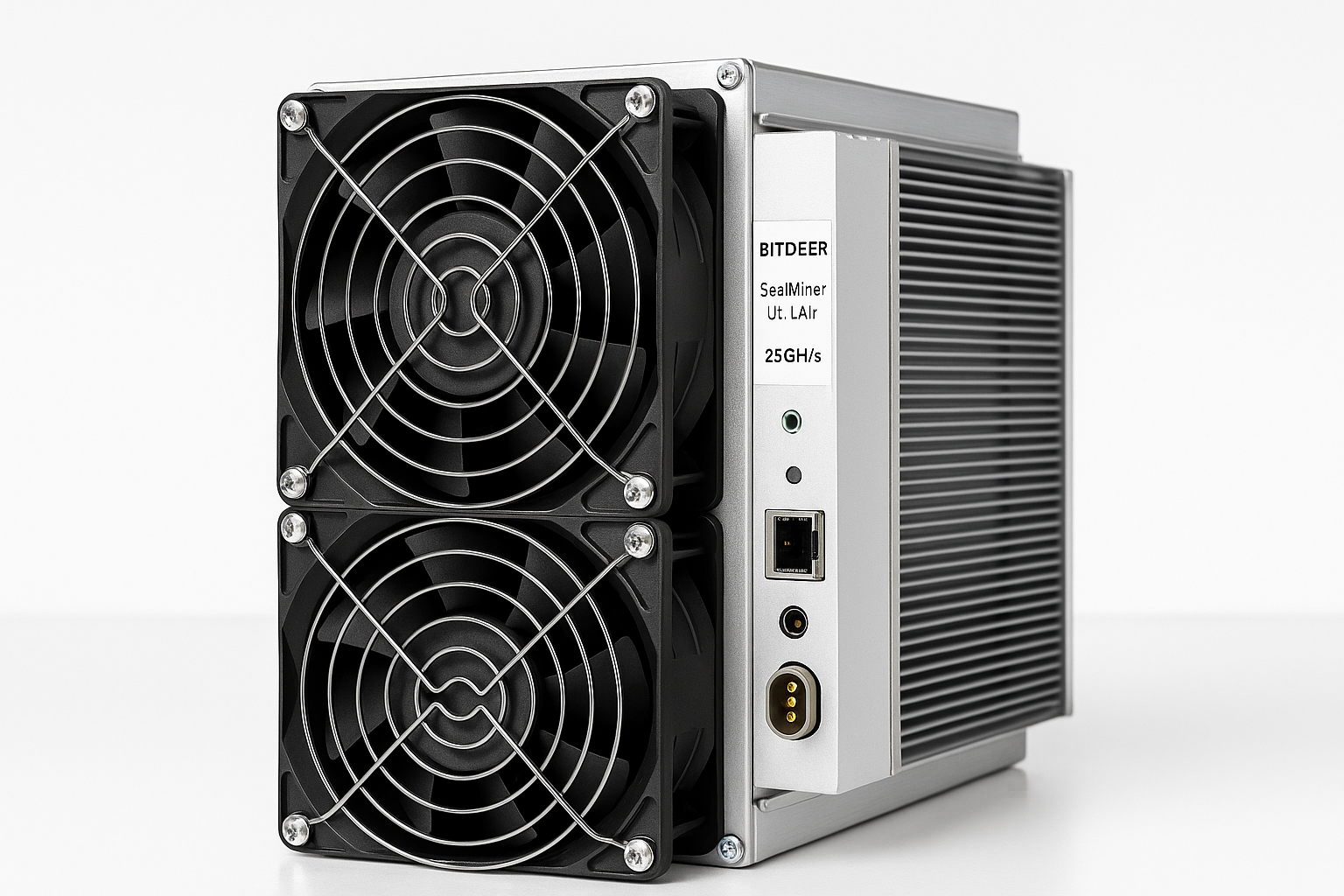
Bitcoin uses SHA-256. Dogecoin uses Scrypt — an algorithm designed to be memory-intensive, which historically made it harder for specialized hardware to dominate. That advantage faded years ago when Scrypt-specific ASIC miners were developed, and today professional Scrypt ASICs from Bitmain, Bitdeer, and others dominate the Dogecoin and Litecoin networks completely.
How Scrypt Mining Works
Every ~60 seconds, Dogecoin miners compete to find a hash value that falls below the current network target. To find it, each miner runs billions of hash computations per second — measured in GH/s (Gigahashes per second) for Scrypt hardware. The faster your hardware, the more guesses per second you make, and the higher your statistical chance of winning the block reward.
Merged Mining Explained
Since September 2014, Dogecoin has used Auxiliary Proof of Work (AuxPoW) to merge-mine with Litecoin. Here is how it works in practice:
- Your Scrypt ASIC submits work to a mining pool that supports merged mining.
- The pool simultaneously submits your work to the Litecoin blockchain and the Dogecoin blockchain (and any other AuxPoW-compatible chains).
- When your work satisfies Litecoin’s difficulty, you earn LTC. When it satisfies Dogecoin’s (lower) difficulty, you earn DOGE. You can earn both from the same computation.
- Your energy, hardware, and hashrate are not divided — you mine both chains at 100% capacity simultaneously.
What this means for miners: the gross daily income figures you see in profitability calculators for Scrypt miners already include earnings from both DOGE and LTC (plus smaller merged-mined coins like Bellcoin and others). When you see a Scrypt miner earning $16/day, that income comes from the full merged mining bundle, not from DOGE alone.
Dogecoin Mining Methods: Which Approach Is Right for You?
There are three main ways to mine Dogecoin in 2026. Each has a very different cost structure and suitability profile.
Data as of April 25, 2026. Hardware costs, cloud pricing, and coin prices change frequently.
| Method | Hardware | Upfront Cost | Best For | 2026 Viability |
|---|---|---|---|---|
| ASIC Mining | Dedicated Scrypt ASIC (e.g., Antminer L11 Hyd, SealMiner DL1) | $2,200–$9,500+ | Serious operators with low-cost power | ✅ Viable — only practical method |
| GPU Mining | Nvidia/AMD gaming or workstation GPU | $500–$3,000 | Hobbyists, small scale | ❌ Not viable — Scrypt ASICs outcompete GPUs by 1,000x+ |
| Cloud Mining | None (rented hashrate) | Subscription or contract | Zero hardware management preference | ⚠️ High risk — most contracts are unprofitable; scam risk is significant |
The verdict is clear: in 2026, Scrypt ASIC mining is the only viable method for anyone serious about Dogecoin and Litecoin mining. GPU mining was competitive before dedicated ASICs arrived. Cloud mining contracts almost never deliver the returns promised. If you want to mine DOGE, plan on purchasing a Scrypt ASIC miner.
Dogecoin Mining Hardware: The 2026 Buyer’s Guide
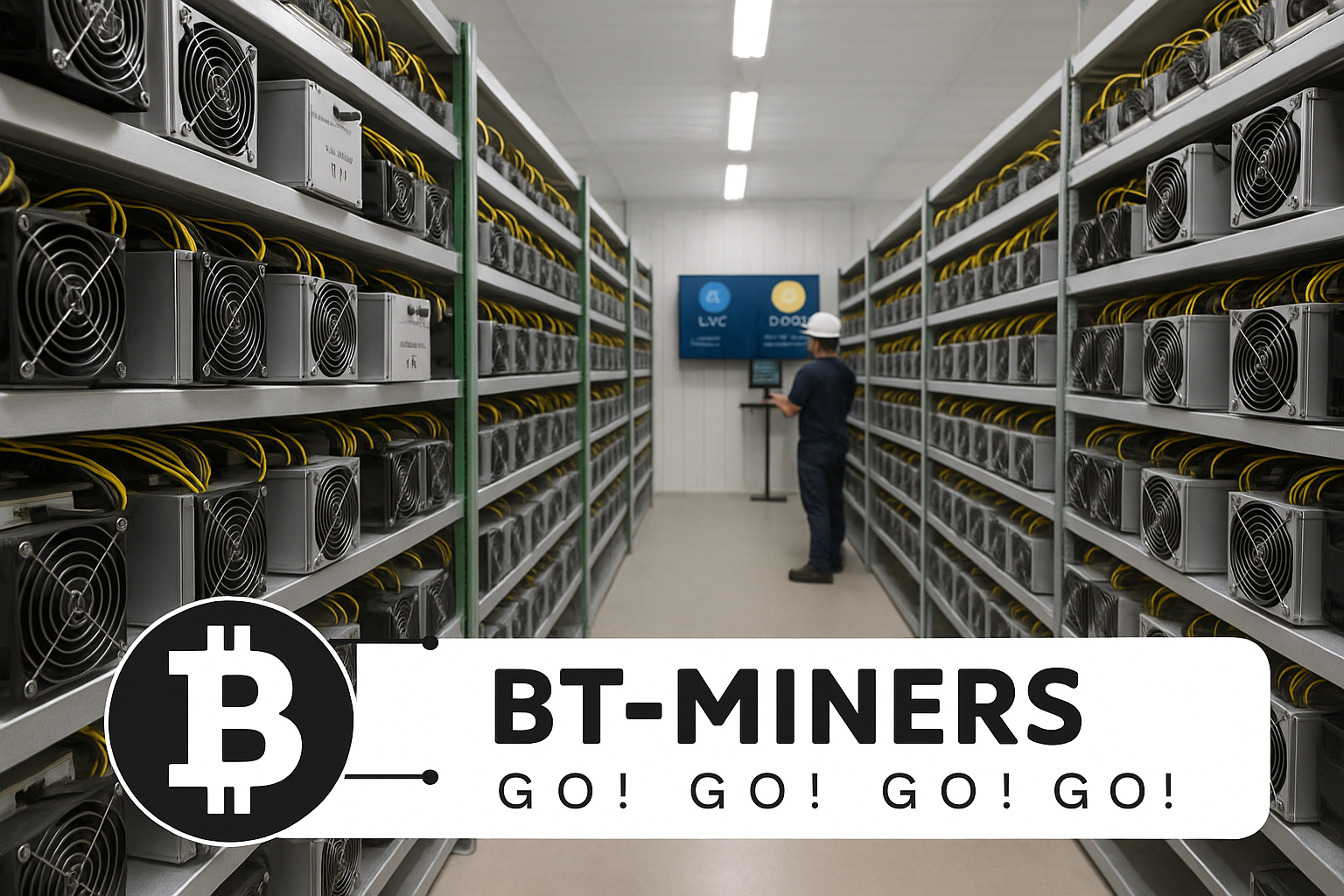
All Scrypt ASIC miners listed below are available at BT-Miners and support merged mining for LTC + DOGE simultaneously. Gross daily income reflects the combined earnings from all merged-mined coins at current market rates.
Data as of April 25, 2026. DOGE: $0.0977. LTC: $56.08. Net profit = Gross − (Power × 24h ÷ 1,000 × $0.07/kWh). Hardware prices subject to change.
| Miner | Hashrate | Power | Efficiency | Cooling | Gross/Day | Net/Day @$0.07 | Price | Est. ROI |
|---|---|---|---|---|---|---|---|---|
| Antminer L11 Hyd 2U | 35 GH/s | 5,775W | 165 J/GH | Hydro | $20.27 | $10.57 | $9,000 | ~28.4 mo |
| Bitdeer SealMiner DL1 Air | 25 GH/s | 3,625W | 145 J/GH | Air | $14.48 | $8.39 | $9,000 | ~35.8 mo |
| Antminer L11 HU6 | 33 GH/s | 5,676W | 172 J/GH | Hydro | $19.11 | $9.58 | $9,500 | ~33.1 mo |
| Antminer L11 Pro | ~21 GH/s | 3,612W | ~172 J/GH | Air | $12.16 | $6.09 | $8,600 | ~47.1 mo |
| Antminer L9 | ~17 GH/s | 3,570W | ~210 J/GH | Air | $9.85 | $3.85 | $2,200 | ~19.0 mo |
What to Look For When Buying a Scrypt Miner
- Efficiency (J/GH): The lower the better. The SealMiner DL1 Air at 145 J/GH is the most efficient air-cooled Scrypt miner currently available. Every joule saved per gigahash goes directly to your net margin.
- Cooling type: Hydro-cooled machines (L11 Hyd 2U, L11 HU6) achieve higher raw hashrate but require liquid cooling infrastructure — a data center or purpose-built facility. Air-cooled machines (DL1 Air, L11 Pro) are more flexible for operators without hydro setup.
- Price vs. hashrate: The Antminer L9 at $2,200 earns $3.85/day net at $0.07/kWh and returns capital in approximately 19 months — the shortest ROI of any miner in this lineup. It is the best-value entry point for operators with limited capital.
- Electricity rate sensitivity: Scrypt miners with high power draw (5,000W+) are extremely sensitive to electricity rate. A few cents per kWh difference dramatically affects net margins — as shown in the profitability table below.
Contact BT-Miners for current availability and pricing on all Scrypt miners. Inventory changes frequently.
Setting Up Your Dogecoin Wallet
Before you configure a mining pool, you need a Dogecoin wallet address to receive your payouts. Here are the most common options:
- Dogecoin Core — the official full-node wallet from dogecoin.com. Downloads the entire blockchain (~80 GB). Most secure option, but requires significant disk space and sync time.
- Trust Wallet — a mobile wallet that supports DOGE. Fast setup, good for smaller holdings. Custodial of your keys on your device.
- Exodus Wallet — desktop and mobile, multi-coin, user-friendly. Good for beginners managing multiple mined coins (LTC, DOGE, BEL, etc.).
- Hardware Wallets (Ledger, Trezor) — the most secure option for significant holdings. If you are mining daily and accumulating thousands of DOGE, a hardware wallet significantly reduces custodial risk.
- Exchange Wallet (Coinbase, Binance) — convenient for immediate selling, but you do not control the private keys. Suitable only if you plan to convert mined DOGE to fiat or other coins quickly.
Recommendation: Start with Exodus or Trust Wallet for simplicity. As your balance grows, move holdings to a hardware wallet. Never keep large mining proceeds on an exchange long-term.
Once your wallet is set up, copy your DOGE receive address (a string beginning with D, e.g. DQkwDpRYUyNNnoEZDf5Cb3QVqcSSbpe2g2). You will enter this into your mining pool account as your payout address.
Choosing and Joining a Dogecoin Mining Pool
Solo mining Dogecoin is not practical for individual operators — the probability of solo-solving a block on a network this large is extremely low. Pool mining aggregates hashrate from many miners, finds blocks collectively, and distributes rewards proportionally to each miner’s contributed work.
How to Choose a Mining Pool
Evaluate pools on these criteria:
- Merged mining support: Confirm the pool automatically handles LTC + DOGE merged mining so you earn from both chains without manual configuration.
- Fee structure: Typical pool fees range from 0% to 2%. Lower fees improve net payout, but very low-fee pools may offer less infrastructure reliability.
- Payout method: PPS (Pay Per Share) gives predictable daily payouts. PPLNS (Pay Per Last N Shares) can pay more in active periods but with more variance.
- Pool size: Larger pools find blocks more frequently, smoothing out payout variance. Smaller pools may pay less consistently but at higher amounts per block.
- Minimum payout threshold: Check that the minimum payout matches your expected daily earnings so you are not waiting weeks per withdrawal.
Recommended Dogecoin + Litecoin Mining Pools (2026)
| Pool | Fee | Payout Method | Merged Mining | Best For |
|---|---|---|---|---|
| Litecoinpool.org | 0% | PPS | ✅ LTC + DOGE | All operator sizes, reliable payouts |
| Prohashing | 1–2% | PPLNS | ✅ Auto-optimized multi-coin | Operators wanting auto-switching for max revenue |
| F2Pool | 1% | PPS+ | ✅ LTC + DOGE | Large operations, global server coverage |
| AntPool | 0–2% | PPS / PPLNS | ✅ LTC + DOGE | Bitmain hardware users, large scale |
| ViaBTC | 2% | PPS+ | ✅ LTC + DOGE | Multi-coin miners wanting one platform |
Recommended starting pool for most operators: Litecoinpool.org. It charges 0% fees, uses PPS (predictable daily payouts), and has a long history of reliability. Prohashing is the top choice if you want an automated system that optimizes across multiple Scrypt coins beyond just LTC and DOGE.
Step-by-Step: How to Start Mining Dogecoin
Here is the full setup process from hardware to first payout:
Step 1 — Purchase Your Scrypt ASIC Miner
Select your miner based on your electricity rate and available infrastructure. For most operators with standard commercial or data center power at $0.05–$0.07/kWh, the Bitdeer SealMiner DL1 Air is the best balance of efficiency, hashrate, and air-cooling flexibility. For operators with hydro cooling infrastructure, the Antminer L11 Hyd 2U delivers the highest net daily output. Contact BT-Miners to discuss current stock and lead times.
Step 2 — Set Up Your Wallet
Install Exodus or Trust Wallet, create a new DOGE wallet, and note your DOGE receive address. Also note your LTC receive address — you will need both since merged mining pays both coins separately.
Step 3 — Register with a Mining Pool
Sign up at your chosen pool (e.g., litecoinpool.org or prohashing.com). Enter your DOGE and LTC wallet addresses in the payout settings. Set the minimum payout threshold based on your expected daily earnings. Copy the pool’s stratum connection URL and port number — you will need these in step 5.
Step 4 — Prepare Your Power Setup
Scrypt ASIC miners draw 1,200W to 5,775W continuously. Confirm your power supply, circuit breakers, and PDU (Power Distribution Unit) can handle the sustained load. Professional ASICs require 208–240V industrial connections. If you are using BT-Miners’ co-location hosting service, the facility handles all power provisioning.
Step 5 — Configure the Miner
Connect the miner to your local network via ethernet. Access the miner’s web interface via its local IP address (typically 192.168.x.x). Navigate to the pool configuration section and enter:
- Pool URL: the stratum address from your pool (e.g., stratum+tcp://litecoinpool.org:3333)
- Worker name: your_pool_username.worker1
- Password: x (most pools use a placeholder)
Save settings. The miner will reboot and begin hashing within 60–90 seconds.
Step 6 — Monitor and Verify
After 10–15 minutes, log into your pool dashboard and confirm your worker is showing active hashrate. Check that the accepted shares count is climbing. Set up email or Telegram alerts for any hashrate drops. Review earnings after 24 hours to validate against expected figures from the BT-Miners profitability calculator.
Understanding Dogecoin Mining Costs and Profitability
Profitability for Scrypt miners is highly sensitive to electricity rate. The table below shows net daily income and estimated ROI for the Bitdeer SealMiner DL1 Air (25 GH/s, 3,625W, $9,000) across common electricity rates, using current DOGE and LTC prices.
Data as of April 25, 2026. Gross daily income: $14.48 (LTC + DOGE merged mining). Net = Gross − (3,625W × 24h ÷ 1,000 × $/kWh). Hardware price: $9,000.
| Electricity Rate | Daily Electric Cost | Net Daily Profit | Est. ROI |
|---|---|---|---|
| $0.04/kWh | $3.48 | $11.00 | ~27.3 months |
| $0.05/kWh | $4.35 | $10.13 | ~29.6 months |
| $0.07/kWh | $6.09 | $8.39 | ~35.8 months |
| $0.10/kWh | $8.70 | $5.78 | ~51.9 months |
| $0.12/kWh | $10.44 | $4.04 | ~74.0 months |
The ROI picture for Dogecoin mining is honest: at standard electricity rates, payback timelines are measured in years, not months. This contrasts with altcoin ASICs like the Antminer Z15 Pro (ZEC, ~4.9 months ROI) or Antminer X9 (XMR, ~7.0 months ROI). The economics of Scrypt mining are best for operators with very low-cost power and a long-term thesis on DOGE and LTC price appreciation.
Use the BT-Miners profitability calculator to model your specific electricity rate and current coin prices before committing capital.
Common Mistakes Beginner DOGE Miners Make
- Buying a GPU miner for Scrypt: GPU mining is economically obsolete on the Scrypt network. A professional ASIC produces 25+ GH/s; a top gaming GPU produces roughly 2–4 MH/s. ASIC hardware outperforms GPUs by a factor of 10,000x or more. GPUs have no realistic chance of competing for block rewards.
- Not accounting for all electricity costs: Miners often quote electricity cost at face value but forget to include cooling overhead (A/C or chiller power draw), UPS losses, and any demand charge premiums their utility applies. Add 10–20% to your baseline electricity estimate to account for infrastructure power draw.
- Ignoring merged mining configuration: If your pool or miner is not properly configured for merged mining, you may only earn LTC rewards and miss DOGE entirely. Confirm your pool shows separate DOGE balance accruing alongside LTC. Litecoinpool.org handles this automatically; other pools may require manual AuxPoW configuration.
- Using a single wallet address for all coins: Scrypt miners pay out in multiple coins (LTC, DOGE, and sometimes BEL, LKY, PEP). Set up separate receive addresses for each coin in your pool payout settings. Mixing addresses causes failed payouts.
- Underestimating hosting lead times: Demand for co-location slots at sub-$0.07/kWh facilities is high. If you plan to host rather than run at home, contact BT-Miners early in the planning process to confirm availability before purchasing hardware.
- Expecting short ROI on Scrypt hardware: Unlike ZEC or XMR miners which currently offer sub-12-month payback, Scrypt hardware ROI is measured in years at standard electricity rates. This is a long-term investment in both hardware and coin exposure. Plan accordingly.
Is Dogecoin Mining Worth It in 2026?
The honest answer: it depends on why you are mining.
If your primary goal is fastest capital return, Dogecoin and Litecoin ASIC mining is not the best option at current prices and standard electricity rates. Zcash and Monero ASIC miners currently return capital 3–6x faster than Scrypt hardware under the same electricity conditions. Check out BT-Miners’ profitability calculator or contact the team to explore those alternatives.
If, however, you have any of the following, DOGE mining makes genuine sense:
- Sub-$0.05/kWh electricity access — stranded energy, solar surplus, hydroelectric, or industrial agreements. At $0.04/kWh, a DL1 Air earns $11.00/day net with a 27.3-month payback — a genuinely attractive investment horizon.
- A long-term thesis on DOGE or LTC price appreciation. Dogecoin has historically produced enormous price spikes driven by adoption, celebrity endorsement, and exchange listing events. Miners who held DOGE through past cycles captured multiples on their mined coins that far exceeded the hardware cost. This is speculative, but it has happened — and it is a legitimate part of many miners’ business models.
- Diversification across multiple mining positions. Some operators run ZEC or XMR machines as their primary ROI engine and add Scrypt hardware as a secondary position for LTC and DOGE exposure, spreading risk across algorithms and coins.
- Existing Scrypt infrastructure. If you already operate a Litecoin mining facility, adding DOGE payout addresses costs nothing — you are already mining it via merged mining. The marginal cost of adding DOGE is zero.
The bottom line: approach Dogecoin ASIC mining as a multi-year investment with exposure to LTC and DOGE price appreciation, not as a quick-return trade. Operators who succeed in this segment are those with power cost advantages and a conviction on the long-term value of Scrypt-mined assets.
Frequently Asked Questions
How do I mine Dogecoin for beginners?
Purchase a Scrypt ASIC miner (the Bitdeer SealMiner DL1 Air or Antminer L9 are accessible entry points), set up a DOGE and LTC wallet, create a pool account at Litecoinpool.org, enter the pool’s stratum URL and your wallet addresses in the miner’s web interface, and you are mining. The full process takes 1–2 hours from hardware receipt to active hashing. See our step-by-step section above for complete details.
Can I mine Dogecoin on my computer or GPU?
Technically yes, but economically no. The Scrypt network is dominated by professional ASIC miners producing 17–35 GH/s per machine. A top gaming GPU produces roughly 2–4 MH/s on Scrypt — approximately 10,000x less hashrate than a single ASIC. Your GPU would earn a negligible fraction of a cent per day and never recover its electricity cost against the network’s difficulty. ASIC hardware is the only viable approach in 2026.
Is Dogecoin mining profitable in 2026?
At $0.07/kWh, Scrypt mining produces positive net daily profit with ROI ranging from ~19 months (Antminer L9) to ~36 months (SealMiner DL1 Air). At $0.10/kWh timelines extend to 35–52 months. Profitability improves significantly at sub-$0.05/kWh rates, and the total return calculation must include the long-term value of accumulated DOGE and LTC. Operators with low-cost power and a long-term coin thesis find it viable. For faster capital return, consider ZEC or XMR ASIC miners.
Do I mine Dogecoin and Litecoin separately?
No — they are mined simultaneously via merged mining (AuxPoW). A single Scrypt ASIC pointed at a merged-mining pool earns both LTC and DOGE (plus any other AuxPoW-compatible coins) from the same work. You receive separate payouts for each coin in their respective wallets. You do not need to choose between them.
What is the best Dogecoin miner in 2026?
By raw net daily income, the Antminer L11 Hyd 2U (35 GH/s, $10.57/day net at $0.07/kWh) leads the pack — but it requires liquid cooling infrastructure. For air-cooled operations, the Bitdeer SealMiner DL1 Air (25 GH/s, 145 J/GH) is the most energy-efficient Scrypt miner available and the top recommendation for commercial facilities without hydro setup. Contact BT-Miners for current stock and pricing.