Best ASIC Miner for Beginners in 2026: Bitcoin, Zcash, or Monero?
⚠️ Disclaimer: Mining profitability estimates below are based on current coin prices as of April 26, 2026, network difficulty at time of publication, and a $0.07/kWh electricity cost assumption. These figures change daily. Always conduct your own research before purchasing mining equipment.
If you are reading this, you have probably already asked someone “which miner should I buy?” and received conflicting answers. One person says Bitcoin only. Another swears by privacy coins. Someone else is talking about a coin you have never heard of. The confusion is real, and the stakes are too high to guess wrong on your first ASIC purchase.
Here is the honest answer: in 2026, the coin you mine matters more than the brand of hardware you buy. This guide uses live market data — BTC at $77,722, ZEC at $342.56, XMR at $382.06 — to show you exactly what a first-time ASIC buyer can realistically earn, and which machines give beginners the fastest path to recouping their investment.
The Coin Decision: Why Bitcoin Is Not Always the Best Starting Point
Bitcoin is the most recognized cryptocurrency in the world, so it is natural for beginners to assume BTC mining is the default choice. But mining profitability is not determined by name recognition — it is determined by the ratio of your hardware’s output against the network’s total difficulty, your electricity cost, and the coin’s current price.
At the time of writing, the Bitcoin network is running at 934.9 EH/s (exahash per second) — a staggering amount of global competition. The network difficulty recently dropped 3%, but remains at levels that make small-scale BTC mining extremely challenging to justify financially.
The result: most entry-level and mid-range Bitcoin ASICs generate thin net margins at $0.07/kWh electricity, with ROI timelines stretching 2 to 4 years. That is not necessarily a deal-breaker for institutional operations with sub-$0.04/kWh power, but for a first-time miner paying retail electricity, it means your money is locked up for years before you break even.
Zcash (ZEC) and Monero (XMR) miners are a different story. These alternative coins run on different algorithms, face less industrial competition, and — critically — the ASICs designed for them are delivering sub-12-month ROI at current prices. Let us look at the actual numbers.
Bitcoin Mining Numbers Every New Buyer Should Know
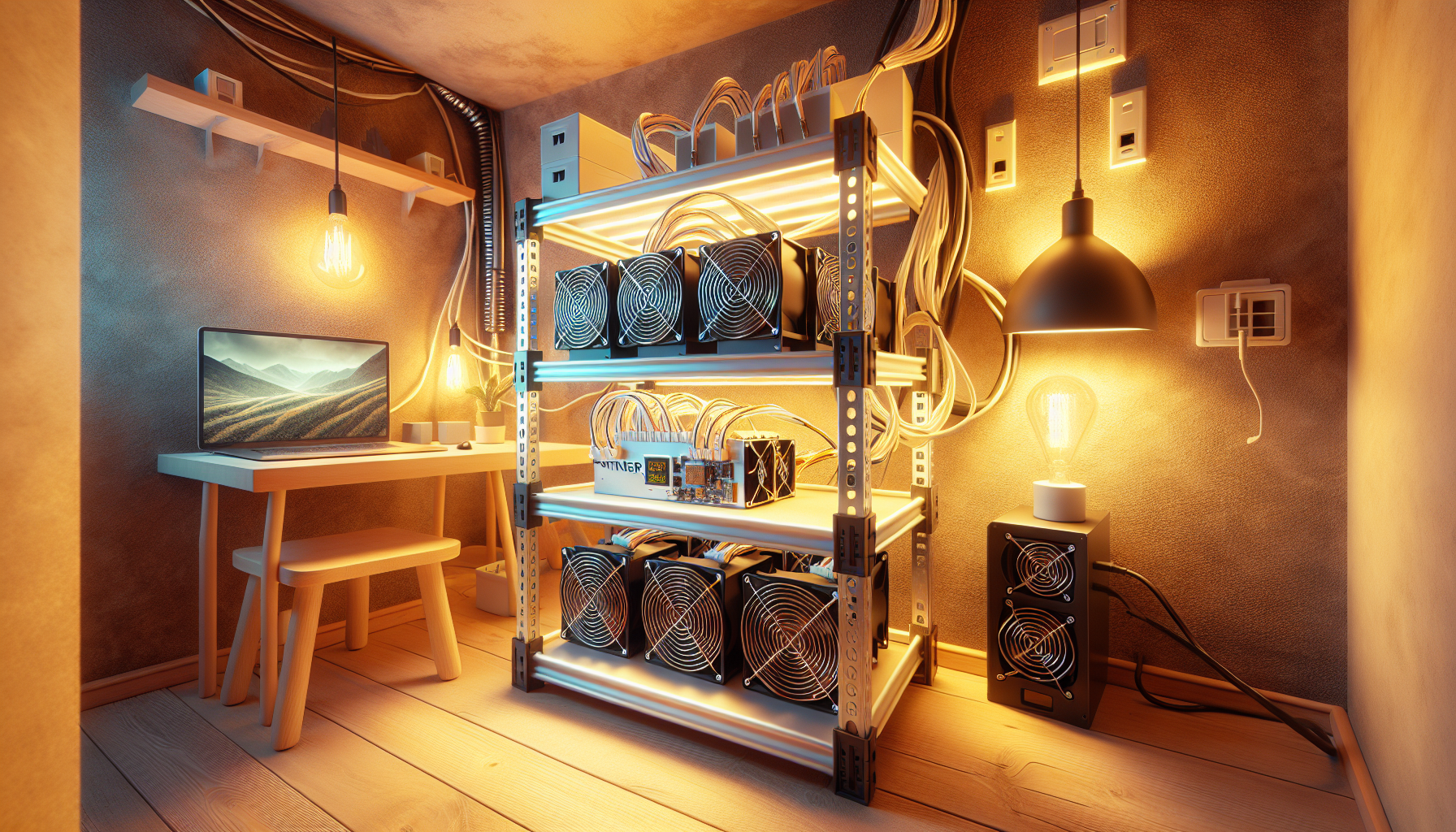
Data as of April 26, 2026. BTC price: $77,722. Network hashrate: 934.9 EH/s. Hardware prices subject to change.
To make this concrete, here is what a popular mid-range Bitcoin ASIC — the Antminer S21 Pro (234 TH/s, 3,510W) — actually earns at $0.07/kWh:
- Gross daily revenue: ~$7.69
- Daily electricity cost: 3,510W x 24h / 1,000 x $0.07 = $5.90/day
- Net daily profit: ~$1.79/day
- Machine price: ~$2,350
- ROI at $0.07/kWh: ~1,313 days (approximately 3.6 years)
That is not a typo. At current BTC network difficulty and $77K Bitcoin prices, a solid mid-range miner earns less than $2 per day net. Bitcoin prices would need to significantly increase, or electricity costs drop to $0.03 to $0.04/kWh, for BTC mining to deliver faster ROI.
For large industrial operations with stranded power or sub-$0.04/kWh contracts, BTC mining remains viable. For a new miner paying $0.06 to $0.10/kWh from a utility, the math is difficult to justify. The high-performance hydro-cooled machines (the Antminer S23 Hyd 3U at 1.16 PH/s, $29,800) do better proportionally, but their $30,000 entry price puts them well outside beginner territory.
Bottom line on BTC: Bitcoin mining in 2026 rewards scale and cheap power. It is not the ideal starting point unless you have exceptional electricity rates or significant capital to deploy at scale.
Zcash and Monero: The ROI Case for Alternative Coin Mining
This is where the math gets genuinely interesting for beginners. ZEC and XMR run on fundamentally different proof-of-work algorithms — Equihash and RandomX respectively — with far less industrial competition than SHA-256 Bitcoin mining. The result is that a single machine can generate meaningful daily profit that translates to sub-year ROI.
Zcash (ZEC) — The Antminer Z15 Pro
ZEC is currently trading at $342.56. Zcash uses the Equihash algorithm, which the Bitmain Antminer Z15 Pro dominates with 840 KSol/s of hashpower and 2,780W of power draw.
- Gross daily revenue: $29.86
- Daily electricity cost: 2,780W x 24h / 1,000 x $0.07 = $4.67/day
- Net daily profit @$0.07/kWh: $25.19/day
- Machine price: $3,700
- ROI @$0.07/kWh: ~147 days (approximately 4.9 months)
The standard Antminer Z15 (420 KSol/s, 1,510W) offers a lower entry point at $2,800 with $12.40/day net profit — roughly 7.5 months ROI. It is a solid choice if you want exposure to ZEC at a lower initial cost.
The Z15 Pro runs at twice the hashrate and delivers meaningfully better ROI per dollar spent. For a first-time buyer who can manage the $3,700 investment, it is the stronger pick. Use the BT-Miners profitability calculator to model ZEC at your specific electricity rate before buying.
Monero (XMR) — The Antminer X9
XMR is trading at $382.06. The Bitmain Antminer X9 is the current benchmark for Monero mining, delivering 1 MH/s on the RandomX algorithm using 2,472W of power.
- Gross daily revenue: $30.83
- Daily electricity cost: 2,472W x 24h / 1,000 x $0.07 = $4.15/day
- Net daily profit @$0.07/kWh: $26.68/day
- Machine price: $5,600
- ROI @$0.07/kWh: ~210 days (approximately 7.0 months)
Note: there is ongoing debate in the Monero community about how the X9 should be architecturally classified. Regardless, the Antminer X9 delivers the highest consistent Monero hashrate available in commercial hardware, and the profitability numbers are real and verifiable at current XMR prices.
One advantage of XMR mining worth noting: Monero has a permanent tail emission (no hard supply cap), which keeps miner incentives long-term without depending entirely on transaction fees. This is structurally different from both Bitcoin and Zcash, and a reason some miners prefer XMR as a long-horizon mining target.
Comparing Your First Miner Options: A 2026 Buyer’s Table
Data as of April 26, 2026. ZEC: $342.56 | XMR: $382.06 | BTC: $77,722. Electricity: $0.07/kWh. All prices USD. Hardware prices subject to change — verify at bt-miners.com before purchasing.
| Miner | Coin | Price | Net Daily Profit | ROI (months) | Algorithm | Cooling |
|---|---|---|---|---|---|---|
| Antminer Z15 Pro | ZEC | $3,700 | $25.19/day | ~4.9 months | Equihash | Air |
| Antminer Z15 | ZEC | $2,800 | $12.40/day | ~7.5 months | Equihash | Air |
| Antminer X9 | XMR | $5,600 | $26.68/day | ~7.0 months | RandomX | Air |
| INIBOX PRO (advanced) | INITVERSE | $7,300 | $51.20/day | ~4.8 months | VersaHash | Air |
| Antminer S21 Pro (BTC ref.) | BTC | $2,350 | $1.79/day | ~43 months | SHA-256 | Air |
The INIBOX PRO offers the fastest ROI numerically but carries higher risk as INITVERSE is a newer project. It is listed for reference — see below for why beginners may want to start with ZEC or XMR first.
How to Choose Your First ASIC Based on Budget and Risk Tolerance
Now that you have the data, here is a practical decision framework. Your first miner purchase should balance capital at risk, ROI timeline, and how comfortable you are with volatility in a specific coin.
Budget Under ,000: Start with the Antminer Z15
The Antminer Z15 gives you real ZEC mining exposure at $2,800 with a 7.5-month ROI at current prices. It is air-cooled, straightforward to set up, and ZEC is an established privacy coin with a meaningful track record. This is the lowest-risk entry point into serious ASIC mining.
Budget ,000 to ,000: The Antminer Z15 Pro is the Top Pick
At $3,700 and a 4.9-month ROI, the Antminer Z15 Pro offers the best combination of accessible price, fast capital recovery, and established coin stability. If you are only buying one machine and want the fastest path to profitability, this is it. Run your electricity rate through the profitability calculator to confirm the numbers for your situation.
Budget ,000 to ,000: Antminer X9 for XMR Diversification
If you already have a ZEC miner or want coin diversification, the Antminer X9 at $5,600 is a strong choice. XMR higher per-coin price and slightly better net daily make it competitive. The 7-month ROI is reasonable for the investment size, and Monero has a well-established mining community.
A Word on INITVERSE and the INIBOX PRO
The Pinecone Matches INIBOX PRO currently generates $51.20/day net at $0.07/kWh — the highest of any miner in our current inventory — with a 4.8-month ROI at $7,300. However, INITVERSE is a significantly newer coin than ZEC or XMR, which means price volatility risk is materially higher. For experienced miners looking to diversify into high-ROI altcoin mining, it is worth serious research. For a first miner, starting with established coins and adding INITVERSE exposure later is the more measured approach.
Electricity Rate Is Everything
All figures above assume $0.07/kWh. If you are paying $0.10/kWh, the Z15 Pro net profit drops to roughly $20/day — extending ROI to around 6 months at $3,700. Still workable, but the margin compresses. If your home electricity is above $0.10/kWh, consider whether BT-Miners co-location hosting at industrial power rates makes more sense than home deployment.
Frequently Asked Questions
Is Zcash mining profitable for beginners in 2026?
Yes. With ZEC at $342.56 and the Antminer Z15 Pro delivering $25.19/day net profit at $0.07/kWh, the approximately 4.9-month ROI makes it one of the most beginner-accessible mining investments currently available. Model your specific electricity rate using the profitability calculator before committing.
Is the Antminer X9 good for Monero mining in 2026?
At current XMR prices ($382.06), the X9 generates $26.68/day net at $0.07/kWh. At $5,600, you are looking at approximately 7 months to break even. That is significantly better than Bitcoin mining, which is running 3+ year ROI timelines at comparable electricity costs.
Can a beginner mine Bitcoin profitably in 2026?
It is possible but difficult. At $0.07/kWh, most mid-range Bitcoin ASICs earn under $2/day net, resulting in 3+ year ROI periods. Bitcoin mining is more viable at industrial scale with sub-$0.04/kWh electricity. Beginners with standard electricity rates typically find better short-term economics in ZEC or XMR miners.
Which ASIC miner should a complete beginner buy first in 2026?
The Antminer Z15 Pro (Zcash, ~4.9 months ROI at $3,700) is the top recommendation for most beginners. It offers the fastest capital recovery among established-coin miners, is air-cooled and straightforward to configure, and targets ZEC — a coin with years of network history. The standard Antminer Z15 at $2,800 is also solid if you want a lower entry price point.
What electricity rate do I need for ASIC mining to be worth it?
For ZEC and XMR miners, $0.07 to $0.10/kWh is workable. For Bitcoin mining, profitability becomes very tight above $0.06/kWh for most machines. Use the BT-Miners profitability calculator to run your exact numbers before purchasing.
Sources
- Zcash Block Explorer — Network difficulty and block data
- CoinWarz — ZEC Mining Profitability Calculator
- Monero Project — Official documentation and tail emission details
- WhatToMine — Multi-coin mining profitability reference
Have questions about which miner fits your setup? Contact the BT-Miners team — we help buyers at every stage find hardware that matches their power, space, and budget constraints.