5 Common ASIC Mining Mistakes Beginners Make in 2026 (And How to Avoid Them)
⚠️ Disclaimer: Mining profitability estimates are based on current coin prices, network difficulty, and $0.07/kWh electricity cost. These figures change daily. Always conduct your own research before purchasing mining equipment.
Every week, new miners enter the crypto space excited about ASIC hardware — only to find themselves disappointed when the numbers don’t work out as expected. The good news? Most of these setbacks stem from the same handful of preventable mistakes. Whether you’re evaluating your first machine or reconsidering an existing setup, understanding these ASIC mining mistakes beginners make in 2026 before you spend money can mean the difference between a profitable operation and an expensive lesson.
Mistake #1: Treating Gross Revenue as Net Profit
The single most expensive beginner error is reading an ASIC’s “daily revenue” figure and assuming that’s money in your pocket. Mining calculators across the internet report gross revenue — what the miner earns before subtracting electricity costs. The electricity bill can be substantial enough to turn a profitable-looking miner into a money-losing machine.
Here’s the correct formula for net daily profit at $0.07/kWh:
Net Daily Profit = Gross Daily Revenue − (Power Watts × 24 ÷ 1,000 × $0.07)
Let’s apply this to a cross-section of miners currently available from BT-Miners:
Data as of April 19, 2026. BTC price: $74,740.66. ZEC price: $334.03. XMR price: $345.27. Electricity at $0.07/kWh. Hardware prices subject to change.
| Miner | Coin | Price | Power | Gross/Day | Elec./Day | Net/Day | ROI |
|---|---|---|---|---|---|---|---|
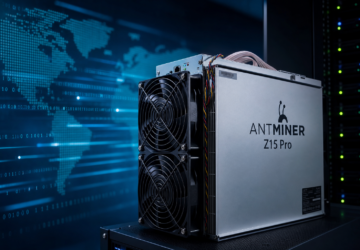
| Antminer Z15 Pro | ZEC | $3,700 | 2,780W | $31.44 | $4.67 | $26.77 | ~4.6 months |
| Antminer X9 | XMR | $5,600 | 2,472W | $21.87 | $4.15 | $17.72 | ~10.5 months |
| Antminer Z15 | ZEC | $2,800 | 1,510W | $15.43 | $2.54 | $12.89 | ~7.2 months |
| Matches INIBOX PRO | INITVERSE | $7,300 | 1,280W | $39.58 | $2.15 | $37.43 | ~6.5 months |
| Antminer S21 XP+ Hyd | BTC | $12,700 | 5,500W | $3.79 | $9.24 | −$5.45 | N/A (unprofitable) |
The Antminer S21 XP+ Hyd is a state-of-the-art Bitcoin miner with 500 TH/s of hashrate — yet at standard residential electricity of $0.07/kWh, it costs more to run than it earns. This is a real-world illustration of why gross revenue figures are misleading without running the electricity calculation first.
How to avoid it: Always run the net profit formula before purchasing any machine. Use BT-Miners’ profitability calculator to model your actual electricity rate and get a realistic ROI timeline before committing capital.
Mistake #2: Defaulting to Bitcoin Without Evaluating Altcoin Miners
“Bitcoin mining” is what most newcomers associate with crypto mining — but in 2026, with BTC’s network hashrate at 1,010 EH/s and difficulty near all-time highs, the economics for individual miners have become extremely challenging. As the table above shows, most consumer BTC ASICs are operating at a net loss at standard residential electricity rates.
Meanwhile, altcoin ASICs mining Zcash (ZEC at $334.03), Monero (XMR at $345.27), and emerging projects like INITVERSE are delivering net profits of $12–$37 per day with payback periods measured in months — not years. The Antminer Z15 Pro mines ZEC at 840 KSol/s and nets $26.77/day after electricity, recovering its full hardware cost in approximately 4.6 months at current ZEC prices.
This doesn’t mean Bitcoin is a poor long-term asset — it means that mining Bitcoin is not the same as holding Bitcoin. If your goal is efficient capital deployment through ASIC hardware, the numbers in 2026 strongly favor certain altcoin algorithms over SHA-256 for most individual buyers.
How to avoid it: Evaluate miners across algorithms side by side. Compare net daily profit and payback period — not just hashrate or brand recognition. Coins like ZEC (Equihash) and XMR (RandomX) currently offer substantially shorter ROI windows, making them far more accessible entry points for new miners than Bitcoin hardware.
Mistake #3: Underestimating Electrical and Cooling Requirements
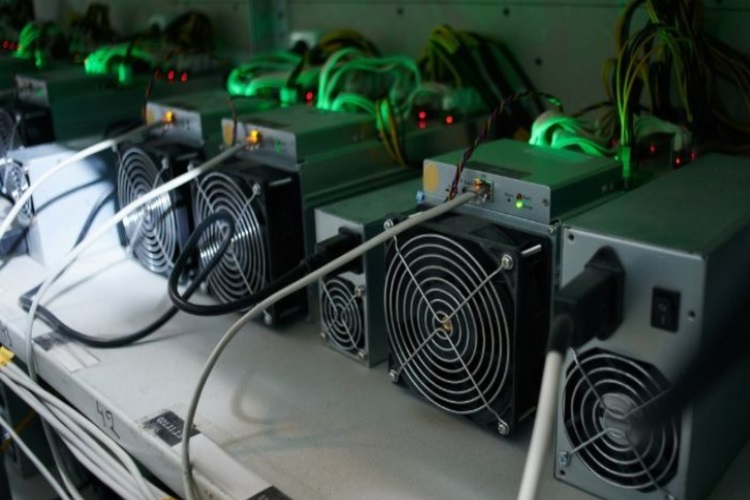
ASICs are industrial machines housed in compact enclosures. A single Antminer Z15 Pro draws 2,780 watts — equivalent to running roughly 28 standard light bulbs continuously, around the clock. Multiple units can easily exceed the capacity of a residential electrical panel and push heat output beyond what any standard room can handle.
Common electrical and cooling mistakes beginners make include:
- Using standard 15A or 20A household circuits — most ASICs require dedicated 240V 30A or 60A circuits, which require licensed electrical work
- Not accounting for heat output — a 2,780W miner produces roughly 9,500 BTU/hour of heat, similar to a window air conditioner running in reverse inside your home
- Ignoring airflow direction — ASICs are engineered for straight-through airflow; placing them in enclosed or confined spaces dramatically shortens hardware lifespan
- Skipping surge protection — quality PDUs (power distribution units) add $50–$300 per rack but protect thousands of dollars in equipment from power fluctuations and spikes
Before ordering any hardware, get an electrical inspection and confirm your space can handle the load. If home setup is impractical, co-location hosting provides a purpose-built environment with all infrastructure already in place — see Mistake #5 below for details.
How to avoid it: Calculate total planned wattage across all units plus 20% safety overhead before purchase. Confirm panel capacity, ensure adequate exhaust and intake airflow clearance, and budget for licensed electrical work if circuit upgrades are needed.
Mistake #4: Using a Static ROI Calculation Instead of Tracking It Dynamically
ROI timelines shift constantly based on three variables: hardware price, coin price, and network difficulty. Beginners often make a single calculation at purchase time and then forget to revisit it — or worse, rely on an ROI figure from a website that hasn’t updated its data in months.
The core formula is simple, but the inputs must be refreshed regularly:
ROI (days) = Hardware Price ÷ Net Daily Profit
Here’s how electricity rate alone shifts the Antminer X9‘s payback period at current XMR prices ($345.27):
Data as of April 19, 2026. XMR price: $345.27. Antminer X9 power: 2,472W, gross: $21.87/day. Hardware price: $5,600.
| Electricity Rate | Electricity Cost/Day | Net Profit/Day | ROI (at $5,600) |
|---|---|---|---|
| $0.04/kWh (hosting tier) | $2.37 | $19.50 | ~9.6 months |
| $0.07/kWh (residential baseline) | $4.15 | $17.72 | ~10.5 months |
| $0.10/kWh (higher residential) | $5.93 | $15.94 | ~11.7 months |
| $0.15/kWh (peak/commercial) | $8.90 | $12.97 | ~14.4 months |
The Antminer X9 remains solidly profitable across a wide range of electricity rates — but the payback timeline extends by nearly 50% between $0.04 and $0.15/kWh. Knowing your actual electricity rate isn’t optional; it’s the most important input in the entire ROI calculation.
Beyond electricity, coin price swings matter enormously. If XMR fell 30% from current levels ($345 to ~$242), the X9’s gross revenue would fall proportionally, extending the payback period by several months. This is why miners with shorter initial ROI windows — like the Z15 Pro at ~4.6 months — offer more built-in downside protection than machines with 24-month payback targets.
How to avoid it: Bookmark the BT-Miners profitability calculator and revisit it monthly. Set a calendar reminder to recalculate whenever your electricity rate changes or a mined coin moves more than 20% in price. Treat ROI as a living number, not a one-time figure.
Mistake #5: Not Considering Co-Location Hosting as an Alternative
Many beginners assume that mining must happen at home — but for serious operations, professional co-location hosting frequently produces better overall returns than a home setup, even after accounting for monthly hosting fees.
The advantages of co-location for ASIC mining include:
- Lower electricity rates: Professional mining facilities typically access power at $0.03–$0.06/kWh — roughly half to one-third of standard North American residential rates
- No infrastructure build-out: Electrical panels, cooling systems, and industrial-grade circuits are already in place and properly sized for mining loads
- Noise and heat removed from living space: Industrial ASICs produce 70–85 decibels of continuous noise — comparable to running a vacuum cleaner 24 hours a day inside your home
- Professional monitoring: Mining facilities provide around-the-clock hardware monitoring and typically maintain spare parts inventory for rapid maintenance turnaround
At a co-location rate of $0.04/kWh, the Antminer Z15 Pro’s electricity cost drops from $4.67/day to $2.67/day — increasing net daily profit from $26.77 to $28.77. Over a 12-month period, that electricity savings alone amounts to over $730 per machine, which can fully offset hosting fees depending on the arrangement.
BT-Miners offers professional co-location hosting services for customers who purchase hardware through the platform — especially worth exploring for buyers planning to run multiple units or located in areas with high residential electricity rates. Contact the BT-Miners team to discuss hosting options alongside any hardware purchase.
How to avoid it: Run a side-by-side comparison: your home electricity cost per day versus an estimated co-location rate, then factor in the value of your time for setup, monitoring, and maintenance. For most multi-machine operations, hosting wins decisively on total cost of ownership.
Frequently Asked Questions
Is ASIC mining profitable for beginners in 2026?
It depends on which coin you mine and your electricity rate. Bitcoin mining at standard residential rates is currently unprofitable for most individual miners due to extremely high network difficulty (1,010 EH/s). However, altcoin ASICs — particularly Zcash (ZEC) and Monero (XMR) miners — are generating strong net profits with ROI timelines of 4–10 months at current prices.
How much electricity does an ASIC miner use per month?
A typical mid-range ASIC uses between 1,500W and 3,500W. At 2,780W (like the Antminer Z15 Pro running 24/7), that’s approximately 2,001 kWh per month. At $0.07/kWh, that’s roughly $140/month in electricity costs — which is exactly why net profit calculations are essential before any purchase decision.
What is the best ASIC miner for beginners in 2026?
For beginners prioritizing short payback periods and manageable electricity costs, the Antminer Z15 Pro (ZEC mining, ~4.6 month ROI at $3,700) and the Antminer Z15 (ZEC mining, ~7.2 month ROI at a lower $2,800 entry price) are among the strongest current options. The Antminer X9 is an excellent pick for Monero mining with robust returns across a wide range of electricity rates.
Can I mine cryptocurrency from home?
Yes, but with important caveats. Most ASICs require dedicated 240V circuits, produce significant noise (70–85 dB), and generate substantial heat that must be vented or cooled. One or two machines in a garage or basement is feasible with proper electrical work. For three or more units, co-location hosting often becomes the more practical and cost-effective solution on a total cost of ownership basis.
What happens to my ROI if the coin price drops significantly?
A 30% price drop in your mined coin reduces gross revenue by roughly 30%, extending your payback period proportionally. For example, if ZEC fell 30% from $334 to ~$234, the Z15 Pro’s net daily profit would fall from $26.77 to approximately $17.06/day, pushing ROI from 4.6 months to around 7.2 months. This is why miners with shorter initial ROI windows provide more built-in protection against coin price volatility than machines with longer payback periods.
Start Smart: Avoid These Mistakes Before You Buy
The five ASIC mining mistakes outlined above — confusing gross with net profit, defaulting to Bitcoin without checking altcoin ROI, underestimating electrical infrastructure, using a static ROI calculation, and overlooking co-location hosting — are responsible for the majority of beginner disappointments in this space. All five are preventable with the right information and tools.
Use the BT-Miners profitability calculator to model real scenarios with your actual electricity rate, and don’t hesitate to contact the BT-Miners team for hardware recommendations tailored to your budget, electricity cost, and investment goals. The right machine at the right price can still generate meaningful returns in 2026 — but only when the math is done correctly from the start.