Best Mining Pools for ZEC, XMR & BTC in 2026 | Fees, Payouts & Reliability Compared
⚠️ Disclaimer: All profitability figures use BTC at $81,275, ZEC at $549, and XMR at $396 (May 15, 2026), calculated at stated electricity rates. Mining returns fluctuate with coin prices, network difficulty, and power costs. Conduct your own due diligence before purchasing mining equipment.
You’ve chosen your miner. You know your electricity rate. Now comes the decision most miners rush past: which pool do you connect to? Pool selection doesn’t change your hardware, but it directly determines how much of your gross income actually lands in your wallet. A 2% fee difference on a Z15 Pro earning $42/day is $300 per year — every year, silently extracted from your returns.
In 2026, the top-ROI miners on the market are ZEC-focused (Z15 Pro at 1.3 months ROI), XMR-focused (Antminer X9 at 7.3 months), and BTC-focused (M79S Hydro at 18.5 months at $0.04/kWh). This guide covers the best pools for each coin: what fees they charge, how they pay out, and how much they actually cost you.
Table of Contents
- Payout Models Explained: PPS, PPLNS, FPPS & PPS+
- Best ZEC Mining Pools 2026
- Best XMR Mining Pools 2026
- Best BTC Mining Pools 2026
- How Pool Fees Impact Real Profit: Z15 Pro Example
- How to Switch Pools on Your ASIC Miner
- FAQ
Payout Models Explained: PPS, PPLNS, FPPS & PPS+
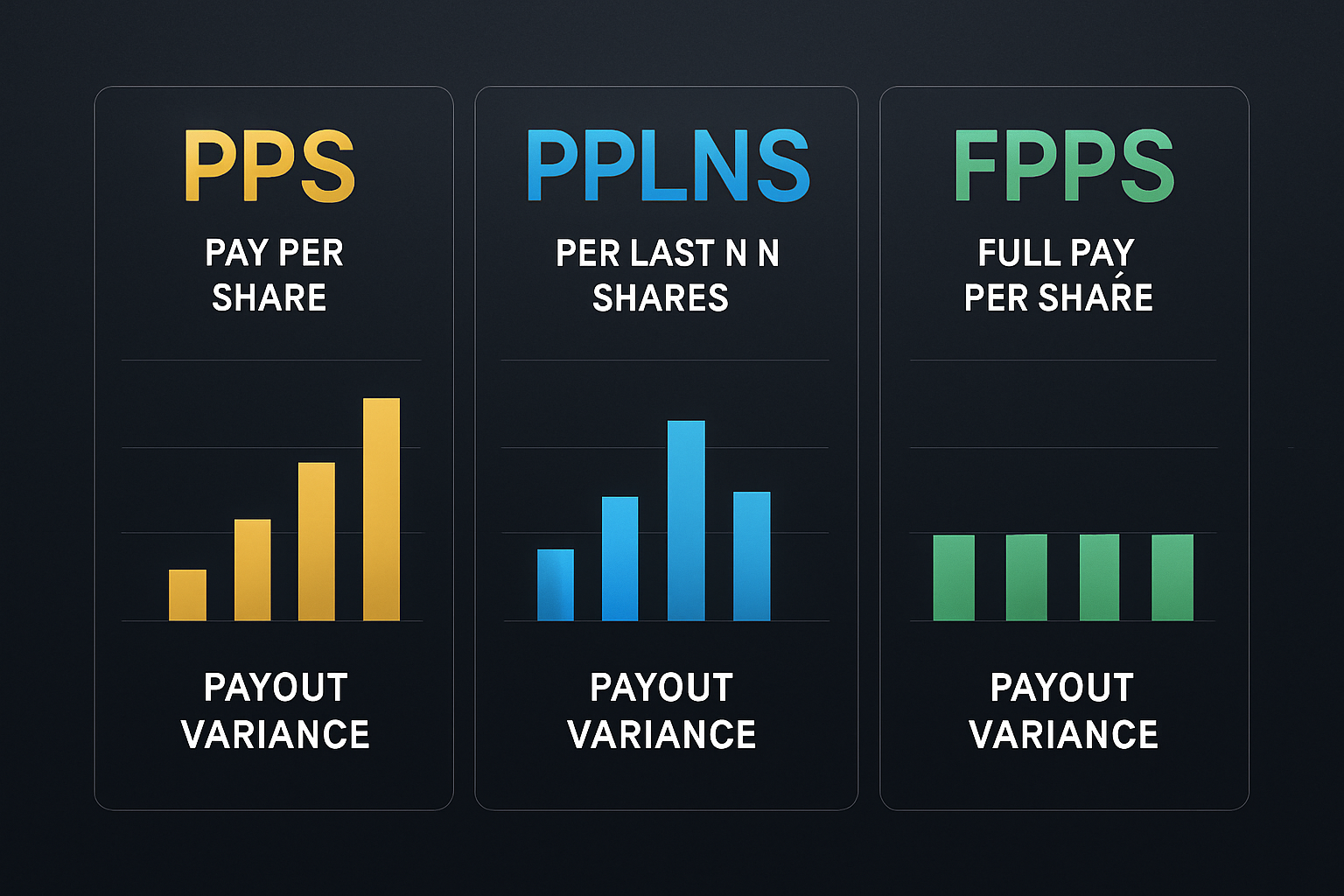
Before comparing specific pools, understand the four payout structures you’ll encounter:
| Model | How It Works | Variance | Best For |
|---|---|---|---|
| PPS (Pay Per Share) | Fixed payment per valid share submitted, regardless of whether the pool finds a block | Very Low | Predictable income; steady payouts |
| PPLNS (Pay Per Last N Shares) | Payment based on your contribution to the last N shares before a block is found | Higher | Loyal long-term miners; rewards consistency |
| FPPS (Full Pay Per Share) | PPS + your proportional share of transaction fees from each block | Very Low | Maximum income capture including tx fees |
| PPS+ | PPS base rate + bonus when pool finds blocks with above-average fees | Low-Medium | Balance of predictability and upside |
Practical takeaway: For ZEC and XMR mining where block rewards dominate income, PPS or PPLNS is fine. For BTC, where transaction fees increasingly matter (and can represent 10–30% of block reward in high-fee periods), FPPS captures the most total income. Never use a pool that charges fees above 2% for any coin — the market is competitive enough that quality pools price at 0–1.5%.
Best ZEC Mining Pools 2026
Zcash uses the Equihash algorithm, and in 2026 the Antminer Z15 Pro (840 KSol/s) and Z15 (420 KSol/s) dominate ZEC hashrate. Pool selection matters in ZEC more than in BTC because the network is smaller — pool hashrate concentration and payout minimums can both affect how quickly you accumulate rewards.
1. Flypool (Bitfly) — Best Overall ZEC Pool
- Fee: 1%
- Payout model: PPLNS
- Minimum payout: 0.01 ZEC
- Servers: US, EU, Asia
- Why choose it: Flypool (operated by Bitfly, the same team behind Ethermine) is consistently one of the two largest ZEC pools by hashrate. Large pool size means more frequent block finds and steadier earnings. The interface is clean, API-accessible, and mobile-friendly. PPLNS rewards consistent uptime — if your Z15 Pro runs 24/7, PPLNS works in your favor.
2. 2Miners — Best for Transparency
- Fee: 1%
- Payout model: PPLNS / PPS+
- Minimum payout: 0.01 ZEC
- Servers: US, EU, Asia
- Why choose it: 2Miners publishes full block stats and has a strong reputation for transparent reporting. They offer both PPLNS and PPS+ variants — choose PPS+ (zec.2miners.com) if you prefer smoother daily payouts. Especially popular with European miners.
3. F2Pool — Best for Multi-Coin Operators
- Fee: 2%
- Payout model: PPS+
- Minimum payout: 0.1 ZEC
- Servers: US, EU, Asia
- Why choose it: If you’re mining multiple coins (e.g., ZEC + BTC or ZEC + XMR across different machines), F2Pool lets you manage everything in one dashboard. The 2% fee is higher than competitors — it costs an extra $0.43/day on a Z15 Pro versus a 1% pool. Worthwhile only if you value unified account management.
4. ViaBTC — Best Uptime Record
- Fee: 2% (PPLNS) / 4% (PPS)
- Payout model: PPLNS or PPS
- Minimum payout: 0.1 ZEC
- Why choose it: ViaBTC has maintained near-100% uptime since 2016 and handles high-hashrate miners well. The 4% PPS fee is high; use the PPLNS option. Best for operators who want a proven, stable pool with a long track record — and are willing to pay slightly more for it.
ZEC Pool Summary
| Pool | Fee | Model | Min Payout | Best For |
|---|---|---|---|---|
| Flypool | 1% | PPLNS | 0.01 ZEC | Best overall — large, low minimum |
| 2Miners | 1% | PPLNS/PPS+ | 0.01 ZEC | Best transparency, PPS+ option |
| F2Pool | 2% | PPS+ | 0.1 ZEC | Multi-coin operators |
| ViaBTC | 2% | PPLNS | 0.1 ZEC | Maximum uptime reliability |
Recommendation: Start with Flypool or 2Miners (both 1% PPLNS). The 1% fee difference vs F2Pool/ViaBTC saves $0.43–$0.86/day per Z15 Pro — that’s $156–$314/year per machine purely from pool choice.
Best XMR Mining Pools 2026
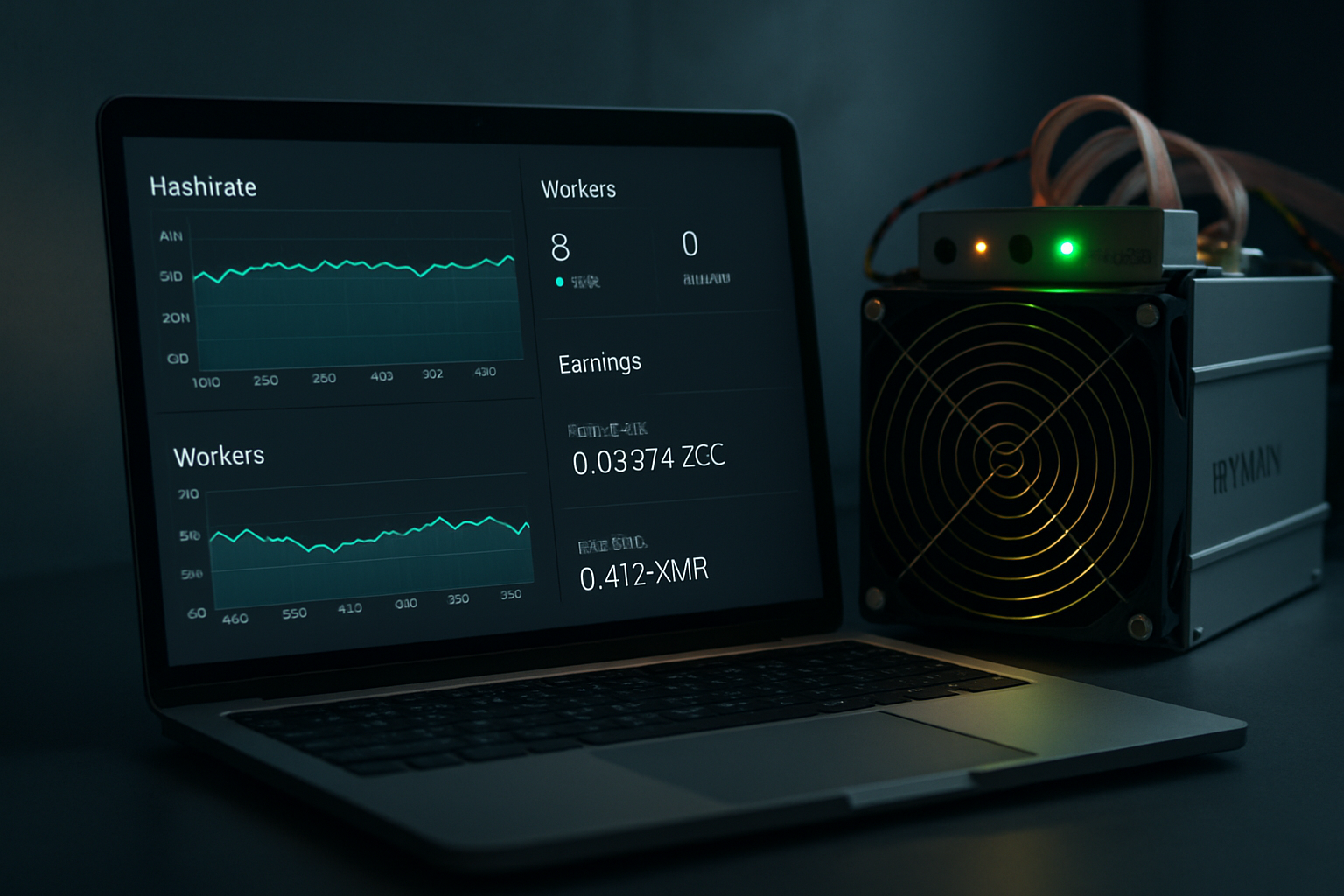
Monero uses RandomX, an algorithm designed to resist ASIC mining — yet MicroBT’s Antminer X9 (1 MH/s RandomX) makes it economically competitive with 2 MW power draw and $25.55/day net at $0.07/kWh. XMR pool selection has a unique dimension: the Monero community strongly values decentralization, and several pools have strong philosophical positions against hashrate centralization.
1. MoneroOcean — Best for Profit Optimization
- Fee: 0% (default, donations optional)
- Payout model: PPLNS
- Minimum payout: 0.003 XMR
- Special feature: Auto profit-switching — mines the most profitable RandomX-compatible coin at any moment and pays out in XMR
- Why choose it: MoneroOcean’s profit-switching is its killer feature. If another RandomX coin becomes momentarily more profitable than XMR (a common occurrence), your miner automatically switches while payouts remain in XMR. For ASIC operators who want to maximize income without manual monitoring, this is the optimal choice. Zero fees make it even more attractive.
2. P2Pool — Best for Decentralization
- Fee: 0%
- Payout model: PPLNS (decentralized)
- Minimum payout: ~0.0004 XMR (very low — paid with each share)
- Why choose it: P2Pool is a decentralized mining protocol — there is no central operator, no single point of failure, and no risk of pool operator fraud. Miners receive payouts directly to their wallet with each share they submit. The Monero community actively encourages P2Pool use to prevent any single pool from exceeding 51% of network hashrate. The tradeoff: solo variance — earnings can be lumpy. Best for operators who value sovereignty and network health equally with profit.
3. SupportXMR — Best Stability
- Fee: 0.6%
- Payout model: PPLNS
- Minimum payout: 0.1 XMR
- Why choose it: One of the oldest running Monero pools with a strong track record. The 0.6% fee is reasonable, payouts are reliable, and the pool has maintained fair hashrate distribution. Good choice for miners who want predictable PPLNS payouts from an established operator.
4. Nanopool — Best for Asia-Pacific Miners
- Fee: 1%
- Payout model: PPLNS
- Minimum payout: 0.1 XMR
- Why choose it: Strong server presence in Asia (Singapore, Japan) with low latency for Southeast Asian and East Asian operators. The 1% fee is competitive. Higher minimum payout than SupportXMR or MoneroOcean — factor this in if you’re running a single X9.
XMR Pool Summary
| Pool | Fee | Model | Min Payout | Best For |
|---|---|---|---|---|
| MoneroOcean | 0% | PPLNS + switch | 0.003 XMR | Maximum profit via auto-switching |
| P2Pool | 0% | Decentralized | ~0 XMR | Network decentralization + sovereignty |
| SupportXMR | 0.6% | PPLNS | 0.1 XMR | Stable established pool |
| Nanopool | 1% | PPLNS | 0.1 XMR | Asia-Pacific low latency |
Recommendation: Use MoneroOcean if you want to maximize income passively — the profit-switching feature routinely outperforms static pool mining by 5–15% on a monthly basis. Use P2Pool if you care about network health and want trustless, direct payouts.
Best BTC Mining Pools 2026
Bitcoin mining pool selection is more competitive and consequential than any other coin. At BTC $81,275 and current difficulty, the SHA-256 pools are processing enormous aggregate hashrate — and transaction fees during busy periods can represent a meaningful share of block rewards. This makes FPPS the preferred payout model for BTC: it captures both the block subsidy and transaction fee revenue proportionally.
1. Foundry USA — Best for North American Miners
- Fee: 0% (included in spread) — effectively ~1.5–2% when compared to FPPS competitors
- Payout model: FPPS
- Minimum payout: 0.005 BTC
- Why choose it: Foundry USA is the largest single Bitcoin mining pool by hashrate as of 2026, consistently controlling 25–35% of network hashrate. The scale provides extremely consistent block finding. Designed for institutional and semi-institutional operators. US-based servers with strong latency for North American miners. No upfront fees; revenue is captured through the FPPS spread.
2. Antpool — Best Integration with Bitmain Hardware
- Fee: 0% PPLNS / 2.5% PPS+
- Payout model: PPLNS or PPS+
- Minimum payout: 0.001 BTC
- Why choose it: Operated by Bitmain — deeply integrated with Antminer hardware management. If you run a fleet of S23 Hyd 3U or S21 XP+ machines, the unified Antpool + Antminer dashboard reduces management overhead. Use PPLNS (0% fee) for the best economics, PPS+ for predictability.
3. ViaBTC — Best FPPS Rate
- Fee: 2% (PPS+) / 4% (PPS)
- Payout model: PPS+ or PPLNS
- Minimum payout: 0.0001 BTC
- Why choose it: ViaBTC’s very low minimum payout (0.0001 BTC) makes it ideal for smaller operations or operators who want to accumulate BTC quickly without waiting for 0.005 BTC thresholds. The 2% PPS+ fee is competitive for the income stability it provides. PPS option exists but at 4% is not recommended.
4. Braiins Pool (formerly Slush Pool) — Best for Independent Miners
- Fee: 2% FPPS
- Payout model: FPPS (includes tx fees)
- Minimum payout: 0.001 BTC
- Why choose it: The world’s first Bitcoin mining pool (launched 2010) and still operator-independent — not owned by a hardware manufacturer. Braiins also develops Braiins OS firmware, which can extract additional efficiency from compatible ASICs. Good choice for operators who want institutional-quality infrastructure without being tied to a hardware brand’s pool.
5. F2Pool — Best for Global Operators
- Fee: 2.5% PPS+
- Payout model: PPS+
- Minimum payout: 0.005 BTC
- Why choose it: F2Pool has server infrastructure across North America, Europe, and Asia, making it the best choice for globally distributed mining fleets where minimizing latency across regions matters. The 2.5% PPS+ fee is slightly above market average — justify it only if you genuinely need multi-region redundancy.
BTC Pool Summary
| Pool | Fee | Model | Min Payout | Best For |
|---|---|---|---|---|
| Foundry USA | ~0–2% | FPPS | 0.005 BTC | North America, institutional scale |
| Antpool | 0% / 2.5% | PPLNS/PPS+ | 0.001 BTC | Bitmain hardware operators |
| ViaBTC | 2% | PPS+ | 0.0001 BTC | Low minimum payout, PPS+ stability |
| Braiins Pool | 2% | FPPS | 0.001 BTC | Independent operators, Braiins OS users |
| F2Pool | 2.5% | PPS+ | 0.005 BTC | Global multi-region fleets |
How Pool Fees Impact Real Profit: Z15 Pro Example
Abstract fee percentages become real money fast when you run the numbers on a specific miner. The Z15 Pro earns $42.63/day net at $0.07/kWh with ZEC at $549:
| Pool Fee | Daily Fee Cost | Monthly Cost | Annual Cost | Net Annual Income |
|---|---|---|---|---|
| 0% (MoneroOcean / P2Pool style) | $0 | $0 | $0 | $15,560 |
| 1% (Flypool / 2Miners) | $0.43 | $13 | $156 | $15,404 |
| 2% (F2Pool / ViaBTC) | $0.85 | $26 | $311 | $15,249 |
| 3% | $1.28 | $38 | $467 | $15,093 |
| 4% (ViaBTC PPS) | $1.71 | $51 | $623 | $14,937 |
Over a single year, choosing a 2% pool over a 1% pool costs $155 — for doing nothing except pointing your miner at a different stratum address. With 10 Z15 Pros, that’s $1,550/year extracted purely by pool fee choice. The math is even more stark for BTC miners where daily income figures are higher in absolute dollar terms.
Pool fee optimization is the easiest single action you can take to improve mining returns without touching your hardware. Pair it with the BT-Miners live profitability calculator to see real-time net income across all miner models.
How to Switch Pools on Your ASIC Miner
Switching pools takes under 5 minutes on any ASIC miner and requires no hardware changes:
- Access your miner’s web interface — enter the miner’s IP address (found via your router’s DHCP table or a network scanner like Advanced IP Scanner) in a browser
- Navigate to Miner Configuration → Pool Settings
- Enter the new pool’s stratum address — format is typically
stratum+tcp://pool.address.com:PORT - Set your wallet address as the worker username and any label as the password (e.g.,
your_wallet_address.rig1) - Save and apply — the miner reconnects to the new pool within 30 seconds
- Verify on the pool’s dashboard — your worker should appear within 1–2 minutes
For Antminer Z15 Pro / Z15 / X9, the stratum configuration is under Miner Configuration → Pools in the web UI. You can configure up to three failover pools — always set a backup pool (such as a second reputable option from this guide) so mining continues uninterrupted if the primary pool experiences downtime.
Frequently Asked Questions
Does pool size affect my earnings?
Under PPLNS and FPPS, a larger pool finds blocks more frequently, which smooths out your payout variance. Individual earnings per TH/s are theoretically equal across pools of different sizes over time — but practically, larger pools mean smaller gaps between payouts, which benefits operators who reinvest or sell regularly.
Can I mine ZEC and XMR on the same pool account?
Not directly — ZEC (Equihash) and XMR (RandomX) use different algorithms and require separate hardware. However, F2Pool supports both ZEC and XMR under one account if you’re running both a Z15 Pro and an X9. MoneroOcean is XMR-only. Flypool is ZEC-only (Bitfly operates separate pools per coin).
What happens if my pool goes offline?
Configure failover pools in your miner’s pool settings (slots 2 and 3). Most ASICs automatically switch to the backup pool within 60 seconds if the primary fails. Never run with only one pool configured — unplanned downtime directly reduces your income.
Is solo mining viable in 2026?
For ZEC: at Z15 Pro hashrate (840 KSol/s), expected solo block time is roughly 250–400 days depending on network difficulty. For XMR with an X9 (1 MH/s): similar solo variance. For BTC with any single ASIC: statistically years between blocks. Solo mining is not recommended for commercial operation — use P2Pool if you want decentralized mining that still yields regular payouts.
Which pool pays out the fastest?
Minimum payout threshold determines how quickly ZEC or XMR accumulates in your wallet. Flypool and 2Miners (0.01 ZEC minimum) pay out faster than F2Pool or ViaBTC (0.1 ZEC minimum) for ZEC miners. MoneroOcean (0.003 XMR minimum) is the fastest-paying XMR pool. For BTC, ViaBTC (0.0001 BTC) pays out most frequently.
Ready to start mining? Browse the full lineup of Antminer Z15 Pro, Antminer X9, and BTC ASIC miners at BT-Miners — and use the live profitability calculator to model your exact returns at your electricity rate before you buy.