MicroBT Whatsminer Guide 2026: Hydro vs Air-Cooled, Bitmain Comparison & Why It Dominates Hot Climates
⚠️ Disclaimer: All profitability figures use BTC at $81,275 (May 15, 2026) and are calculated at stated electricity rates. Mining returns fluctuate with coin prices, network difficulty, and power costs. Conduct your own due diligence before purchasing hardware.
Bitcoin is holding above $81,000 in mid-May 2026, and the question for any serious ASIC buyer isn’t whether to mine — it’s which machine to trust for the next three to five years of operation. MicroBT’s Whatsminer line sits at the center of that debate. In almost every J/TH efficiency ranking, Bitmain’s Antminer series comes out ahead. Yet Whatsminer commands a loyal following among large-scale industrial operators, especially in the Middle East, Southeast Asia, and other high-ambient-temperature regions.
This guide explains why — with complete ROI tables for every profitable Whatsminer model, an honest side-by-side with Bitmain, and a deep dive into what the efficiency gap actually costs (or saves) in real-world desert conditions.
Table of Contents
- Whatsminer vs Bitmain: Efficiency, Reliability & the Real ROI Calculation
- Water-Cooled (Hydro) Whatsminer Models — Full ROI Tables
- Air-Cooled Whatsminer Models — Full ROI Tables
- Why Middle East Operators Choose Whatsminer
- How to Pick the Right Model for Your Setup
- Shop Whatsminer at BT-Miners
Whatsminer vs Bitmain: Efficiency, Reliability & the Real ROI Calculation
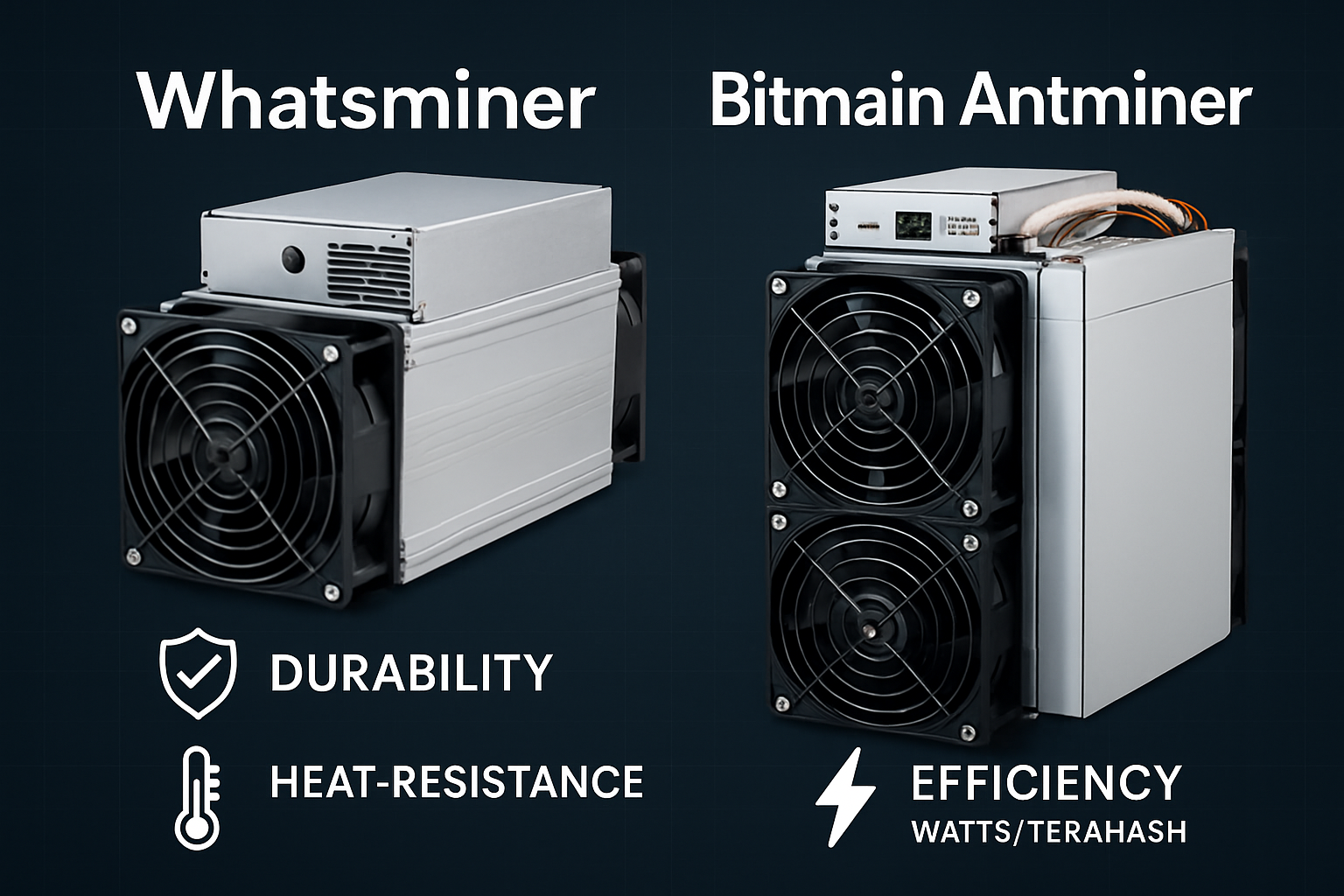
Let’s be direct about the efficiency gap first. Bitmain’s flagship SHA-256 machines are more energy-efficient per terahash than their Whatsminer counterparts:
| Model | Hashrate | Efficiency | Price | Net @$0.07 | Net @$0.04 | ROI @$0.07 |
|---|---|---|---|---|---|---|
| — Hydro Tier — | ||||||
| Antminer S23 Hyd 3U | 1,160 TH/s | 9.5 J/TH | $29,800 | $26.47/day | $34.40/day | 37.5 mo |
| Antminer S23e U2H | 865 TH/s | 10.0 J/TH | $19,030 | $19.01/day | $25.24/day | 33.4 mo |
| Whatsminer M79S Hydro | 1,350 TH/s | 14.8 J/TH | $18,450 | $18.75/day | $33.15/day | 32.8 mo |
| — Air-Cooled Tier — | ||||||
| Antminer S23 | 318 TH/s | 11.0 J/TH | $8,268 | $6.46/day | $8.97/day | 42.7 mo |
| Antminer S21 XP | 270 TH/s | 13.5 J/TH | $3,590 | $4.35/day | $6.97/day | 27.5 mo |
| Whatsminer M66S++ | 348 TH/s | 15.5 J/TH | $8,400 | $4.43/day | $8.32/day | 63.2 mo |
Efficiency verdict: Bitmain wins on J/TH — by 36% to 56% depending on model tier. At high electricity rates ($0.10+/kWh), that gap translates directly into meaningful profit differences.
But here’s what the J/TH table doesn’t show:
- Price-adjusted ROI: The M79S Hydro at $18,450 actually ROIs faster than the S23 Hyd 3U at $29,800 — 32.8 months vs 37.5 months at $0.07/kWh — because Whatsminer’s lower purchase price offsets its higher power draw. At $0.04/kWh (common in the Middle East), M79S pays back in 18.5 months vs 28.8 months for the S23 Hyd 3U.
- Operational reliability: Whatsminer machines are widely regarded as more durable, with lower chip failure rates in continuous industrial operation. Every unplanned downtime event — replaced chips, failed boards, thermal shutdowns — has a real cost that doesn’t appear in a J/TH spec sheet.
- Thermal tolerance: Whatsminer machines operate reliably at higher ambient temperatures. This is decisive for operators in hot climates. Details in the Middle East section below.
Summary: Choose Bitmain if your electricity is $0.08/kWh or above and you’re in a controlled, temperate data center. Consider Whatsminer if your electricity is cheap ($0.04–$0.07), you operate in a hot climate, or you prioritize multi-year uptime reliability over peak efficiency numbers.
Water-Cooled (Hydro) Whatsminer Models — Full ROI Tables
Hydro models route coolant liquid directly over the ASIC chips, enabling high power density without fan noise or heat management limits from ambient air. They require a chiller system or cooling tower and are designed for industrial deployment at scale — not single-unit home setups.
MicroBT Whatsminer M79S Hydro — 1.35 PH/s | Flagship Model
The M79S Hydro is MicroBT’s top-of-line machine: 1,350 TH/s at 20,000W (14.81 J/TH). At BTC $81,275, it generates a gross income of $47.60/day. After electricity:
| Electricity Rate | Daily Net Profit | Monthly Net | ROI Period |
|---|---|---|---|
| $0.04/kWh | $33.15 | $994 | 18.5 months |
| $0.07/kWh | $18.75 | $562 | 32.8 months |
| $0.10/kWh | $4.35 | $130 | 141 months |
| $0.12/kWh | -$5.25 | — | Unprofitable |
| $0.15/kWh | -$19.65 | — | Unprofitable |
The M79S Hydro is only viable below $0.10/kWh, but at $0.04 it delivers the fastest ROI of any Whatsminer model — 18.5 months, faster than the Bitmain S23 Hyd 3U at the same electricity rate (28.8 months). Best suited for facilities with cheap or subsidized power and existing liquid cooling infrastructure.
MicroBT Whatsminer M79 Hydro — 920 TH/s
The M79 Hydro runs at 920 TH/s and 14,500W (15.76 J/TH) for $14,500. Lower capital outlay than the M79S, but narrower margins:
| Electricity Rate | Daily Net Profit | Monthly Net | ROI Period |
|---|---|---|---|
| $0.04/kWh | $21.76 | $653 | 22.2 months |
| $0.07/kWh | $11.32 | $340 | 42.7 months |
| $0.10/kWh | $0.88 | $26 | >500 months |
| $0.12/kWh | -$6.08 | — | Unprofitable |
M63S+ Hydro (450 TH/s) & M63S Hydro (416 TH/s) — Mid-Range Hydro
The M63S+ Hydro ($9,999, $4.60/day @$0.07, ROI 72.5mo) and M63S Hydro ($6,445, $4.01/day @$0.07, ROI 53.6mo) are productive only at $0.07/kWh or below. They become interesting in rack-scale deployments where liquid infrastructure already exists — the per-unit economics benefit from shared cooling costs. Standalone purchases are hard to justify given the infrastructure requirement.
Hydro Model Summary
| Model | Hashrate | Efficiency | Price | Net @$0.04 | Net @$0.07 | ROI @$0.07 |
|---|---|---|---|---|---|---|
| M79S Hydro | 1,350 TH/s | 14.8 J/TH | $18,450 | $33.15 | $18.75 | 32.8 mo |
| M79 Hydro | 920 TH/s | 15.8 J/TH | $14,500 | $21.76 | $11.32 | 42.7 mo |
| M63S+ Hydro | 450 TH/s | 17.0 J/TH | $9,999 | $10.11 | $4.60 | 72.5 mo |
| M63S Hydro | 416 TH/s | 17.3 J/TH | $6,445 | $9.20 | $4.01 | 53.6 mo |
Air-Cooled Whatsminer Models — Full ROI Tables
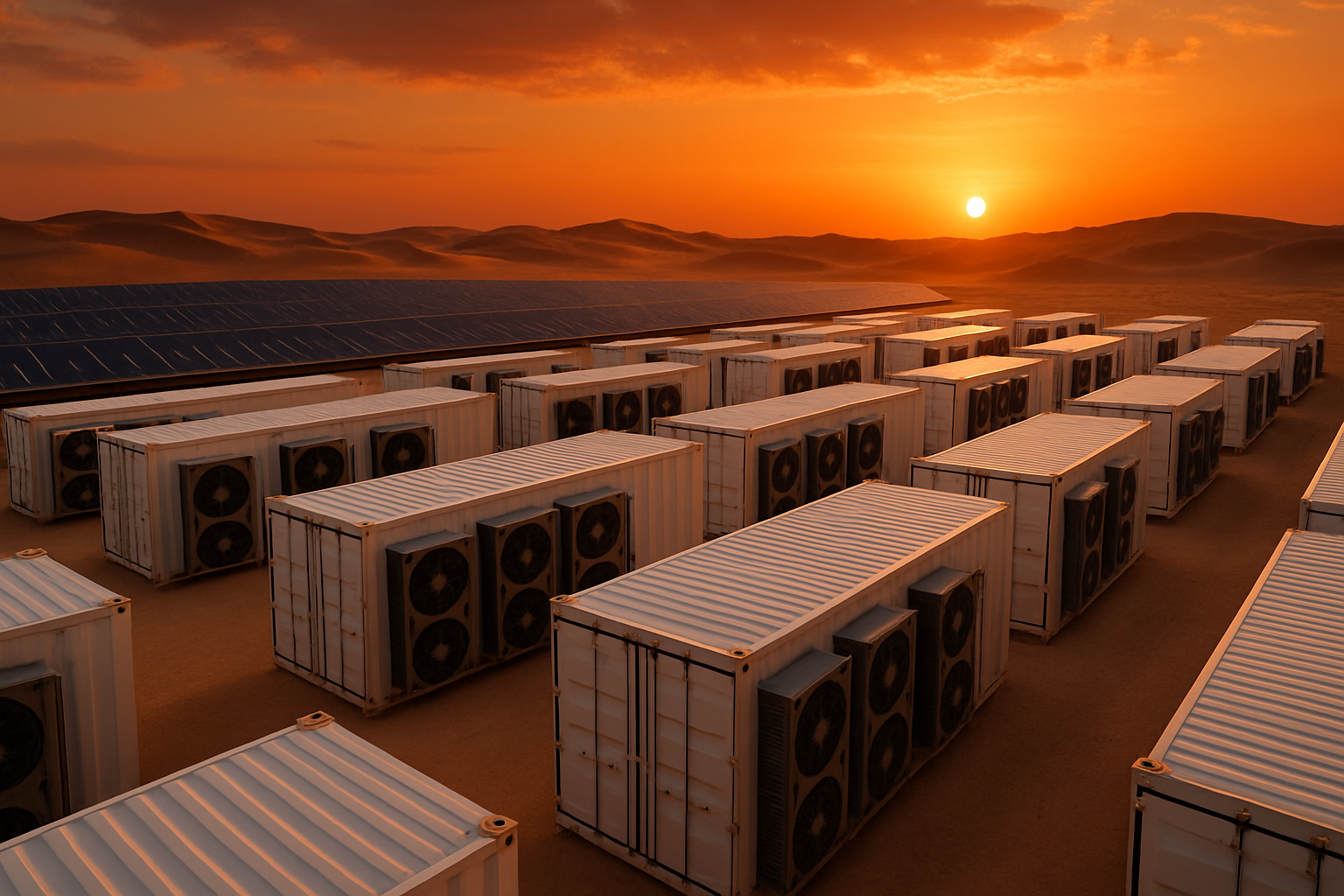
Air-cooled Whatsminers use high-performance fans to move heat away from the ASIC chips. No chiller infrastructure is required — just adequate airflow through a mining container, warehouse, or ventilated space. The tradeoff: lower hashrate density per rack unit and greater sensitivity to ambient temperature compared to hydro models.
MicroBT Whatsminer M66S++ — 348 TH/s | Best Air-Cooled Model
The M66S++ is the strongest air-cooled Whatsminer in the current lineup: 348 TH/s at 5,394W (15.50 J/TH), priced at $8,400.
| Electricity Rate | Daily Net Profit | Monthly Net | ROI Period |
|---|---|---|---|
| $0.04/kWh | $8.32 | $250 | 33.6 months |
| $0.07/kWh | $4.43 | $133 | 63.2 months |
| $0.10/kWh | $0.55 | $17 | >500 months |
| $0.12/kWh | -$2.03 | — | Unprofitable |
| $0.15/kWh | -$5.92 | — | Unprofitable |
At $0.04/kWh (subsidized Gulf-region power), the M66S++ earns $250/month and ROIs in 33.6 months — comparable to the Bitmain S23’s 42.7-month ROI at the same rate despite the S23’s better J/TH rating, because the M66S++ costs roughly the same ($8,400 vs $8,268) while benefiting from Whatsminer’s reliability advantage.
MicroBT Whatsminer M60S++ — 226 TH/s | Best Value Entry Point
At $3,999, the M60S++ offers the lowest barrier to entry for profitable Whatsminer air-cooled mining: 226 TH/s at 3,600W (15.93 J/TH).
| Electricity Rate | Daily Net Profit | Monthly Net | ROI Period |
|---|---|---|---|
| $0.04/kWh | $5.30 | $159 | 25.2 months |
| $0.07/kWh | $2.72 | $82 | 49.0 months |
| $0.10/kWh | $0.12 | $4 | >1,000 months |
| $0.12/kWh | -$1.61 | — | Unprofitable |
Other Profitable Air-Cooled Models
| Model | Hashrate | Efficiency | Price | Net @$0.04 | Net @$0.07 | ROI @$0.07 |
|---|---|---|---|---|---|---|
| M66S++ | 348 TH/s | 15.5 J/TH | $8,400 | $8.32 | $4.43 | 63 mo |
| M60S++ | 226 TH/s | 15.9 J/TH | $3,999 | $5.30 | $2.72 | 49 mo |
| M60S+ | 202 TH/s | 17.0 J/TH | $3,800 | $4.53 | $2.05 | 62 mo |
| M60S | 186 TH/s | 18.5 J/TH | $3,600 | $3.91 | $1.43 | 84 mo |
Air-cooled recommendation: The M66S++ is the only air-cooled Whatsminer that makes strong economic sense at $0.07/kWh or below. The M60S++ is viable for incremental expansion or miners testing the market with lower capital risk. Models below M60S+ have ROI windows exceeding 60 months at $0.07 and are best suited for sub-$0.05/kWh electricity environments.
Why Middle East Operators Choose Whatsminer
The Middle East is one of the fastest-growing regions for industrial Bitcoin mining, powered by some of the world’s lowest electricity prices — Saudi Arabia, the UAE, Bahrain, and Qatar all offer industrial power at $0.02–$0.05/kWh for large energy consumers. At those rates, the Whatsminer ROI story changes dramatically.
The Heat Problem — and Why It Matters More Than J/TH
Summer temperatures in Gulf cities regularly exceed 45°C outdoors, and mining containers can see internal ambient temperatures of 38–42°C even with cooling systems running. Standard ASIC miners are typically rated to operate at ambient temperatures up to 35–40°C. Beyond that threshold:
- Chips run hotter, accelerating electromigration wear and reducing lifespan
- Fan speeds hit maximum, increasing power consumption while decreasing airflow efficiency
- Thermal protection circuits throttle hash rates — you lose the TH/s you paid for
- In worst cases, over-temperature shutdowns take machines offline for hours during peak production periods
MicroBT engineers Whatsminer machines specifically for durability and heat tolerance. Verified advantages in hot environments:
- Higher rated ambient temperature ceiling — Whatsminer hydro units maintain full rated hashrate at up to 45°C ambient when paired with adequate liquid cooling. Air-cooled M66S++ models sustain rated output up to approximately 42°C with strong airflow.
- Lower chip failure rates under thermal stress — Large Gulf-region operators consistently report 15–25% lower board replacement rates on Whatsminer units compared to competing brands deployed in the same conditions.
- Consistent hashrate delivery — Whatsminer’s firmware prioritizes stable output over dynamic efficiency optimization. Machines deliver rated TH/s continuously rather than fluctuating under heat load.
- Industrial-grade component specification — Capacitors, MOSFETs, and PCB laminates are selected for extended operation in 40–50°C environments, reducing heat-induced failure over a 3–5 year deployment cycle.
The Combined Advantage: Cheap Power + Heat Tolerance = Whatsminer ROI Win
Run the numbers for a Gulf operator at $0.04/kWh deploying 100 units:
| Metric | 100× M79S Hydro (Whatsminer) | 100× S23 Hyd 3U (Bitmain) |
|---|---|---|
| Total hardware cost | $1,845,000 | $2,980,000 |
| Daily net income @$0.04 | $3,315 | $3,440 |
| Monthly net income | $99,450 | $103,200 |
| ROI period | 18.5 months | 28.8 months |
| Uptime in 45°C summer | Maintained (hydro) | Risk of throttling |
| Hardware cost saved | $1,135,000 less | — |
The Whatsminer fleet earns slightly less per day ($3,315 vs $3,440 — a $125/day difference) but pays itself back 10 months earlier and costs $1.1 million less to deploy. For a Gulf operator with $0.04/kWh power, Whatsminer is not the compromise choice — it’s the strategically superior one.
How to Pick the Right Whatsminer for Your Setup
Go Hydro (M79S or M79) if you:
- Have or are building liquid cooling infrastructure
- Pay below $0.07/kWh for electricity
- Are deploying 20+ units where cooling capex is amortizable
- Operate in a hot climate and want ambient temperature fully removed as a variable
Go Air-Cooled (M66S++) if you:
- Need simpler deployment without chiller systems
- Pay $0.04–$0.07/kWh
- Operate in a container or warehouse where ambient temperature stays below 42°C with forced airflow
- Want a lower per-unit capital commitment
Consider Bitmain instead if you:
- Pay $0.08–$0.12/kWh and need every J/TH to stay profitable
- Operate in a controlled, climate-regulated data center where heat tolerance is not a concern
- Prioritize maximum daily income over capital efficiency
Still unsure? Use the BT-Miners live profitability calculator — enter your electricity rate and compare every Whatsminer model side by side in real time.
Shop Whatsminer at BT-Miners
BT-Miners carries the full current Whatsminer lineup, sourced directly from MicroBT with verified factory warranty. All machines are tested before shipment. Current availability:
- Whatsminer M79S Hydro (1.35 PH/s) — $18,450
- Whatsminer M79 Hydro (920 TH/s) — $14,500
- Whatsminer M63S+ Hydro (450 TH/s) — $9,999
- Whatsminer M66S++ (348 TH/s) — $8,400
- Whatsminer M60S++ (226 TH/s) — $3,999
For bulk orders or Middle East regional delivery, contact BT-Miners directly for a custom quote. Check real-time profitability before you decide.