Bitcoin Hashrate Falls to 918 EH/s: How the June 2026 Difficulty Drop Reshapes ASIC Mining Margins
⚠️ Disclaimer: Mining profitability fluctuates with electricity costs, cryptocurrency prices, and network difficulty. All figures reflect conditions as of June 5, 2026. Past performance does not indicate future results. Conduct your own due diligence before purchasing mining equipment.
Bitcoin’s network hashrate has dropped to 918.2 EH/s, triggering an expected -9.21% difficulty adjustment at the next epoch — one of the larger downward corrections in recent months. For SHA-256 miners (the machines that power the Bitcoin network using Bitcoin’s cryptographic hashing algorithm) still running, the adjustment delivers roughly 10% more BTC per unit of hash per day. But the broader question is whether that lift meaningfully changes the economics for operators at current BTC prices of $63,865.
Why Bitcoin’s Hashrate Is Falling in June 2026
The BTC network hashrate — the collective computing power directed at mining Bitcoin, measured in exahashes per second (EH/s) — peaked above 1,000 EH/s earlier in 2026. It has since shed roughly 90 EH/s to reach 918 EH/s today. The cause is straightforward: Bitcoin’s price has retreated from approximately $81,000 in early May to $63,865 — a decline of about 21%. When BTC falls, miners running at higher electricity costs or on less efficient hardware stop generating positive margins and shut their machines off.
This is the capitulation process in practice. Hashrate exits first from operations with higher power costs and older hardware. What remains is a leaner network: operators with lower electricity contracts, more efficient machines, or both. The departure of roughly 90 EH/s caused the network to mine blocks slightly slower than the target 10-minute interval, which is what triggers a downward difficulty adjustment at the next 2,016-block epoch.
How a -9.21% Difficulty Adjustment Works for Miners
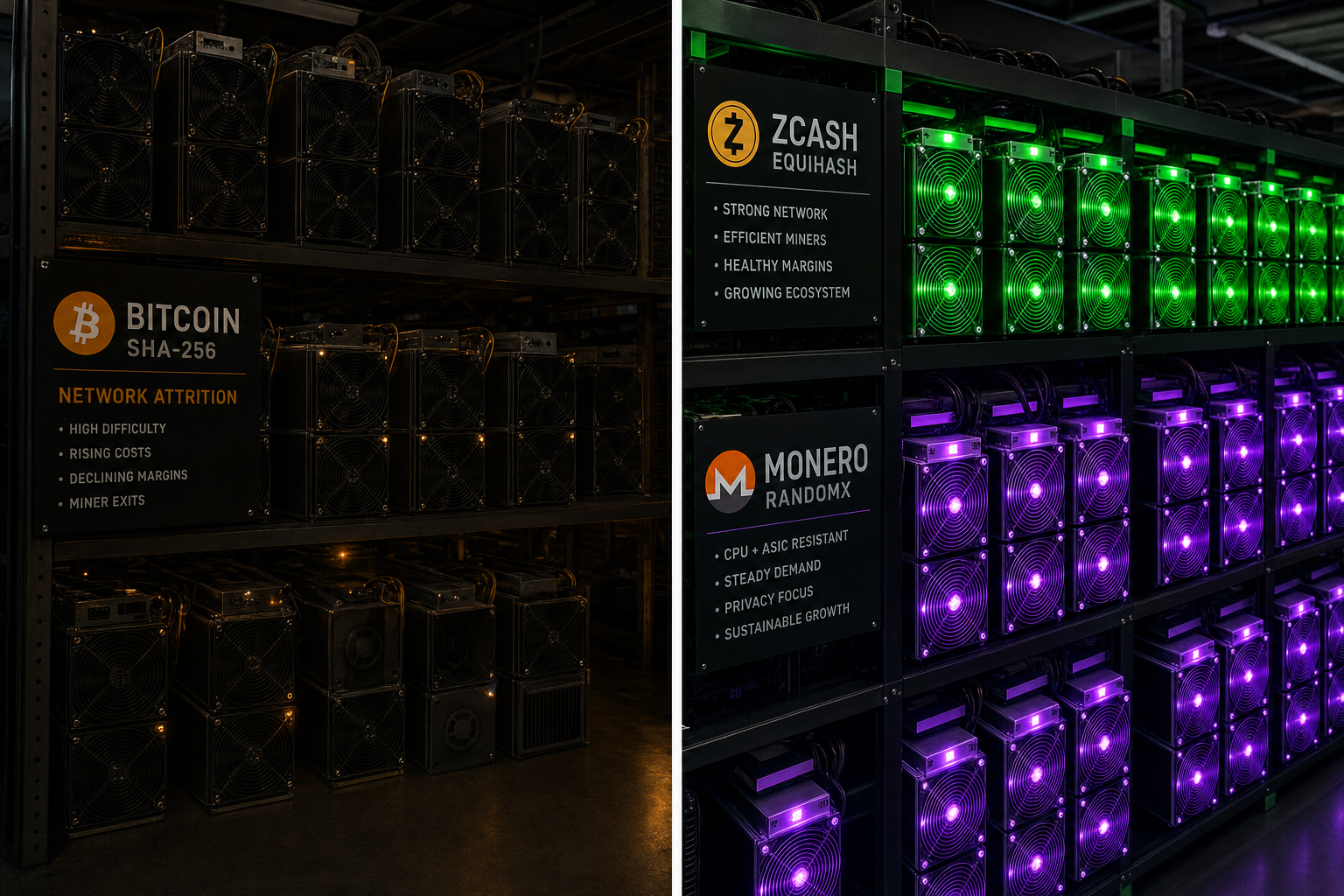
Bitcoin automatically recalibrates mining difficulty every 2,016 blocks to maintain the 10-minute average block interval. When hashrate falls, blocks arrive more slowly, and the protocol responds by lowering the difficulty target — making it proportionally easier to find a valid block hash.
The math for active miners: a difficulty reduction of d percent means each unit of hashrate contributes a larger fraction of total network work. Revenue per TH/s increases by a factor of 1 ÷ (1 − d). For the upcoming -9.21% adjustment:
Revenue multiplier = 1 ÷ (1 − 0.0921) ≈ 1.101
In practical terms: a miner currently earning $6.82 gross per day will earn approximately $7.51 gross per day after the adjustment, assuming BTC price and its own hashrate remain constant. That is a real improvement, though the absolute gain is modest for most air-cooled machines at current BTC prices.
SHA-256 Miner Margins Before and After the Adjustment
Current Profitability at BTC ,865
The following table shows net daily profit for representative Bitcoin miners across a range of electricity rates at current network conditions (pre-adjustment):
| Miner | Hashrate | Power (W) | Gross/day | Net @$0.04 | Net @$0.07 | Net @$0.10 | Breakeven |
|---|---|---|---|---|---|---|---|
| Antminer S23 Hyd 3U 1160T | 1,160 TH/s | 11,020 | $33.81 | $23.23 | $15.30 | $7.36 | $0.128/kWh |
| Bitdeer SealMiner A4 Pro Hyd 680T | 680 TH/s | 7,412 | $19.82 | $12.70 | $7.37 | $2.03 | $0.111/kWh |
| Bitdeer SealMiner A3 Pro Air 290T | 290 TH/s | 3,625 | $8.45 | $4.97 | $2.36 | -$0.25 | $0.097/kWh |
| Antminer S21 Pro+ 234T | 234 TH/s | 3,510 | $6.82 | $3.45 | $0.92 | -$1.60 | $0.081/kWh |
Note: Gross revenue calculated at BTC $63,865.02, current network difficulty (pre-adjustment). Net = gross − (power_kW × 24h × electricity rate). Hydro-cooled models require commercial data center infrastructure and are not suitable for home deployment.
Post-Adjustment Revenue: The ~10% Lift
After the -9.21% difficulty drop takes effect, gross revenue for all SHA-256 miners increases by approximately 10.1%. The table below shows how the same machines compare once the adjustment is applied:
| Miner | New Gross/day | Net @$0.04 | Net @$0.07 | Net @$0.10 | New Breakeven |
|---|---|---|---|---|---|
| Antminer S23 Hyd 3U 1160T | $37.23 | $26.65 | $18.72 | $10.78 | $0.141/kWh |
| Bitdeer SealMiner A4 Pro Hyd 680T | $21.82 | $14.70 | $9.37 | $4.03 | $0.123/kWh |
| Bitdeer SealMiner A3 Pro Air 290T | $9.30 | $5.82 | $3.21 | +$0.60 | $0.107/kWh |
| Antminer S21 Pro+ 234T | $7.51 | $4.14 | $1.61 | -$0.91 | $0.089/kWh |
Note: Post-adjustment gross = current gross × 1.101. BTC price and individual hashrate held constant for comparison. The actual adjustment date depends on block discovery pace and typically falls within a few days of the 2,016-block epoch completing.
The most notable shift: the Bitdeer SealMiner A3 Pro Air 290T moves from -$0.25/day to +$0.60/day at $0.10/kWh after the adjustment. For operators at commercial electricity rates near $0.09–$0.10/kWh, that is the practical difference between machines running at a loss and machines contributing positive margin. The breakeven threshold shifts from $0.097 to $0.107/kWh.
Electricity Breakeven: Which Machines Hold Up at K BTC
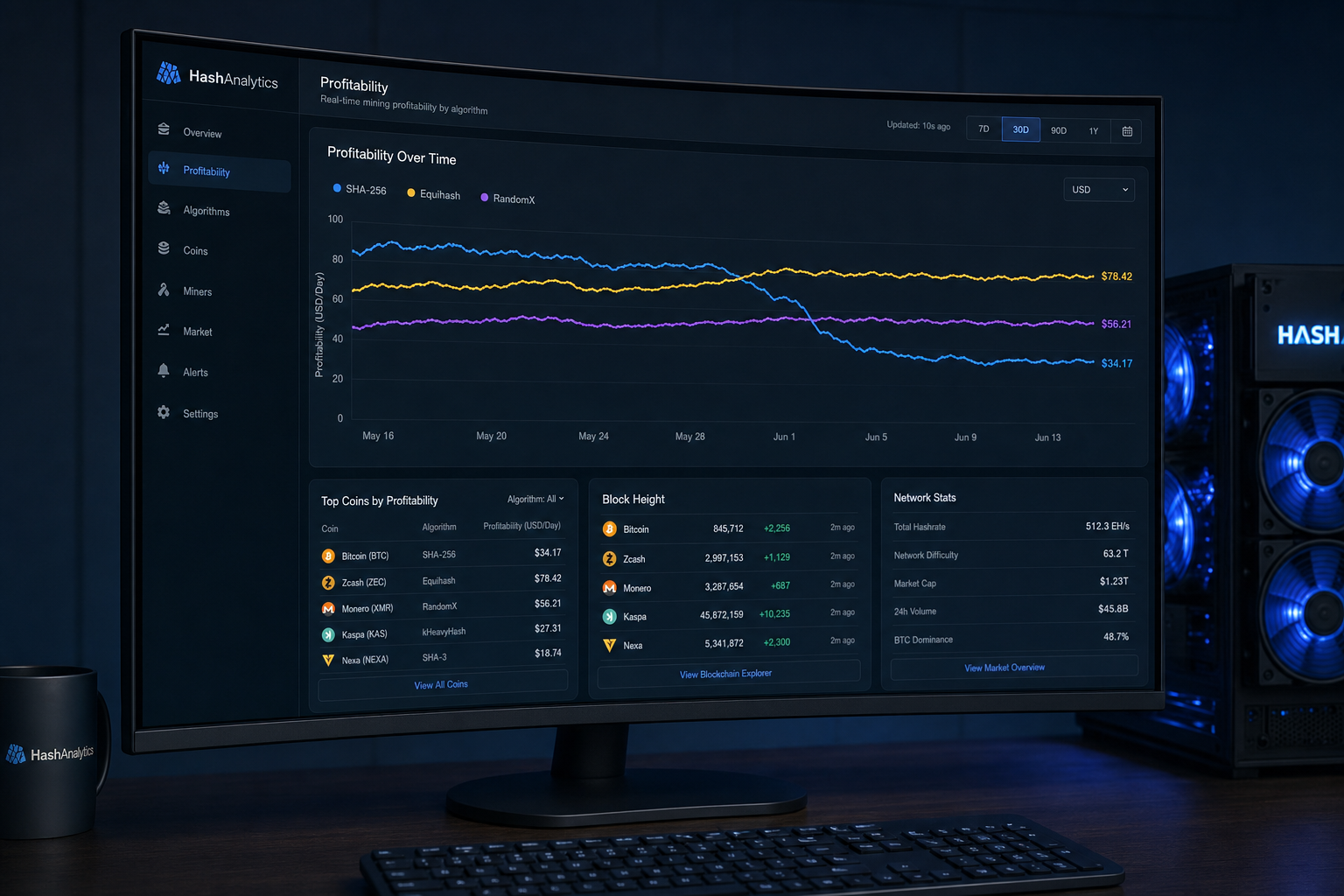
The difficulty drop improves the economics for all surviving miners, but it does not uniformly rescue operations that were already losing money at higher electricity rates. A plain-language summary by machine:
- Antminer S21 Pro+ 234T: Breakeven improves from $0.081 to $0.089/kWh. Profitable at residential rates below $0.08/kWh today; the post-adjustment window extends viability marginally toward $0.09/kWh. Still unprofitable at most commercial $0.10+ rates.
- Bitdeer SealMiner A3 Pro Air 290T: Breakeven improves from $0.097 to $0.107/kWh. Operators at exactly $0.10/kWh flip from marginally negative to $0.60/day positive — a meaningful inflection for commercial operations.
- Bitdeer SealMiner A4 Pro Hydro 680T: Breakeven improves from $0.111 to $0.123/kWh. Already profitable at most commercial data center rates; hydro cooling infrastructure required.
- Antminer S23 Hyd 3U 1160T: Breakeven improves from $0.128 to $0.141/kWh. Viable at sub-$0.05/kWh industrial power rates, though margins narrow considerably above that range. Enterprise-scale hydro infrastructure required.
The difficulty drop does not change the underlying price environment. For operators paying above $0.10/kWh, most air-cooled SHA-256 hardware remains unprofitable at $63,865 BTC, even after the adjustment. For context, a hypothetical BTC recovery toward $70K–$75K would improve SHA-256 margins more materially than the difficulty drop alone — though price direction remains uncertain and should not be factored into purchase decisions. Use the BT-Miners profitability calculator to model your specific electricity rate and hardware combination.
Equihash and RandomX ASICs: Unaffected by BTC Difficulty
Bitcoin’s difficulty adjustment has no effect on Equihash (Zcash) or RandomX (Monero) networks. These operate on entirely separate difficulty schedules driven by their own hashrate levels and block-time targets. The June 2026 BTC correction has not changed the economics for ZEC or XMR miners.
Current ROI data for the three leading altcoin ASICs, with ZEC at $454.97 and XMR at $376.20:
| Miner | Algorithm | Coin | Gross/day | Net @$0.04 | Net @$0.07 | Net @$0.10 | Price | ROI @$0.07 |
|---|---|---|---|---|---|---|---|---|
| Antminer Z15 Pro 840K | Equihash | ZEC | $35.43 | $32.76 | $30.76 | $28.76 | $4,100 | 4.4 mo |
| Antminer X9 1M | RandomX | XMR | $27.43 | $25.06 | $23.28 | $21.50 | $5,600 | 8.0 mo |
| Antminer Z15 420K | Equihash | ZEC | $17.72 | $16.27 | $15.18 | $14.10 | $3,600 | 7.9 mo |
Note: ZEC at $454.97, XMR at $376.20, as of June 5, 2026. These miners operate on separate networks and are unaffected by BTC difficulty changes. Altcoin prices carry their own volatility, separate from Bitcoin’s price cycle.
The earnings contrast with SHA-256 hardware is significant. The Antminer Z15 Pro earns $30.76/day net at $0.07/kWh — approximately 33 times what the Antminer S21 Pro+ earns at the same electricity rate. Its electricity breakeven sits well above $0.35/kWh, making power cost a secondary consideration for most operators. At $4,100 with current ZEC prices, the ROI is approximately 4.4 months.
It is worth noting that ZEC at $454.97 and XMR at $376.20 are both below the peaks seen in earlier months of 2026. Operators should model ROI at multiple price scenarios rather than relying solely on spot prices. Altcoin mining carries different risk factors than SHA-256 mining, including smaller market depth and coin-specific network dynamics.
What Miners Should Watch in the Coming Weeks
Several indicators will determine whether June 2026 represents a temporary floor or the start of continued pressure on SHA-256 economics:
- BTC price recovery: A hypothetical move toward $70K–$75K would improve SHA-256 margins across the board independent of difficulty — for illustrative purposes, at $67K the Antminer S21 Pro+ would likely cross back above breakeven at $0.10/kWh without needing the difficulty adjustment. Whether or when that price level is reached is not something this analysis can predict.
- Hashrate stabilization: If hashrate holds near 918 EH/s through the next epoch, difficulty could tick upward at the following adjustment. The current downward correction is contingent on continued low hashrate — not a permanent change.
- ZEC and XMR network difficulty: These operate on shorter adjustment windows than Bitcoin. Equihash and RandomX operators should monitor their respective network dashboards independently of BTC market movements.
- Hardware purchase timing: The window between a difficulty drop and the next upward correction can offer favorable entry economics for SHA-256 machines. Given current margins, a clear electricity cost calculation should precede any purchase decision.
Summary
The -9.21% Bitcoin difficulty adjustment is a direct consequence of BTC’s retreat from $81,000 to $63,865: approximately 90 EH/s of hashrate exited the network, and the protocol adjusted as designed. For miners who stayed online, the adjustment delivers approximately 10% more revenue per TH/s — enough to push the Bitdeer SealMiner A3 Pro Air above breakeven at $0.10/kWh, but insufficient to rescue higher-rate operations without a price recovery.
Equihash and RandomX hardware remains in a separate ROI tier. The Antminer Z15 Pro and Antminer X9 are unaffected by BTC’s difficulty cycles and continue to return capital in under nine months at standard electricity rates, driven by ZEC at $455 and XMR at $376 respectively.
For a personalized ROI analysis at your specific electricity rate, use the BT-Miners real-time profitability calculator.