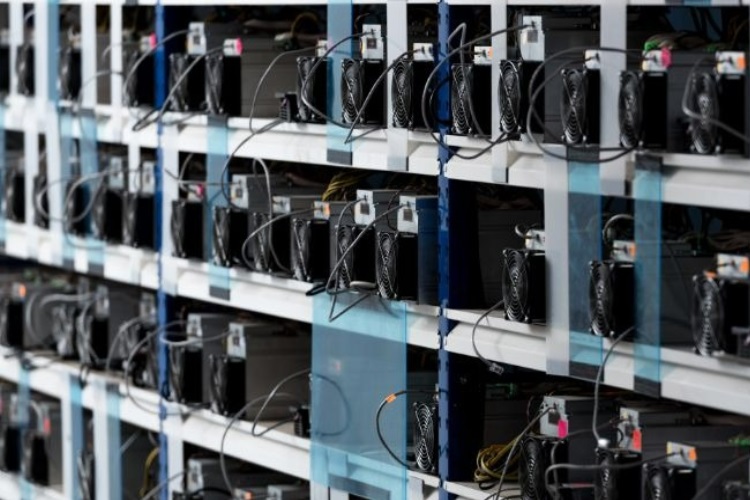
Why Zcash Could Benefit From a New Era of Global Surveillance and Digital Currencies
⚠️ Disclaimer: Mining profitability fluctuates with electricity costs, cryptocurrency prices, and network difficulty. The macroeconomic and regulatory discussion below reflects publicly reported trends as of June 2026 and is offered for informational purposes only — it is not financial or investment advice. All hardware figures reflect conditions as of 2026-06-15. Past performance does not indicate future results. Conduct your own due diligence before purchasing mining equipment or cryptocurrency.
Over the past few years, the global financial system has become harder to separate from geopolitics. Sanctions regimes, central bank digital currency (CBDC) pilots, and AI-driven transaction monitoring are all converging on the same outcome: more visibility into how money moves, and who is moving it. For a niche but persistent corner of the crypto market — privacy coins, and Zcash (ZEC) in particular — that trend has reopened a long-running investment debate. This piece looks at the macro backdrop, why Bitcoin doesn’t fully solve the privacy question, where Zcash’s zero-knowledge proof technology fits, and what it means in practical terms for miners running hardware like the Antminer Z15 Pro.
Financial Systems as Geopolitical Tools
The use of the dollar-denominated clearing system and messaging networks like SWIFT as instruments of foreign policy is not new — sanctions against Iran, Russia, North Korea, and other states have relied on this infrastructure for decades. What has changed is the frequency and speed with which financial access can be restricted, and the growing awareness among governments, institutions, and individuals that cross-border payment rails are not neutral plumbing — they are policy levers. Recent periods of heightened geopolitical tension, including conflicts in the Middle East, have repeatedly put this dynamic back in the headlines, prompting renewed discussion about alternative settlement systems that sit outside traditional correspondent banking.
This doesn’t mean any single event “causes” crypto adoption — the relationship is far more gradual. But each cycle of sanctions or financial-access disruption tends to nudge a segment of capital toward assets that are harder to freeze, seize, or selectively block.
The Rise of Central Bank Digital Currencies
At the same time, central banks have been moving — at very different speeds — toward issuing their own digital currencies. China’s e-CNY has been in expanding pilot programs across multiple cities for several years, and discussions around a digital euro and a U.S. digital dollar have continued in policy circles, though neither has reached full-scale national rollout. CBDCs are generally designed with programmability and traceability as core features, which is part of their appeal to issuers (for monetary policy and anti-fraud purposes) and part of what makes some users uneasy — every transaction is, by design, visible to the issuing authority in a way that physical cash is not.
It’s worth being precise here: CBDC adoption timelines remain uncertain, and most pilots are still limited in scope. But the direction of travel — toward digital, traceable, programmable money issued by the state — is consistent across most major economies exploring the concept.
AI and the Expansion of Financial Surveillance
Separately from CBDCs, the tooling used for anti-money-laundering (AML) and know-your-customer (KYC) compliance has become significantly more capable. Banks, exchanges, and blockchain analytics firms now use machine-learning models to cluster wallet addresses, flag transaction patterns, and de-anonymize activity that would have taken human analysts weeks to untangle just a few years ago. Chain-analysis vendors that work with exchanges and law enforcement have publicly described improvements in their ability to trace funds across blockchains, including through mixers and cross-chain bridges.
The practical effect is that the baseline level of financial transparency — voluntary or not — has risen across both traditional and crypto finance, and AI is accelerating that curve rather than slowing it. One concrete example: the Financial Action Task Force’s “Travel Rule” recommendations, adopted in some form by regulators in the U.S., EU, and several Asian jurisdictions, require exchanges to collect and share sender/receiver information for crypto transfers above certain thresholds — effectively extending bank-style transaction reporting to crypto rails.
Why Privacy Demand Doesn’t Disappear

None of this is to suggest financial privacy is going away as a desire. Historically, demand for financial privacy has proven remarkably durable — it’s why cash remains widely used for everyday transactions even in highly digitized economies, and why jurisdictions with strong banking-secrecy traditions have attracted capital for generations, regulatory pressure notwithstanding. Businesses have legitimate reasons to keep payroll, supplier contracts, and competitive transaction data confidential. Individuals in many parts of the world have legitimate reasons to keep personal finances private from employers, family members, or local authorities in unstable jurisdictions.
The thesis isn’t that privacy coins will replace mainstream finance — it’s that as the default level of transparency rises across both fiat and “transparent” crypto rails, the relative value of an asset that offers an optional, cryptographically verifiable privacy layer may increase for a subset of users and capital.
Why Bitcoin Isn’t a Full Privacy Solution
Bitcoin is often described as “anonymous,” but that’s not technically accurate — it’s pseudonymous. Every transaction is permanently recorded on a public ledger, and addresses can frequently be linked to real-world identities through exchange KYC records, IP analysis, or transaction-graph clustering. This is precisely the kind of analysis that chain-analysis firms and AI tools have gotten significantly better at over the past several years. For most everyday Bitcoin users this is a non-issue, but it means BTC does not, by design, offer a privacy guarantee — it offers a public, permanent, and increasingly analyzable record.
Zcash’s Zero-Knowledge Proof Advantage — and Its Caveats
Zcash’s differentiator is its shielded pool, which uses zero-knowledge proofs — specifically a construction called zk-SNARKs (“zero-knowledge succinct non-interactive arguments of knowledge”) — to let the network validate a transaction without revealing the sender, receiver, or amount on-chain. In plain terms: the network can mathematically confirm the sender has sufficient funds and isn’t double-spending, while the actual transaction details stay encrypted. This is a meaningfully different cryptographic guarantee than Bitcoin’s pseudonymity.
That said, a few caveats matter for anyone forming a view on ZEC:
- Shielded usage is optional, not universal. Zcash supports both transparent (t-addr) and shielded (z-addr) transactions, and historically a significant share of ZEC volume has moved through transparent addresses — partly because many exchanges only support transparent deposits/withdrawals. The privacy guarantee is real for shielded transactions, but it isn’t automatically applied to every ZEC transfer.
- Regulatory attention on privacy coins has been mixed. Following FSA guidance, several Japanese exchanges delisted Monero, Zcash, and Dash around 2018, and South Korean exchanges later imposed similar restrictions on privacy-focused tokens. This is a real risk factor, not just a tailwind — increased surveillance pressure could cut both ways, either driving demand for privacy tech or inviting tighter restrictions on the assets that provide it.
- Protocol upgrades continue. The Zcash development ecosystem has continued to ship upgrades aimed at making shielded transactions the default and more efficient, but adoption curves for any optional privacy feature tend to be gradual.
None of this is a prediction about ZEC’s price. It’s an attempt to lay out, soberly, why the technology underpinning Zcash is structurally relevant to the macro trends described above — while acknowledging that “relevant technology” and “market price” are not the same thing.
What This Means for Zcash Mining Hardware
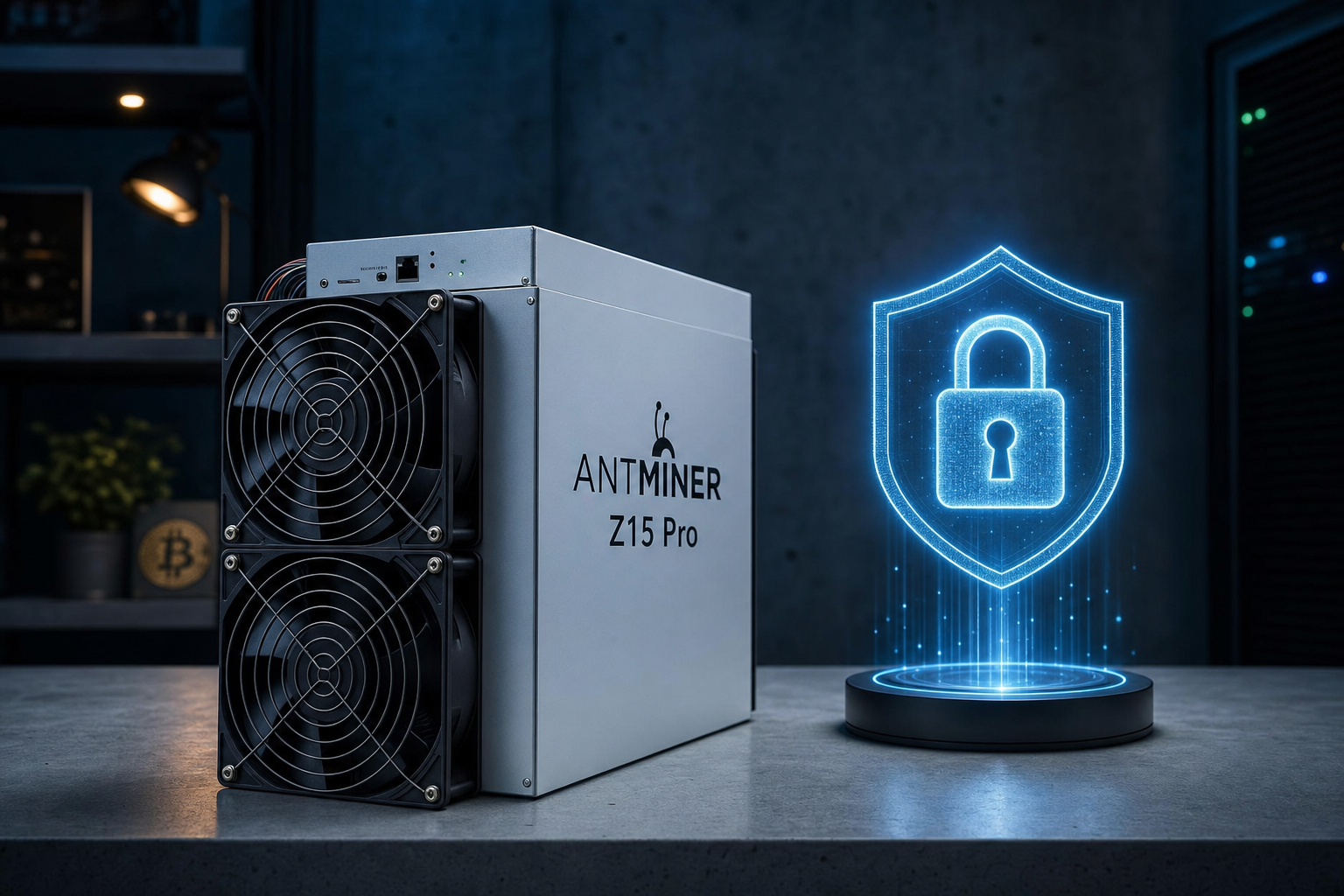
Whatever view one takes on the long-term privacy-asset thesis, the near-term reality for ZEC miners is driven by hashprice: ZEC’s market price, network difficulty, and electricity costs. As of June 15, 2026, ZEC trades at roughly $421.77, down from the $673 level seen in late May following a reported protocol-level bug disclosure that weighed on the price. That price move has a direct effect on the ROI math for ASICs built for Zcash’s Equihash mining algorithm (Equihash ASICs), such as the Antminer Z15 Pro and the standard Antminer Z15.
Antminer Z15 Pro (840 KSol/s, 2780W, ,600)
| Electricity Rate | Daily Net Profit | Estimated ROI |
|---|---|---|
| $0.04/kWh | $27.32 | 5.6 months |
| $0.07/kWh | $25.32 | 6.1 months |
| $0.10/kWh | $23.32 | 6.6 months |
| $0.12/kWh | $21.98 | 7.0 months |
| $0.15/kWh | $19.98 | 7.7 months |
Antminer Z15 (420 KSol/s, 1510W, ,600)
| Electricity Rate | Daily Net Profit | Estimated ROI |
|---|---|---|
| $0.04/kWh | $13.54 | 8.9 months |
| $0.07/kWh | $12.45 | 9.6 months |
| $0.10/kWh | $11.37 | 10.6 months |
| $0.12/kWh | $10.64 | 11.3 months |
| $0.15/kWh | $9.55 | 12.6 months |
Note: In May, when ZEC traded near $673, the Z15 Pro’s calculated payback period at $0.07/kWh was reported at roughly 2.4 months. At today’s ZEC price of $421.77, that figure has moved to approximately 6.1 months — illustrating how directly ZEC’s price affects ROI for Equihash hardware, independent of any view on the asset’s longer-term thesis. Model your own scenario with the BT-Miners profitability calculator, which updates with live ZEC pricing and network difficulty.
Risks and Open Questions
A few things worth weighing before treating any of the above as a reason to act:
- ZEC price volatility is high. A roughly 37% move in about three weeks (from $673 to $421.77) illustrates how quickly ROI assumptions can change. Mining hardware is a multi-month-to-multi-year commitment; coin prices are not.
- Network difficulty adjusts. If ZEC’s price recovers and more Equihash hashrate comes online, difficulty rises and per-unit profitability falls — this is the standard ASIC mining cycle.
- Macro narratives don’t move on a predictable timeline. CBDC rollouts, surveillance-tooling adoption, and geopolitical financial fragmentation are multi-year (or multi-decade) processes. They may be directionally relevant to privacy-asset demand without translating into near-term price action.
- Regulatory risk cuts both ways. Privacy coins have faced delistings in some jurisdictions. Any renewed regulatory crackdown specifically targeting privacy-preserving cryptocurrencies would be a headwind, not a tailwind, regardless of the broader surveillance narrative.
Conclusion
The broad direction of travel — more traceable digital money, more capable surveillance tooling, and a financial system increasingly shaped by geopolitics — is well documented and likely to continue in some form over the next decade. Whether that translates into sustained demand for zero-knowledge privacy technology specifically, and for ZEC as an asset, depends on factors well beyond any single article: regulatory treatment of privacy coins, the pace of shielded-transaction adoption within Zcash itself, and the broader crypto market cycle.
For miners evaluating hardware today, the more immediate variables are the ones in the tables above: current ZEC price, network difficulty, electricity cost, and hardware price. At $0.07/kWh, the Antminer Z15 Pro calculates to roughly a 6.1-month payback at the higher upfront cost of $4,600, while the standard Antminer Z15 requires a lower $3,600 outlay but a longer, still-sub-10-month payback at roughly 9.6 months. Both figures move with ZEC’s price and network difficulty. Run your own numbers — including your local electricity rate and a range of ZEC price scenarios — using the BT-Miners profitability calculator before making a purchase decision.