Guia de SLAs para Hospedagem de Mineração 2026: O que as Garantias de Tempo de Atividade Realmente Significam para Mineradores ASIC
⚠️ Isenção de responsabilidade: A rentabilidade da mineração flutua com os custos de eletricidade, os preços das criptomoedas e a dificuldade da rede. Todos os valores refletem as condições de 12º de junho de 2026 (BTC Aproximadamente US$ 61,388, poder computacional da rede — a capacidade total de processamento que protege a rede Bitcoin — aproximadamente 890.8 EH/s. Os preços de hospedagem e os termos do contrato variam de acordo com o provedor e a região. O desempenho passado não garante resultados futuros. Faça sua própria pesquisa antes de assinar qualquer contrato de hospedagem ou comprar equipamentos de mineração.
Conteúdo
- Por que o SLA importa mais do que a tarifa anunciada
- O que significa, de fato, "tempo de atividade" em um contrato de hospedagem.
- Convertendo percentuais de tempo de atividade em receita perdida na mineração
- O que um SLA justo deve incluir
- Sinais de alerta comuns em contratos de hospedagem
- Tempo de atividade do SLA versus custo de energia: o que importa mais?
- Riscos e perguntas frequentes
- Conclusão
Por que o SLA importa mais do que a tarifa anunciada
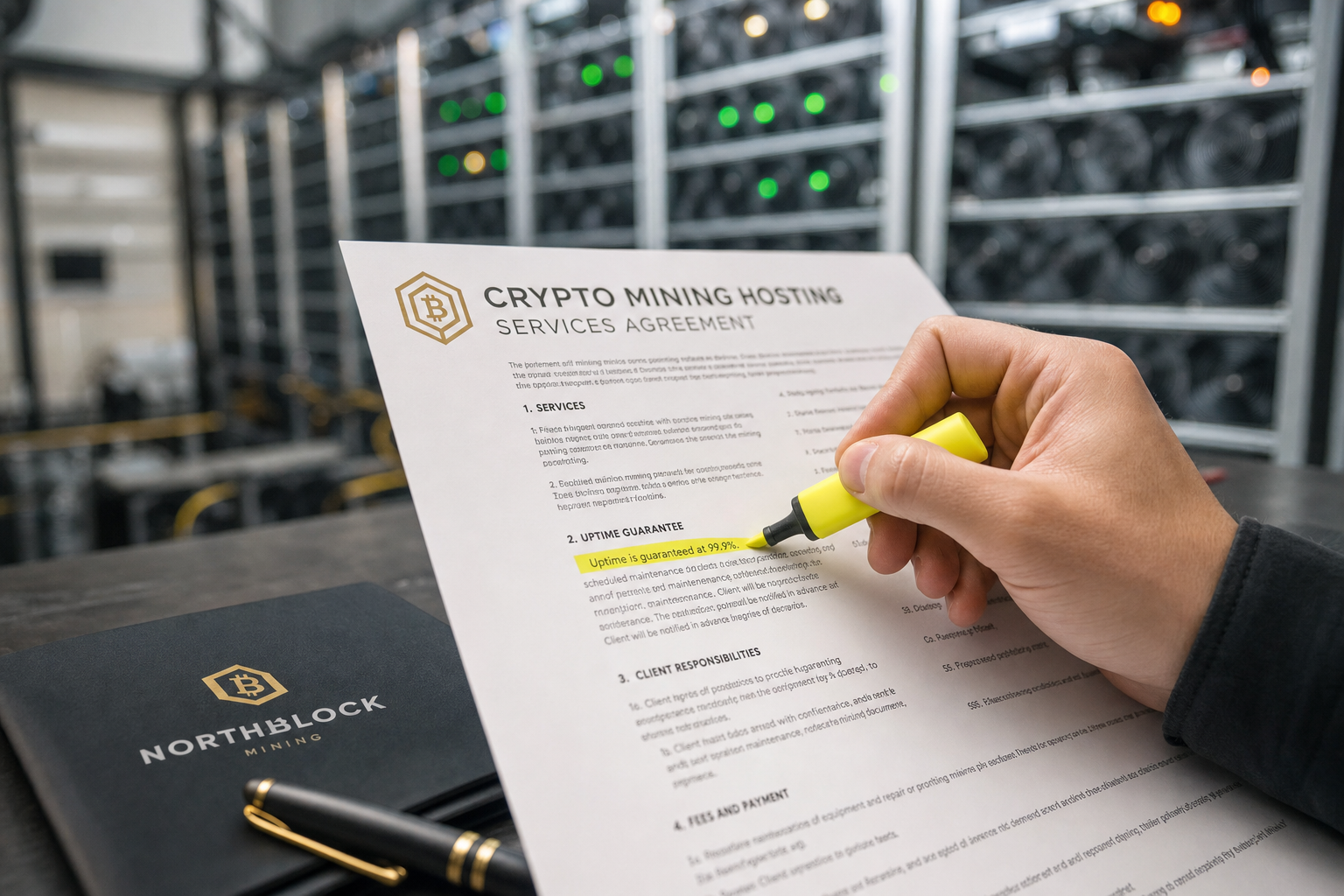
Quando os compradores comparam provedores de hospedagem para mineração, o primeiro número que geralmente observam é a tarifa de energia por kWh. Esse número é importante, mas não representa o quadro completo. Considere um único Antminer Z15 Pro (2780W): uma diferença de 1.5 centavos/kWh na tarifa de hospedagem equivale a aproximadamente US$ 1.00/dia, ou cerca de US$ 365/ano, em custo extra de energia. Em comparação, a diferença entre um SLA de 99% e um de 99.5% para o mesmo minerador representa uma perda de receita bruta de aproximadamente US$ 58 a US$ 118/ano (veja a tabela abaixo). Ambos os valores representam dinheiro real — uma tarifa baixa com um SLA fraco, ou uma tarifa ligeiramente mais alta com um SLA documentado e aplicado, pode resultar em prejuízos financeiros semelhantes, dependendo da frequência com que as interrupções ocorrem.
Um minerador ASIC que não está funcionando não gera receita. Cada hora offline — seja por um disjuntor desarmado, uma queda de rede, uma atualização de firmware com problemas ou um evento de redução de capacidade da rede — representa uma hora de recompensas de bloco e taxas de transação perdidas. Em um contrato de hospedagem de 12 a 24 meses, o efeito cumulativo de pequenas interrupções pode atrasar o retorno sobre o investimento (ROI) de um minerador em meses.
As seções abaixo abordam o significado prático da linguagem de SLA, como converter uma porcentagem de tempo de atividade em um valor monetário para hardware específico e quais termos valem a pena verificar — ou negociar — antes de enviar um minerador para uma instalação de terceiros.
O que significa, de fato, "tempo de atividade" em um contrato de hospedagem.
Nem todas as cláusulas de "tempo de atividade" medem a mesma coisa, e a diferença é fácil de passar despercebida ao ler um contrato rapidamente.
Tempo de atividade da instalação vs. Tempo de atividade do minerador vs. Tempo de atividade da piscina
- Tempo de atividade da instalação Refere-se à disponibilidade de energia e conectividade de rede no edifício. Uma instalação pode reportar 99.9% de disponibilidade enquanto racks de mineração individuais estiverem offline para manutenção, reparos ou rebalanceamento — e o contrato pode não cobrir essa lacuna.
- Tempo de atividade do minerador é a porcentagem de tempo em que sua unidade específica estava efetivamente realizando hashing. Esse número se relaciona diretamente com sua receita, mas também é o mais difícil para um provedor garantir, já que depende da confiabilidade do hardware, que não está totalmente sob seu controle.
- Tempo de atividade relatado pela piscina É o que você pode verificar de forma independente no painel de controle da sua pool de mineração — shares enviadas, hashrate reportado ao longo do tempo. Este é o número mais útil para um comprador, pois são dados de terceiros que o provedor não pode divulgar seletivamente.
Um contrato que garante apenas o "tempo de atividade da infraestrutura" oferece pouca garantia em termos de receita. Procure por SLAs que definam o tempo de atividade no nível do minerador ou que vinculem explicitamente os créditos de penalidade ao hashrate reportado pela pool durante o período de faturamento.
Períodos de medição: médias mensais versus anuais
O segundo detalhe importante é a janela de média. Um "SLA de disponibilidade de 99%, medido anualmente" permite que um provedor tenha uma única interrupção de vários dias em um mês e ainda assim atinja a meta, graças à média dos meses fortes em torno dela. Um "SLA de 99% medido mensalmente" limita o quão ruim um único mês pode ser — que é a versão que realmente protege o fluxo de caixa de uma mineradora.
Se um fornecedor não se comprometer com medições mensais (ou mesmo semanais), pergunte o porquê. Períodos de medição apenas anuais são, por vezes, um sinal de que o fornecedor teve — ou prevê — interrupções concentradas que não deseja incluir no preço em um período mais curto.
Convertendo percentuais de tempo de atividade em receita perdida na mineração
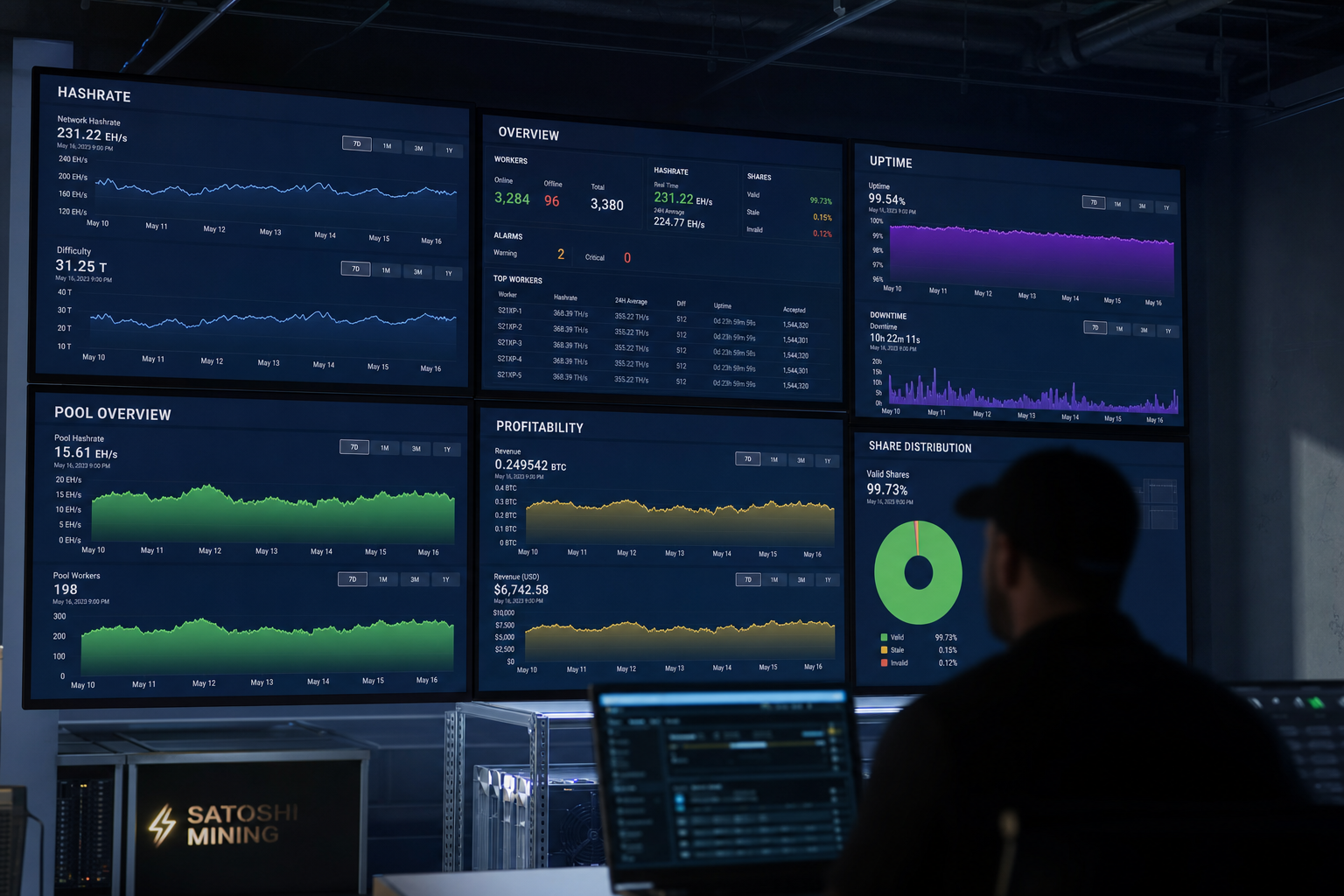
As porcentagens de SLA parecem semelhantes no papel — 99% contra 99.9% parece uma diferença de arredondamento — mas a diferença nas horas reais de inatividade é grande, e o impacto financeiro depende inteiramente do hardware que você está usando.
Tempo de inatividade anual por nível de SLA
| Garantia de disponibilidade do SLA | Tempo de inatividade permitido por ano | Tempo de inatividade permitido por mês |
|---|---|---|
| 99.0% | ~87.6 horas (3.65 dias) | ~ 7.3 horas |
| 99.5% | ~43.8 horas (1.8 dias) | ~ 3.65 horas |
| 99.9% | ~ 8.76 horas | Minutos 44 |
| 99.99% | Minutos 52.6 | Minutos 4.4 |
Qual o custo dessa inatividade em termos de perda de receita bruta?
Para tornar isso concreto, a tabela abaixo aplica o tempo de inatividade permitido para cada nível de SLA à receita bruta diária de três mineradores atualmente listados no BT-Miners — uma unidade Bitcoin SHA-256, uma unidade Zcash Equihash e uma unidade Monero RandomX. Esses valores utilizam a receita bruta (antes do consumo de energia elétrica), pois durante o tempo de inatividade o minerador não gera receita, independentemente de quem esteja pagando a conta de luz.
| Mineiro | Renda Bruta/Dia | Receita perdida a 99% do SLA (por ano) | Receita perdida a 99.5% do SLA (por ano) | Receita perdida a 99.9% do SLA (por ano) |
|---|---|---|---|---|
| Antminer S21 Pro 234TH/s (BTC) | $6.55 | ~ $ 23.90 | ~ $ 11.95 | ~ $ 2.39 |
| Antminer Z15 Pro (ZEC) | $32.20 | ~ $ 117.60 | ~ $ 58.80 | ~ $ 11.76 |
| Antminer X9 (XMR) | $21.89 | ~ $ 79.90 | ~ $ 39.90 | ~ $ 8.00 |
Nota: Estas são estimativas por unidade, baseadas nos valores de receita bruta diária da base de conhecimento da BT-Miners, em 12 de junho de 2026. As perdas reais variam de acordo com a quantidade de unidades hospedadas, a dificuldade da rede e as alterações no preço da moeda durante o período de inatividade. Faça sua própria simulação com a calculadora de rentabilidade da BT-Miners.
O padrão se mantém em todos os tipos de hardware: a diferença entre um SLA de 99% e um de 99.9% representa aproximadamente uma ordem de grandeza na perda de receita por unidade, por ano. Para um único minerador, isso pode equivaler ao preço de uma pizza. Para uma implantação com 500 unidades, a diferença entre esses dois níveis de SLA corresponde a aproximadamente US$ 12,000 e US$ 1,200 em perda de receita anual — isso sem sequer considerar se o SLA inclui algum crédito por penalidade.
O que um SLA justo deve incluir
Um contrato de hospedagem que leva a sério o tempo de atividade geralmente aborda esses pontos explicitamente:
- Uma definição clara de tempo de atividade — idealmente vinculado ao hashrate reportado pela pool ou ao monitoramento em nível de minerador, e não apenas ao status de energia da instalação.
- Uma janela de medição realista — mensal ou trimestral, não apenas anual.
- Exclusões para manutenção programada — um número definido e limitado de horas por mês para atualizações de firmware planejadas, trocas de racks ou limpeza, que não são contabilizadas no SLA, mas também são divulgadas com antecedência.
- Créditos de penalidade com consequências — um crédito proporcional na taxa de hospedagem (ou, em alguns casos, um crédito no custo de energia) por tempo de inatividade além do limite garantido, aplicado automaticamente em vez de exigir um processo de contestação.
- Cláusula de força maior e restrição de geração de energia — “Redução temporária da produção” significa que a instalação desliga temporariamente as máquinas de mineração a pedido da concessionária de energia, geralmente durante períodos de alta demanda regional de eletricidade. Muitos grandes complexos de mineração participam desses programas de resposta à demanda (comuns no Texas, por exemplo) em troca de créditos da concessionária. Trata-se de um acordo comercial legítimo, mas deve ser divulgado e ter um limite estabelecido — e não ser usado como uma desculpa indefinida para períodos de inatividade.
- Acesso para denúncias — um painel de controle ou relatório periódico que mostre o histórico do hashrate por unidade, para que você não dependa exclusivamente da palavra do provedor.
Sinais de alerta comuns em contratos de hospedagem
- Linguagem de tempo de atividade "melhor esforço" Sem qualquer garantia numérica. Isso não é um SLA — é uma esperança.
- O tempo de atividade é definido apenas no nível da instalação., sem nenhum relato individual de mineradores.
- Créditos limitados a um valor simbólico (por exemplo, uma taxa fixa de 5 dólares, independentemente do número de horas ou unidades afetadas), o que elimina qualquer incentivo real para o fornecedor resolver os problemas rapidamente.
- direitos de redução ilimitados ou indefinidos — se o contrato permitir que a instalação desligue as mineradoras “conforme necessário para a estabilidade da rede”, sem limite anual, isso equivale, na prática, a uma permissão ilimitada de tempo de inatividade com um nome amigável.
- Não existe cláusula de rescisão vinculada a repetidas violações do SLA. — um contrato que te prende por 12 a 24 meses, mas não te dá o direito de realocar o hardware se o provedor não cumprir consistentemente suas próprias metas de tempo de atividade, transfere todo o risco para você.
Nenhum desses sinais de alerta significa que um provedor esteja agindo de má-fé — muitos contratos de hospedagem são redigidos de forma genérica e podem ser negociados. O objetivo de revisar o SLA cuidadosamente é saber com o que você está concordando antes, e não depois, do envio do hardware.
Tempo de atividade do SLA versus custo de energia: o que importa mais?
Na prática, a tarifa de eletricidade em um contrato de hospedagem geralmente tem um efeito maior no ROI a longo prazo do que as diferenças de SLA na faixa de 99% a 99.9% — mas um SLA fraco pode anular a vantagem de uma tarifa baixa se as interrupções se concentrarem durante períodos de alta dificuldade de rede ou preços favoráveis das criptomoedas, quando o custo de oportunidade do tempo de inatividade é maior.
A tabela abaixo mostra a sensibilidade da renda líquida diária de cada minerador exemplificado à tarifa de energia da instalação que o hospeda, usando os valores atuais da renda bruta:
| Mineiro | @$0.04/kWh | @$0.07/kWh | @$0.10/kWh | @$0.12/kWh | @$0.15/kWh |
|---|---|---|---|---|---|
| Antminer S21 Pro 234TH/s (3510W) | $3.18 | $0.65 | - $ 1.87 | - $ 3.56 | - $ 6.09 |
| Antminer Z15 Pro (2780 W) | $29.53 | $27.53 | $25.53 | $24.19 | $22.19 |
| Antminer X9 (2472 W) | $19.52 | $17.74 | $15.96 | $14.77 | $12.99 |
Nota: Renda líquida = renda bruta diária menos (potência em watts × 24 ÷ 1000 × tarifa de eletricidade). Na atual dificuldade da rede e BTC Considerando o preço, a margem de lucro do S21 Pro é tão pequena que uma diferença de 3 centavos/kWh na tarifa de hospedagem importa mais do que a diferença entre um SLA de 99% e 99.9%. Para unidades de maior receita, como o Z15 Pro e o X9, tanto a tarifa de energia quanto o SLA afetam significativamente o retorno anual.
A conclusão prática: para ASICs de Bitcoin com margens de lucro menores, negocie primeiro o preço da energia — alguns centavos por kWh podem representar a diferença entre lucro e prejuízo na dificuldade atual. Para ASICs de altcoins com receitas maiores, como mineradores de Zcash ou Monero, tanto o preço quanto os termos do SLA valem a pena negociar, já que os valores absolutos em jogo são maiores.
Riscos e perguntas frequentes
Posso obter meus dados de tempo de inatividade de forma independente?
A maioria dos pools de mineração fornece o histórico de hashrate por trabalhador, que você pode exportar. Antes de fechar negócio com um provedor, confirme se ele fornecerá os nomes individuais dos trabalhadores ou subcontas para que você possa acompanhar suas próprias unidades, em vez de depender apenas dos relatórios agregados do provedor.
Um SLA de 99.9% significa que minha estimativa de ROI é "segura"?
Não. O tempo de atividade definido pelo SLA é apenas um fator entre vários — a dificuldade da rede, o preço da moeda e as alterações nas tarifas de eletricidade geralmente têm um impacto maior no retorno sobre o investimento (ROI) do que um ou dois pontos percentuais de inatividade. Considere o SLA como um termo de gestão de riscos, não como uma garantia de lucratividade.
O que acontece se o centro de hospedagem fechar completamente?
Verifique o contrato para detalhes sobre a logística e os prazos de devolução do hardware em caso de fechamento das instalações ou insolvência do provedor. Esta é uma questão distinta dos SLAs de disponibilidade, mas representa um dos maiores riscos em hospedagem de terceiros, e provedores confiáveis devem ter um processo documentado para isso.
A redução da geração de energia na rede elétrica é um mau sinal?
Não inerentemente. Muitas instalações de grande porte são pagas pelas concessionárias de energia para reduzir a carga durante os períodos de pico de demanda, o que pode diminuir o custo efetivo de energia da instalação (às vezes repassado aos clientes que a hospedam). O problema surge apenas quando as horas de redução de carga não são limitadas ou não são divulgadas nos cálculos do SLA.
Conclusão
Um SLA de hospedagem é um documento de alocação de riscos tanto quanto uma garantia de serviço. A porcentagem em si importa menos do que como o tempo de atividade é definido, como é medido e o que acontece — concretamente — quando o provedor não atinge a meta. Para a maioria dos compradores, o exercício mais valioso antes de assinar o contrato não é comparar 99% com 99.9% no papel, mas sim solicitar ao provedor seu histórico real de tempo de atividade nos últimos 6 a 12 meses e verificar se a estrutura de créditos teria compensado significativamente o cliente durante o pior mês.
Se você está avaliando a hospedagem em comparação com uma configuração de mineração doméstica, ou tentando modelar como um nível específico de SLA e tarifa de energia afetariam o período de retorno do investimento de um minerador específico, a calculadora de lucratividade da BT-Miners permite ajustar as tarifas de eletricidade e ver o efeito nos retornos diários e anuais. Você também pode navegar pelas listas atuais de ASICs para Zcash , Monero e Bitcoin para ver os preços e especificações atuais antes de solicitar orçamentos de hospedagem.