¿Deberían los mineros ASIC cubrirse contra el precio del hash antes de comprar nuevo hardware? Un marco de referencia para 2026.
⚠️ Descargo de responsabilidad: La rentabilidad de la minería fluctúa con los costos de electricidad, los precios de las criptomonedas y la dificultad de la red. Todas las cifras de este artículo reflejan las condiciones al 11 de junio de 2026 (BTC ≈ $61 387,88, hashrate de red ≈ 870.4 EH/s, cambio de dificultad ≈ -10.71%), basado en datos de rentabilidad en tiempo real de BT-Miners a $0.07/kWh. Los futuros de hashrate y los derivados de precio de hash son instrumentos financieros con sus propios riesgos de contraparte, liquidez y plataforma; nada de lo aquí expuesto constituye asesoramiento financiero. El rendimiento pasado no garantiza resultados futuros. Realice su propia investigación antes de adquirir equipos de minería o celebrar cualquier acuerdo de cobertura.
Bitcoin acaba de caer a aproximadamente $61,387.88 mientras que la dificultad de la red disminuyó 10.71% en una sola
ajuste: una combinación poco común que facilita brevemente la minería justo cuando la moneda que estás minando vale menos. Si estás
Al sopesar una nueva compra de ASIC esta semana, esa combinación plantea una pregunta incómoda: ¿debería fijar el precio de hoy?
¿Deberías considerar un precio de hash con cobertura antes de invertir cinco o seis cifras en hardware que no se amortizará en meses?
Esta no es una pregunta de sí o no. Es una pregunta de marco conceptual, y a la mayoría de los mineros minoristas nunca se les ha enseñado a pensar.
sobre ella.
Índice
- ¿Qué es el precio del hash y por qué fluctúa?
- Futuros de tasa de hash frente a cobertura del precio de las criptomonedas
- Por qué esto es importante ahora mismo
- Un marco práctico: ¿Debería cubrirse antes de comprar?
- ¿Cuánto debería cubrirse: 25%, 50% o 75%?
- Ejemplo práctico: Z15 Pro vs. X9 Payback bajo cobertura
- Riesgos y preguntas frecuentes
- Conclusión
¿Qué es el precio del hash y por qué fluctúa?

precio de hash es la forma estándar en que la industria minera mide los ingresos por unidad de potencia informática.
normalmente expresado en dólares por terahash por día (o por petahash/día para algoritmos de unidades más pequeñas como Equihash o
RandomX). Es un único número que agrupa tres partes móviles:
- precio de la moneda - cuando BTC Las ventas bajan de 68 a 61 dólares, el precio del hash baja al mismo ritmo, todo lo demás permanece igual.
- Dificultad de la red / tasa de hash — cuando la dificultad disminuye (como acaba de hacerlo, en un -10.71%), cada unidad de
Tu tasa de hash capta una mayor parte de la recompensa por bloque, lo que hace que el precio del hash vuelva a subir. - Recompensas y tarifas por bloque — corregido a corto plazo por las reglas del protocolo, pero las tarifas aumentan durante los períodos de mayor actividad.
Los períodos pueden mover el precio del hash de manera significativa para BTC mineros
Para un minero que decide si comprar hardware, el precio del hash es realmente la respuesta a "¿cuántos dólares costará esta máquina?".
¿Generar por día, antes de la electricidad? Todo lo demás (período de recuperación, ROI, costo de electricidad de equilibrio) se deriva
a partir de ese único número. Cuando el precio del hash es volátil, su estimación de retorno de la inversión también lo es, incluso si el hardware en sí mismo...
nunca cambia.
Futuros de tasa de hash frente a cobertura del precio de las criptomonedas
La mayoría de las personas que han oído hablar de "cobertura" en criptomonedas piensan en vender en corto. BTC futuros para compensar una caída de precios. Esa es una
pieza del rompecabezas, pero solo cubre el componente del precio de la moneda del precio del hash. No hace nada con respecto a la
Componente de dificultad/tasa de hash, que, como demuestra esta semana, puede variar más del 10 % en cualquier dirección independientemente del precio.
Futuros de tasa de hash y swaps de precio de hash son una categoría más reciente de contrato financiero (ofrecido por un puñado de
mesas especializadas y algunos exchanges) que permiten que un minero acuerde hoy un precio de hash fijo; en términos sencillos, un precio fijo.
cantidad de ingresos diarios por TH/s de hashrate — para un período futuro determinado, independientemente de lo que BTC precio o red
dificultad realmente hacer durante ese período. En efecto, una parte está apostando a que el precio del hash subirá y la otra está
apostando a que caerá, y ambos aseguran la certeza en cualquier sentido. Las ventajas y desventajas:
| Ciclo de | Lo que cubre | Lo que no cubre | Acceso típico |
|---|---|---|---|
| BTC futuros/opciones (cortas) | Caída del precio de las monedas | La dificultad aumenta | Principales bolsas de valores, ampliamente disponibles. |
| Futuros de tasa de hash / swaps de precio de hash | Precio combinado + riesgo de dificultad | Riesgo de contraparte (que la otra parte del contrato no pague), riesgo de plataforma/intercambio y tiempo de actividad del hardware. | Mesas de negociación extrabursátil especializadas, liquidez limitada. |
| Sin seto | Nada | Todo: exposición total al precio spot del hash | N/A — este es el valor predeterminado |
Para la mayoría de los operadores minoristas y de pequeña escala, la cobertura total de futuros de tasa de hash no es realmente accesible; mínimo
Los tamaños y los requisitos de las contrapartes tienden a favorecer a las flotas a escala industrial. Eso no significa que el marco sea inútil,
Sin embargo. La misma lógica que usan los departamentos institucionales para decidir sean para cubrir se puede reducir a un tamaño mucho mayor
decisión más sencilla: ¿Compro ahora, espero o divido mi compra?
Por qué esto es importante ahora mismo
La configuración actual es inusual: BTC ha bajado a aproximadamente 61.4 dólares (muy por debajo de los máximos recientes), mientras que la dificultad de la red solo
cayeron un 10.71%, lo que probablemente refleja que algunos mineros están reduciendo o cerrando hardware más antiguo y menos eficiente a medida que aumentan los márgenes.
comprimido. Para cualquiera que posea ASICs más nuevos y eficientes, esa caída de dificultad es un viento a favor: la misma máquina ahora gana un
mayor parte de cada bloque. Para cualquiera que esté a punto de buy Al tratarse de una máquina, surge la cuestión del tiempo.
Si compras hoy y la dificultad sigue disminuyendo (más mineros antiguos capitulan), tu período de recuperación de la inversión podría reducirse.
más rápido de lo que sugieren las cifras al contado. Si compra hoy y BTC sigue cayendo mientras la dificultad rebota como eficiente
Cuando las máquinas vuelvan a estar en línea, su período de recuperación podría extenderse. La diferencia entre esos dos resultados es exactamente la
El riesgo que supone la cobertura, en cualquiera de sus formas, está destinado a reducirse.
Un marco práctico: ¿Debería cubrirse antes de comprar?
En lugar de una decisión binaria de "cubrirse o no hacerlo", piénsalo como una lista de verificación. Cuantas más casillas marques, más sólido será el argumento.
para algún tipo de cobertura, incluso si esa "cobertura" es simplemente una decisión de compra más conservadora en lugar de un derivado.
comercio.
- ¿Es largo el período de recuperación de su inversión en relación con su tolerancia al riesgo? Una máquina con un retorno de la inversión de 5 a 6 meses.
(como el Antminer Z15
Pro (con un beneficio neto de aproximadamente 27.53 dólares al día y un retorno de la inversión de unos 5.6 meses en las condiciones actuales) conlleva un riesgo de precio de hash mucho menor.
que uno con un retorno de más de 70 meses. Cuanto más largo sea el horizonte, más macrociclos tendrá que soportar su hardware y el
Esto refuerza la necesidad de cubrir al menos una parte de esa exposición. - ¿La criptomoneda que estás minando es especialmente volátil? ZEC, XMR y otras criptomonedas de mediana capitalización tienden a fluctuar.
más difícil —tanto al subir como al bajar— que BTCEso tiene dos caras: amplifica el potencial alcista si el precio sube, pero también significa una
Una caída del 20-30% en cuestión de semanas está dentro de los límites normales, no es un evento extremo. - ¿Vas a financiar la compra o a pagar en efectivo? Si has contraído una deuda o un plan de pago para financiarla
el hardware, su desventaja es asimétrica: unos pocos meses malos de precio de hash no solo retrasan la recuperación de la inversión, sino que también pueden crear una
déficit de flujo de caja que debes cubrir con otras fuentes. Las compras financiadas son las candidatas más fuertes para la cobertura. - ¿Tiene acceso a instrumentos de cobertura adecuados a su escala? Si estás impartiendo de 1 a 5 unidades, formal
Es probable que los futuros de hashrate no estén disponibles para usted. Su "cobertura" probablemente consista en: comprar en tramos a lo largo del tiempo.
(promediar el costo en dólares de sus compras de hardware), elegir una máquina con un retorno de inversión más corto o simplemente guardar algo de efectivo
Reservar un importe equivalente a los ingresos previstos de algunos meses. - ¿Existe algún factor desencadenante a corto plazo que pueda provocar un cambio drástico en la dificultad o en el precio? Reducciones a la mitad, moneda importante
actualizaciones o grandes capitulaciones de mineros (como el tipo que puede estar impulsando el movimiento de dificultad de -10.71% de esta semana)
crear ventanas cortas donde el precio del hash puede reevaluarse rápidamente. Comprar, o cubrirse, en torno a estos eventos merece una atención especial.
pensamiento.
Si cumples tres o más de estas condiciones, vale la pena al menos explorar coberturas parciales o un plan de compra por etapas.
antes de comprometer todo el presupuesto en hardware. Si marca cero o uno, por ejemplo, una máquina de rápida amortización, comprada
con efectivo, en una moneda relativamente estable: la "cobertura" más simple puede ser simplemente correr
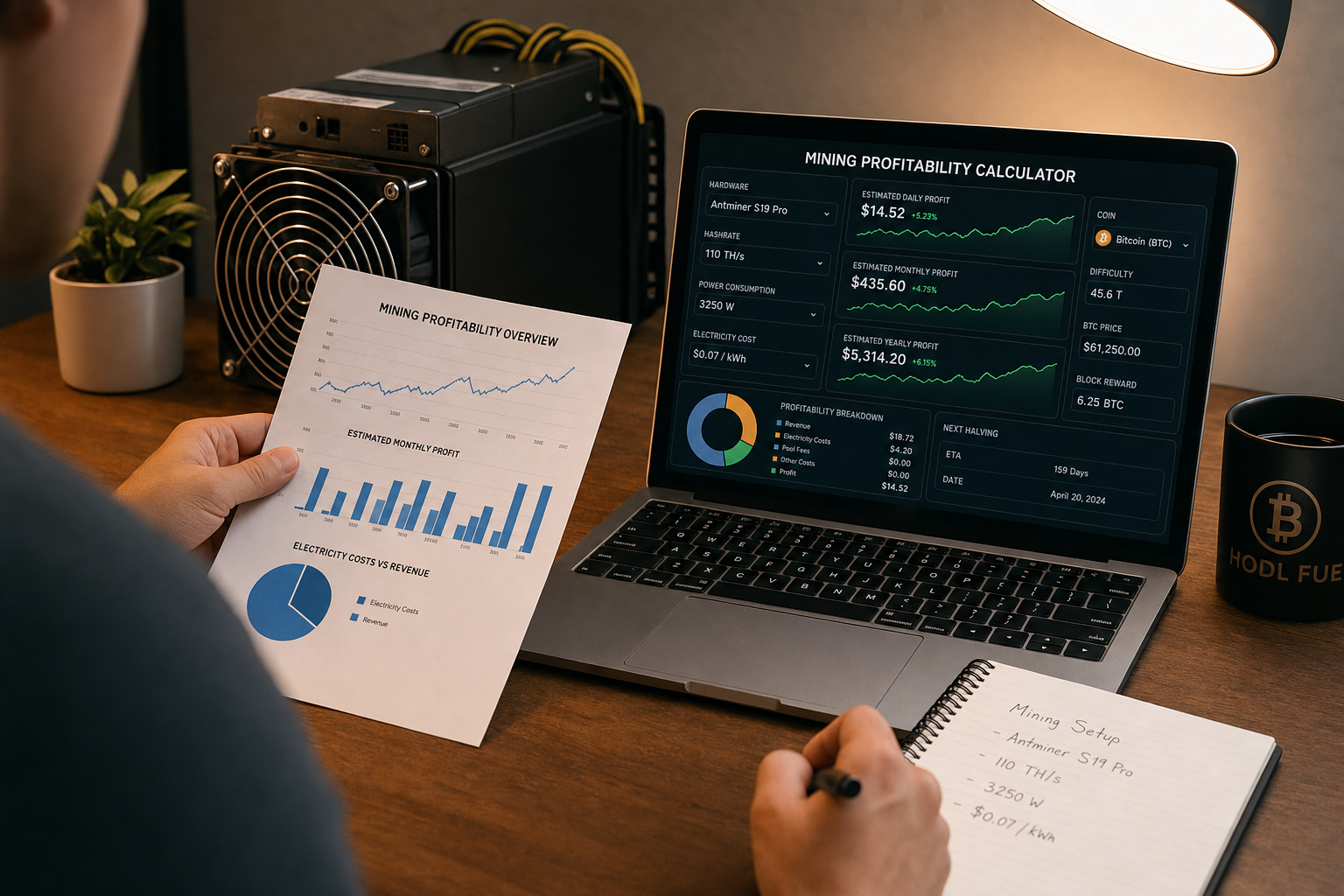
Calculadora de rentabilidad con una variedad de costos de electricidad
y analizar los escenarios de precios antes de comprar, y proceder si las cifras se mantienen dentro de ese rango.
¿Cuánto debería cubrirse: 25%, 50% o 75%?
Para los operadores que tienen acceso a futuros de tasa de hash o intercambios de precio de hash (normalmente flotas más grandes, pero algunos
Los operadores más pequeños con visión de futuro participan a través de productos agrupados o fraccionados), la pregunta cambia de
“Cubrirse o no” a “cuánto de los ingresos esperados asegurar”.
| Ratio de cobertura | mejor ajuste para | Compensación |
|---|---|---|
| ~ 25% | Compradores al contado con hardware de corto plazo de amortización que principalmente desean cubrir gastos fijos. costos (alquiler, gastos operativos básicos) |
Conserva la mayor parte del potencial alcista si sube el precio del hash; protección limitada contra pérdidas. |
| ~ 50% | Compras mixtas (al contado y financiadas), plazos de amortización moderados (10-30 meses). | Equilibrado: suaviza los ingresos sin renunciar a la mayor parte del potencial de ganancias. |
| ~75%+ | Compras con financiación elevada, hardware con largos plazos de amortización (más de 50 meses) o operadores cerca de los umbrales de convenios/préstamos |
Maximiza la certeza del flujo de caja; renuncia a la mayor parte del potencial alcista si el precio del hash manifestaciones |
Ninguna de estas proporciones son prescripciones precisas; son puntos de partida para una conversación con quien esté a cargo.
tu flujo de caja (que, para la mayoría de los mineros minoristas, eres tú). La idea central se traslada a cualquier escala: cuanto mayor sea el
la parte de sus ingresos que se necesita para cubrir las obligaciones fijas (pagos de préstamos, tarifas de alojamiento, contratos de electricidad),
cuanto mayor sea la proporción de esos ingresos que desee que sean predecibles.
Ejemplo práctico: Z15 Pro vs. X9 Payback bajo cobertura
Para que esto sea concreto, aquí se muestra cómo se comparan actualmente dos de las máquinas más rentables en BT-Miners, utilizando
Las cifras al contado de hoy son de 0.07 $/kWh:
| Minero | Monedas | Precio | Beneficio neto diario a 0.07 dólares | Retorno de la inversión puntual |
|---|---|---|---|---|
| Antminer Z15 Pro 840K |
ZEC | $4,600 | $27.53 | ~ 5.6 meses |
| Antminer X9 1M |
XMR | $5,600 | $17.74 | ~ 10.5 meses |
Ejecute estos elementos a través del marco anterior:
- Z15 Pro — un período de recuperación de la inversión de aproximadamente 5.6 meses es corto según los estándares de ASIC. Incluso si el precio de ZEC (actualmente
Si ~$434) bajara un 25% y se mantuviera ahí, la recuperación se extendería a aproximadamente 7.5 meses, todavía dentro de un plazo de un año.
la vida útil de la generación de hardware. Para un comprador al contado, el argumento a favor de una cobertura activa aquí es débil; el mayor riesgo es
Simplemente es algo específico de ZEC (un problema de protocolo, la exclusión de la plataforma de intercambio, etc.) que ninguna cobertura de precio de hash cubriría de todos modos. - X9 — un período de recuperación de ~10.5 meses es más sensible. Una caída similar del 25% en el precio de XMR (desde ~$307) sería
retrasar la recuperación de la inversión hasta 14 meses, lo que empieza a chocar con los ciclos típicos de renovación de hardware. Si esta compra es
financiado, o si dependes de ello para cubrir un coste mensual fijo, una cobertura parcial, incluso algo tan simple como
la preventa de una parte de la producción esperada de XMR al precio actual a través de un acuerdo a plazo, cuando esté disponible, comienza a
lucir más atractivo.
Ninguna de las máquinas está en la categoría de "cobertura obligatoria" que requiere un retorno de la inversión de más de 70 meses (como algunos de los sistemas de refrigeración por agua más grandes). BTC
unidades actualmente en BT-Miners) entrarían en. Ese es el objetivo del marco: te dice dónde gastar tu
Esfuerzo de cobertura limitado, en lugar de tratar cada compra de la misma manera.
Riesgos y preguntas frecuentes
¿Garantiza la cobertura la rentabilidad? No. Una cobertura fija un precio o tasa, no lo garantiza.
Esa tasa será rentable en relación con tus costos. Si fijas un precio de hash que ya está por debajo de tu punto de equilibrio.
En cuanto al coste de la electricidad, la cobertura simplemente garantiza una pérdida en lugar de un resultado incierto.
¿Qué ocurre si no puedo acceder a los futuros de hashrate? La versión accesible al público minorista de la "cobertura" se centra principalmente en:
Tamaño y plazos: comprar en lotes más pequeños durante varios meses en lugar de un solo pedido grande, mantener un colchón de efectivo y
Elegir máquinas con períodos de recuperación de la inversión más cortos cuando el precio del hash es volátil o tiende a la baja.
¿Podría la dificultad seguir disminuyendo, convirtiendo este en un buen momento para comprar sin cobertura? Es posible: un -10.71%
El ajuste de dificultad del tamaño que acabamos de ver a veces puede continuar si los mineros marginales siguen capitulando. Si observamos el gráfico de dificultad de Bitcoin durante los últimos años, la tendencia a largo plazo ha sido generalmente ascendente, con
caídas periódicas a corto plazo como esta, a medida que los mineros menos eficientes salen temporalmente. Ese patrón a largo plazo no es un
garantía, pero sugiere que tratar una disminución sostenida de la dificultad como su razón principal para comprar sin cobertura sería una
Apuesta especulativa en lugar de un caso base.
¿Con qué frecuencia debería revisar esta decisión? El precio del hash puede variar significativamente de una semana a otra. Si estás
Si está indeciso sobre una compra, es razonable volver a comprobar las cifras de rentabilidad actuales cada pocos días durante un
Es preferible utilizar periodos volátiles como este en lugar de basarse en una sola instantánea.
Conclusión
La cobertura del precio del hash no es una herramienta que la mayoría de los mineros minoristas usarán directamente, pero la idea detrás de ella es útil en cualquier caso.
escala. La pregunta central siempre es la misma: ¿cuánto de mis ingresos futuros necesito que sea predecible, dado cómo estoy?
¿Financiamiento de esta compra y cuánto tiempo tardará en pagarse? Una máquina con un período de recuperación de la inversión inferior a seis meses, como la
Antminer Z15 Pro
Según las cifras actuales, simplemente tiene menos tiempo expuesto a las fluctuaciones del precio del hash, que es una de las razones por las que el hardware de corto plazo es...
A menudo se considera de menor riesgo, independientemente de la marca o el modelo. Mayor período de recuperación de la inversión.
Las máquinas merecen más precaución —y posiblemente una compra por etapas— especialmente durante semanas como esta, cuando tanto las máquinas de monedas como las de monedas
Los precios y la dificultad de la red están cambiando bruscamente. Antes de comprar nada, revise sus números específicos a través de la
Calculadora de rentabilidad de BT-Miners a través de una gama de
Costes de la electricidad y escenarios de precios, no solo la situación actual.