Guía de compra de mineros de Bitcoin con refrigeración por agua 2026: ¿Cuándo tendrán sentido los modelos S21 Hyd y S23 Hyd?
⚠️ Aviso legal: La rentabilidad de la minería fluctúa según los costos de electricidad, los precios de las criptomonedas y la dificultad de la red. Todas las cifras reflejan las condiciones al 24 de junio de 2026. El rendimiento pasado no garantiza resultados futuros. Realice su propia investigación antes de adquirir equipos de minería.
Los mineros ASIC con refrigeración por agua despiertan gran interés entre los operadores comerciales, pero también generan ideas erróneas persistentes sobre para quiénes son realmente adecuados. Esta guía abarca el marco práctico para la toma de decisiones: qué requiere la refrigeración por agua, qué modelos están disponibles actualmente y los escenarios operativos específicos donde se justifica la inversión en infraestructura. Si está evaluando mineros con refrigeración por agua para un uso doméstico o a pequeña escala, lea primero la última sección.
Cómo funciona la refrigeración por agua en los mineros ASIC
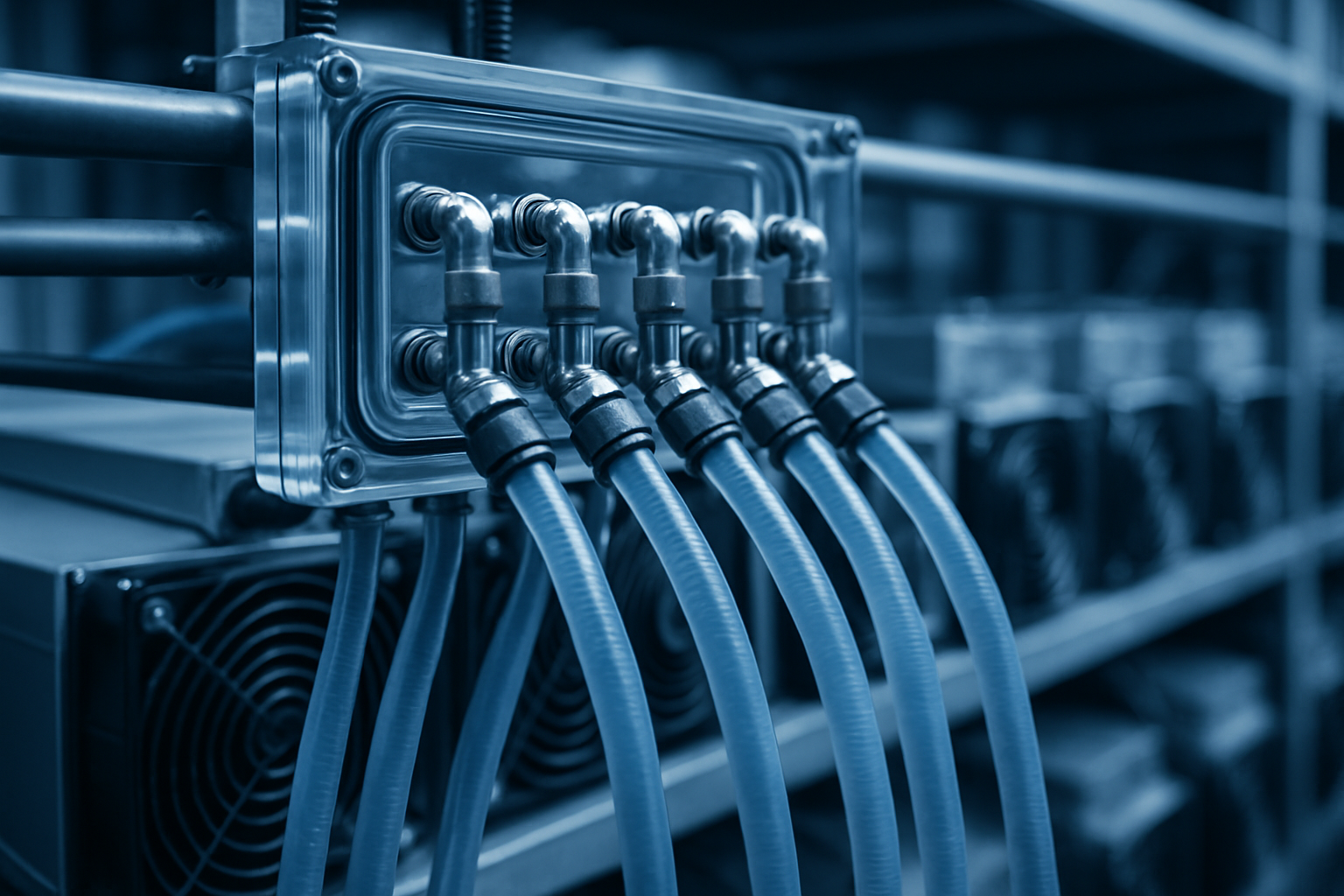
Los mineros ASIC con refrigeración por agua sustituyen los ventiladores industriales de las unidades convencionales por bloques de agua que presionan directamente contra las placas de procesamiento y las placas de control. El refrigerante circula por un circuito cerrado —desde el minero hasta una unidad de distribución de refrigeración (CDU) o torre de refrigeración externa— disipando el calor mediante un intercambiador de calor en lugar de mediante el flujo de aire.
Las principales diferencias operativas con respecto a las unidades refrigeradas por aire incluyen:
- Sin dependencia del flujo de aire — El minero no requiere espacio ventilado ni conductos de ventilación en el suelo elevado.
- Mayor tasa de hash sostenida — La limitación térmica bajo carga pesada se reduce o se elimina.
- Temperaturas internas de funcionamiento más bajas — contribuye a una mayor vida útil del tablero de hash bajo un funcionamiento continuo.
- Operación casi silenciosa — Los ventiladores industriales se eliminan en gran medida; la unidad de control de refrigeración produce algo de ruido, pero mucho menos que sus equivalentes refrigerados por aire.
- Mayor densidad de potencia por unidad de rack. — Mayor tasa de hash cabe en un espacio de rack determinado.
La desventaja es significativa: las unidades de minería hidroeléctrica requieren una infraestructura hídrica permanente que las unidades refrigeradas por aire no necesitan. Una unidad de decantación de carbón (CDU), tuberías, colectores y detección de fugas suponen un coste inicial de entre 15,000 y 60,000 dólares o más, dependiendo de la escala de la instalación, y deben tenerse en cuenta en el coste total de propiedad antes de cualquier análisis de rentabilidad.
Mineros de Bitcoin con refrigeración por agua disponibles en 2026.
Bitmain Antminer S21 Hyd
El Antminer S21 Hyd es el minero de Bitcoin refrigerado por líquido principal de Bitmain para la generación actual. La configuración insignia ofrece 335 TH/s a 5,360 W , con una eficiencia de aproximadamente 16.0 J/TH (julios por terahash, una medida de eficiencia energética donde los valores más bajos indican menor consumo de energía por unidad de trabajo de hash).
| Especificación | Antminer S21 Hyd 335T |
|---|---|
| Tasa de hash | 335 T/s (±3 %) |
| Consumo de energía | 5,360 W (± 5%) |
| Eficiencia del chip | 16.0 J/J |
| Método de enfriamiento | Refrigeración líquida (bloques de agua) |
| Nivel de ruido | |
| Temperatura de entrada de agua | 5-40 ° C |
| Factor de forma | 2U para montaje en bastidor |
| Algoritmo | SHA-256 (Bitcoin) |
Nota: Verifique el precio y la disponibilidad actuales en la página del producto BT-Miners S21 Hyd . Las especificaciones están sujetas a revisiones de firmware.
El S21 Hyd sucede al S19 Hyd en la gama de productos de Bitmain. Los operadores que utilizan un circuito de refrigeración líquida existente de implementaciones de generaciones anteriores generalmente pueden integrar las unidades S21 Hyd sin modificaciones significativas en la infraestructura, siempre que la capacidad de la unidad de distribución de agua (CDU) sea suficiente.
Bitmain Antminer S23 Hyd 3U
El Antminer S23 Hyd 3U representa la gama empresarial de alta densidad de Bitmain. Su formato 3U ofrece una mayor tasa de hash por unidad de rack que el S21 Hyd estándar de 2U, lo que reduce los costes operativos por unidad en gestión, cableado y consumo de circuitos PDU. Con un precio de venta al público actual de aproximadamente 29,800 dólares , esta unidad está dirigida a empresas, no a operadores independientes.
El S23 Hyd 3U requiere una infraestructura de alimentación eléctrica dedicada de alta intensidad (normalmente distribución trifásica de 240 V o superior), además del circuito de refrigeración líquida. Los compradores deben calcular el capital total necesario por rack (coste del minero más la amortización de la CDU y la infraestructura eléctrica) antes de comparar el retorno de la inversión con alternativas de menor coste. Utilice la calculadora de rentabilidad de BT-Miners para realizar proyecciones de ingresos actuales con su tarifa eléctrica.
MicroBT Whatsminer M66S Hydro
La solución hidroeléctrica de MicroBT para 2026, la M66S Hydro, funciona a aproximadamente 298 TH/s con un consumo de energía de 5,412 W (~18.2 J/TH). En términos de eficiencia bruta del chip, es inferior a la S21 Hyd, pero MicroBT mantiene una red de servicio y repuestos más sólida en el sudeste asiático y algunas partes de Oriente Medio, un factor importante para los operadores de esas regiones. Los compradores que ya utilizan el software de gestión Whatsminer también podrían preferir esta unidad para evitar la mezcla de plataformas de control.
Comparación de eficiencia: Refrigeración hidráulica frente a refrigeración por aire.
Se suele asumir que la refrigeración por agua ofrece una eficiencia de los chips significativamente superior a la de las unidades refrigeradas por aire. Sin embargo, los datos muestran una realidad más compleja.
| Modelo | Tipo de enfriamiento | Tasa de hash | Poder de dibujo | Eficiencia (J/TH) |
|---|---|---|---|---|
| Antminer S21 Hyd 335T | Hidroeléctrica | 335 TH / s | 5,360 W | 16.0 |
| Antminer S21 Pro 234T | Aire enfriado | 234 TH / s | 3,510 W | 15.0 |
| Minero de hormigas S21+ 216T | Aire enfriado | 216 TH / s | 3,564 W | 16.5 |
| Whatsminer M66S Hidro | Hidroeléctrica | 298 TH / s | 5,412 W | 18.2 |
| Whatsminer M63S+ 390T | Aire enfriado | 390 TH / s | 6,435 W | 16.5 |
Nota: Las cifras de eficiencia son proporcionadas por el fabricante en condiciones de prueba estándar. La eficiencia real varía según la temperatura del agua de entrada (hidroeléctrica) o la temperatura ambiente (refrigerada por aire), la calibración del voltaje y el perfil de carga. Modele su escenario específico con la calculadora de rentabilidad de BT-Miners.
El S21 Pro refrigerado por aire de Bitmain alcanza los 15.0 J/TH , una mejora significativa con respecto a los 16.0 J/TH del S21 Hyd en términos de eficiencia bruta. La ventaja de la refrigeración por aire no reside en la eficiencia del chip, sino en la estabilidad térmica, la densidad operativa y la consistencia del rendimiento en entornos donde la refrigeración por aire es limitada.
Requisitos de infraestructura: Panorama completo de costos
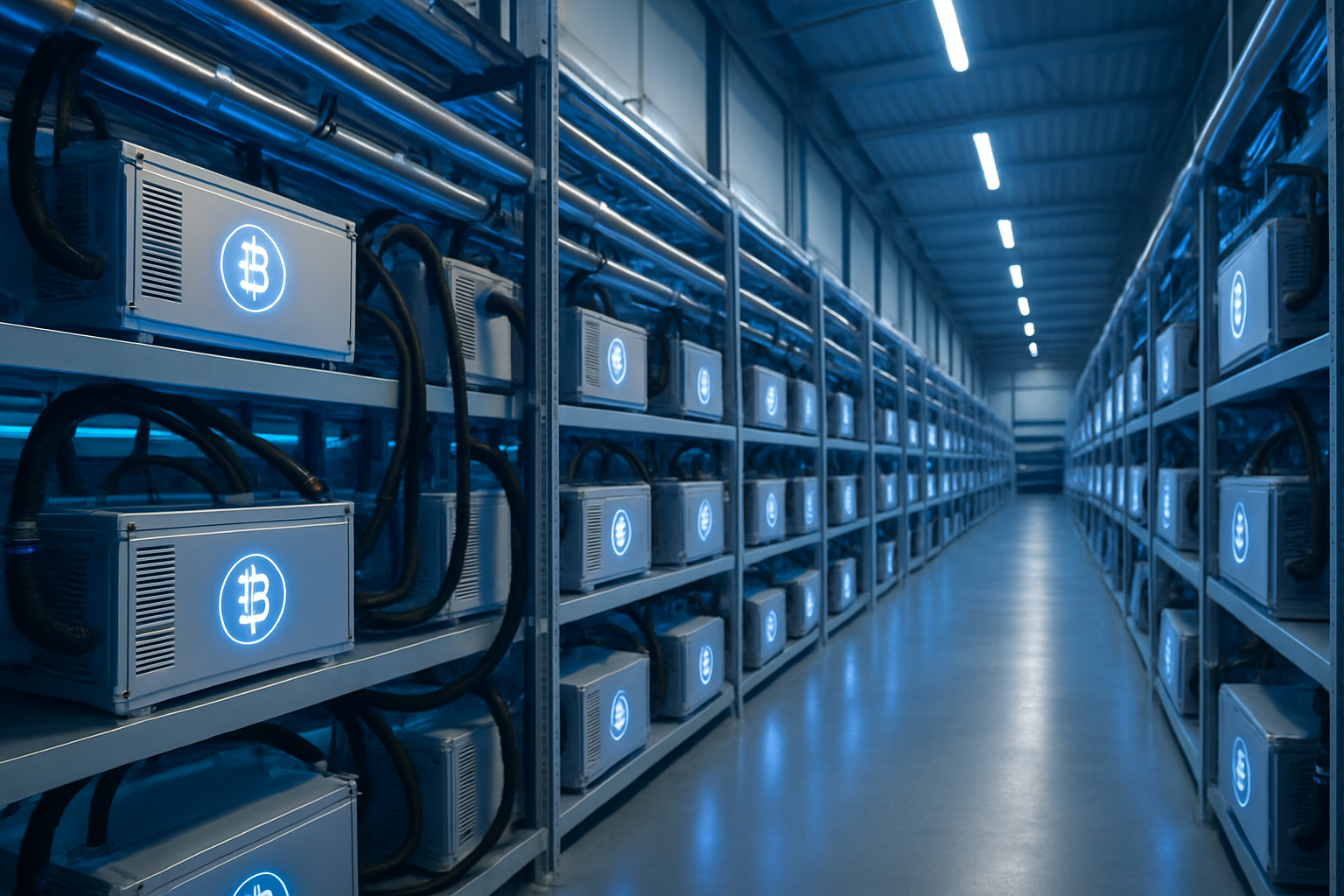
Ninguna evaluación de los sistemas de extracción hidroeléctrica está completa sin considerar toda la infraestructura necesaria. A continuación, se presentan rangos representativos para un despliegue a mediana escala (de 10 a 50 unidades). Los costos varían significativamente según la ubicación, el estado de las instalaciones y las tarifas de los contratistas.
Unidad de distribución de refrigeración (CDU)
Una unidad de control de refrigeración (CDU) gestiona la temperatura, el caudal y la presión del refrigerante en todo el clúster. Para una instalación de 10 unidades, una CDU adecuada cuesta aproximadamente entre 8,000 y 20 000 dólares. Las CDU empresariales que dan soporte a más de 50 unidades suelen costar entre 30 000 y 70 000 dólares.
Tuberías y colectores dentro del rack
Los colectores de suministro/retorno, las conexiones de mangueras flexibles y los sensores de detección de fugas añaden entre 3,000 y 15 000 dólares por rack, según la configuración. La detección de fugas no es opcional: una sola falla de plomería no detectada puede destruir todo un rack de hardware.
Rechazo de calor
La unidad de decantación de carbón (CDU) debe disipar el calor a un sistema externo: una torre de refrigeración, un enfriador seco o un sistema de refrigeración de la planta. En climas cálidos, donde las máquinas de minería refrigeradas por aire requieren una inversión considerable en climatización, esta infraestructura a veces ya está disponible o resulta más económica de construir que un sistema de climatización específico para instalaciones refrigeradas por aire.
Distribución de poder
Las centrales hidroeléctricas consumen 5,000 W o más por unidad. Una instalación de 10 unidades requiere entre 50 y 60 kW de capacidad eléctrica dedicada, que normalmente requiere distribución trifásica de 208 V a 480 V. El coste de las unidades de distribución de energía (PDU) a esta escala oscila entre 5,000 y 3 15,000 dólares antes de la instalación.
Marco de decisión: Cuándo se justifica la refrigeración hidráulica
La refrigeración por agua se justifica económicamente cuando los operadores pueden confirmar la mayoría de las siguientes condiciones:
- Escala mínima de 10+ unidadesLos costos de la unidad de decantación de carbón (CDU) y de las tuberías son en gran medida fijos. Por debajo de 10 unidades, el costo amortizado de la infraestructura por minero es difícil de justificar en comparación con las ganancias de eficiencia de los sistemas de refrigeración por aire de última generación.
- Temperatura ambiente constantemente por encima de 35 °C.Los mineros refrigerados por aire reducen su rendimiento o se apagan en ambientes calurosos. Los mineros hidráulicos mantienen su rendimiento nominal a temperaturas de entrada de agua de hasta 40 °C, lo que los convierte en la opción práctica para instalaciones en Oriente Medio, el Sudeste Asiático o cualquier región sin sistemas de climatización industrial.
- El espacio en rack o los circuitos PDU son una limitación vinculante.Si se busca maximizar la tasa de hash dentro de un espacio fijo en el rack o la capacidad del panel eléctrico, los mineros hidrodinámicos ofrecen aproximadamente entre un 35 % y un 40 % más de tasa de hash por unidad de rack que las unidades comparables refrigeradas por aire.
- Horizonte operativo previsto de más de 2 años.El capital invertido en infraestructura se recupera con el tiempo. Los operadores que planean renovar su hardware cada 12 meses podrían no recuperar los costos iniciales de infraestructura.
- El ruido es una limitación de las instalaciones.Los mineros industriales refrigerados por aire operan a 75–82 dB. Los mineros hidráulicos son prácticamente silenciosos en el chasis. Para instalaciones de coubicación con restricciones de ruido, esto puede ser un requisito indispensable.
| Escenario | Enfoque recomendado | Razonamiento |
|---|---|---|
| Instalación especializada, más de 20 unidades, clima cálido. | Hidroeléctrica | Densidad, estabilidad térmica, sin sistema de climatización superior |
| Ubicación conjunta, 5–20 unidades, clima templado | Aire enfriado | Sin infraestructura CDU, menor costo inicial |
| Vivienda u oficina pequeña, de 1 a 5 unidades. | Sólo refrigerado por aire | La infraestructura hidroeléctrica no es factible ni segura en entornos residenciales. |
| Instalación existente refrigerada por agua con capacidad ampliada | Hidroeléctrica | La CDU ya está amortizada; la adición incremental de unidades es eficiente. |
| Maximización de la densidad de los racks, espacio limitado | Hidroeléctrica | ~35–40% más TH/s por rack U en comparación con refrigeración por aire. |
¿Quiénes no deberían comprar hidrominerales?
Las máquinas mineras refrigeradas por agua no son adecuadas para la minería doméstica ni para operaciones con menos de 5 a 10 unidades. Las razones son prácticas:
- La infraestructura CDU no es viable en entornos residenciales.
- Las modificaciones de plomería generalmente infringen los contratos de arrendamiento residencial y los códigos de construcción.
- El agua cerca de equipos de alta tensión representa un grave riesgo para la seguridad y la propiedad.
- La rentabilidad por unidad no funciona a pequeña escala: el coste de la infraestructura supera cualquier ahorro operativo.
Para los mineros independientes y los pequeños operadores, las unidades refrigeradas por aire actuales, con una potencia de entre 15 y 17 J/TH, ofrecen un rendimiento sólido sin necesidad de infraestructura adicional. La decisión debe basarse en condiciones operativas verificables, no en el atractivo de un producto técnicamente impresionante.
Conclusión: Una herramienta para el entorno operativo adecuado.
Los mineros refrigerados por agua, como el Antminer S21 Hyd y el S23 Hyd 3U, son productos consolidados con soporte del fabricante y redes de repuestos disponibles. Para los operadores comerciales que construyen o amplían una instalación dedicada, especialmente en climas cálidos o configuraciones de rack de alta densidad, representan una opción viable para las implementaciones de 2026, siempre que se cumplan dichas condiciones. La ventaja en eficiencia del chip sobre las alternativas refrigeradas por aire actuales es modesta, pero las ventajas en densidad, estabilidad térmica y ruido operativo pueden compensar el mayor costo inicial de infraestructura a lo largo de un horizonte de implementación de varios años, aunque esto depende de las tarifas eléctricas reales, la utilización del hardware y su vida útil.
Para los operadores que no cumplen con los requisitos de infraestructura, la misma inversión en hardware refrigerado por aire de última generación generalmente generará un mejor resultado neto. Utilice la calculadora de rentabilidad de BT-Miners para comparar escenarios con su tarifa eléctrica antes de tomar una decisión.
Consulte los precios y la disponibilidad actuales de los modelos Antminer S21 Hyd y Antminer S23 Hyd 3U en BT-Miners, o póngase en contacto con el equipo para hablar sobre la adquisición comercial y el apoyo en la planificación de la infraestructura.