Guida all'acquisto di ASIC per il mining 2026: come i nuovi miner evitano costosi errori hardware
Scegliere il miglior miner ASIC nel 2026 non significa solo trovare l'hashrate più alto. Per molti principianti, il più grande errore nell'acquisto di hardware per il mining è quello di acquistare una macchina basandosi unicamente su TH/s, GH/s o KSol/s, ignorando i costi dell'elettricità, l'efficienza, le commissioni delle pool di mining, il calore, il rumore, l'hosting, la garanzia e il reale ritorno sull'investimento (ROI).
Questa guida all'acquisto di ASIC per il mining del 2026, realizzata da BT-MINERS, aiuta i nuovi miner a capire come confrontare l'hardware di mining prima dell'acquisto. Che tu stia cercando un miner per Bitcoin, Litecoin e Dogecoin, Scrypt, Zcash, Kaspa o un pacchetto di mining ASIC in hosting, questa guida spiega come evitare costosi errori hardware e scegliere un miner adatto alle reali condizioni operative.
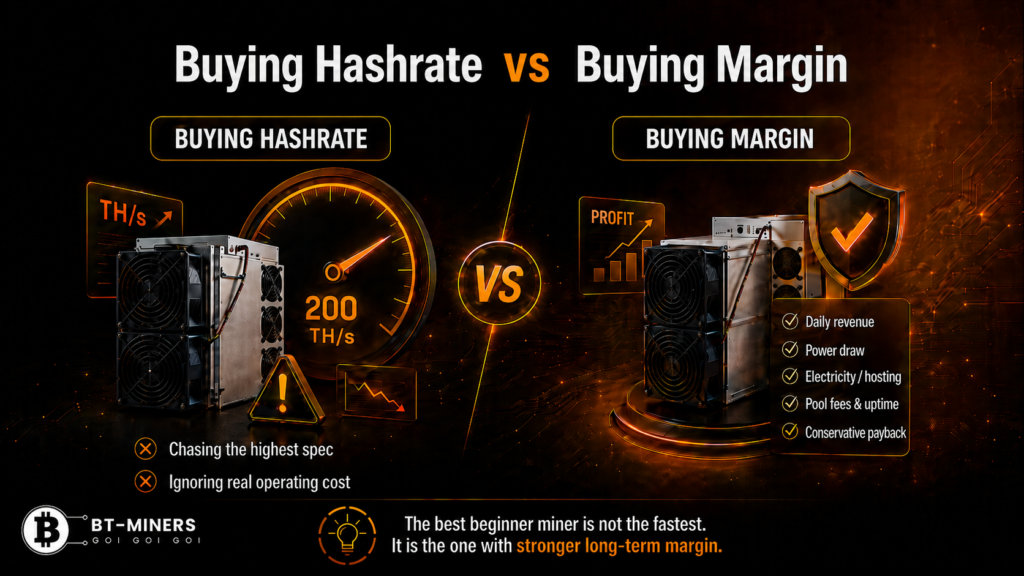
Acquistare hashrate o acquistare margine: il più grande errore dei miner ASIC
L'hashrate è facile da capire. Ecco perché molti principianti cercano naturalmente il valore TH/s, GH/s o KSol/s più alto che si possono permettere.
Ma l'hashrate da solo non basta a stabilire se un miner sia un buon acquisto.
I ricavi derivanti dal mining vengono solitamente percepiti in criptovaluta, mentre molti dei costi sono pagati in dollari: prezzo della macchina, elettricità, hosting, dazi doganali, riparazione, manutenzione ed eventuali tempi di inattività. Un miner con un hashrate elevato può comunque rivelarsi un cattivo investimento se consuma troppa energia, richiede infrastrutture costose o risulta redditizio solo in condizioni di mercato ideali.
Un punto di partenza migliore è il margine operativo reale del minatore. Prima di effettuare un ordine, confronta:
- Ricavo giornaliero previsto dalla moneta o dall'algoritmo
- Consumo energetico in watt
- La tua tariffa effettiva per l'elettricità o l'hosting
- Costo del pool e modalità di pagamento
- Tempo di attività previsto al netto dei rischi legati a calore, polvere, rete e manutenzione.
- Costi di spedizione, dazi doganali e copertura della garanzia
- Periodo di recupero dell'investimento in base a ipotesi conservative di prezzo e difficoltà
Per una prima rapida valutazione, puoi confrontare le macchine utilizzando la pagina dei guadagni giornalieri dei miner di BT-MINERS, quindi adattare il risultato in base al tuo prezzo dell'energia. Un calcolatore di redditività non garantisce profitti, ma può aiutare i principianti a evitare gli acquisti sbagliati più ovvi prima di spendere soldi.
Perché l'efficienza dei miner ASIC è più importante della semplice potenza di calcolo (hashrate)
L'efficienza degli ASIC è uno dei fattori più importanti per il successo a lungo termine del mining.
Per i miner di Bitcoin SHA-256 , l'efficienza viene solitamente misurata in joule per terahash. Per altri algoritmi, il concetto è simile: quanta energia è necessaria alla macchina per produrre una determinata quantità di hashrate. In generale, un minore consumo energetico per unità di hashrate conferisce al miner una maggiore capacità di sopravvivenza in condizioni di mercato sfavorevoli.
Questo è importante perché le condizioni di mining possono cambiare rapidamente. Il prezzo delle criptovalute può scendere, la difficoltà della rete può aumentare e l'hash price può muoversi a sfavore dei miner. Quando i margini si riducono, le macchine più vecchie e meno efficienti sono spesso le prime a essere spente.
Un principiante non dovrebbe limitarsi a chiedersi: "Questo miner è redditizio oggi?". Una domanda migliore sarebbe: "Questo miner può rimanere competitivo se il mercato diventa meno favorevole?".
La macchina più economica non è sempre la più conveniente. La macchina più veloce non è sempre la scelta più sicura. In molti casi, il miglior miner per principianti è quello che offre un migliore equilibrio tra hashrate, efficienza energetica, prezzo, assistenza e ritorno sull'investimento realistico.
Come scegliere il miner ASIC giusto in base alla criptovaluta, all'algoritmo e al rischio
I diversi miner ASIC espongono gli acquirenti a mercati differenti.
Un miner di Bitcoin SHA-256, come il Bitmain Antminer S21 Pro , è principalmente legato al prezzo del Bitcoin, alla difficoltà della rete Bitcoin e all'hash price. Un miner di Scrypt , come il Bitmain Antminer L11 , è legato all'economia del mining combinato di Litecoin e Dogecoin. Un miner di Zcash , come l' Antminer Z15 Pro , dipende dal prezzo di ZEC, dalla difficoltà di Equihash e dalle prospettive di mercato per le criptovalute incentrate sulla privacy.
Ciò significa che non esiste una risposta universale alla domanda: "Qual è il miglior miner ASIC?"
La scelta giusta dipende dal tuo obiettivo. Alcuni acquirenti desiderano un'esposizione a Bitcoin perché ha la liquidità più elevata e il mercato più consolidato. Altri preferiscono i miner di Scrypt perché vogliono un'esposizione al mining congiunto di Litecoin e Dogecoin. Altri ancora possono scegliere Equihash o altri algoritmi perché credono in una specifica criptovaluta o desiderano un profilo di rischio diverso.
Prima di acquistare, scrivi la tua tesi di investimento:
- A quale criptovaluta o algoritmo desideri esporti?
- Stai cercando un ritorno sull'investimento stimato a breve termine o un accumulo di criptovalute a lungo termine?
- Hai bisogno di elettricità a basso costo o di un servizio di hosting?
- Ti senti a tuo agio con una maggiore volatilità?
- Hai bisogno di un dispositivo per il mining domestico o sei in grado di utilizzare hardware per il mining industriale?
La scelta della macchina giusta dipende dalla tariffa elettrica, dall'ambiente operativo e dalla propensione al rischio, non da una lista casuale di "macchine più redditizie".
In che modo i pool di mining influenzano la redditività dei miner ASIC
Un pool di mining combina l'hashrate di molti miner e distribuisce le ricompense in base al lavoro svolto. La maggior parte dei miner di piccole e medie dimensioni utilizza i pool perché il mining in pool riduce la varianza dei pagamenti rispetto al mining individuale.
Tuttavia, la scelta del pool non è solo un dettaglio tecnico. Può influenzare i tempi di pagamento, la struttura delle commissioni, la stabilità delle ricompense, il tasso di quote non ancora utilizzate, la trasparenza e i guadagni reali.
I modelli di pagamento più comuni nei pool di mining includono PPS, FPPS, PPS+ e PPLNS. I modelli di pagamento in stile PPS solitamente offrono un reddito più stabile, ma potrebbero prevedere commissioni più elevate o includere il rischio nel tasso di pagamento. Il modello PPLNS può essere interessante per i miner che possono tollerare una maggiore variabilità e mantenere le macchine online in modo costante.
Prima di scegliere un pool di mining, i principianti dovrebbero confrontare:
- Costo della piscina
- Metodo di pagamento
- Soglia minima di pagamento
- Criptovalute e algoritmi supportati
- Disponibilità del server regionale
- Trasparenza del cruscotto
- Tasso di azioni obsolete
- Reputazione e affidabilità
La scelta del pool non è un aspetto da considerare a posteriori. Può determinare se le entrate calcolate sono realistiche o solo teoriche.
Requisiti di alimentazione, calore, rumore e hosting per i miner ASIC
Molti acquirenti alle prime armi calcolano correttamente i ricavi derivanti dall'attività mineraria, ma sottovalutano gli aspetti fisici dell'estrazione.
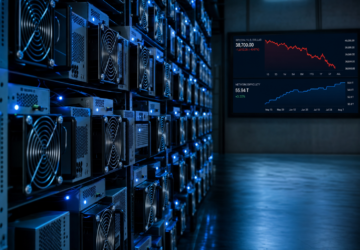
I miner ASIC sono macchine specializzate. Spostano grandi quantità d'aria, consumano molta energia e generano calore considerevole. Alcuni modelli non sono adatti ai normali ambienti domestici senza un'adeguata ventilazione, una potenza elettrica sufficiente e un sistema di riduzione del rumore.
Prima di acquistare un miner ASIC, verificare:
- Il circuito è in grado di gestire in sicurezza l'assorbimento di potenza della macchina.
- La tua stanza, il tuo garage, il tuo magazzino o la tua struttura possono rimuovere il calore
- Il livello di rumore è accettabile per il luogo.
- La connessione Internet è stabile
- La filtrazione dell'aria e il controllo della polvere sono realistici
- I cavi di alimentazione, la PDU e i requisiti di tensione sono corretti
- È possibile accedere al servizio di riparazione e ai pezzi di ricambio.
Se questi requisiti risultano difficili da gestire a casa, l'hosting ASIC potrebbe essere più pratico. L'hosting trasforma il mining in una decisione infrastrutturale. In tal caso, la potenza di calcolo, lo storico dei tempi di attività, la politica di manutenzione, l'assicurazione, la trasparenza dei pagamenti e i tempi di risposta dell'assistenza diventano importanti quanto la macchina di mining stessa.
Come calcolare il ROI di un ASIC miner con ipotesi prudenti
I modelli di ROI per principianti sono spesso troppo ottimistici.
Molti nuovi minatori calcolano il ritorno sull'investimento basandosi sul prezzo attuale della criptovaluta, sulla difficoltà attuale della rete, su un funzionamento impeccabile, su costi di riparazione pari a zero e sulla consegna istantanea. Questo modello può sembrare allettante, ma non rispecchia le reali condizioni di mining.
Un modello di ROI più utile dovrebbe includere anche i casi negativi:
- Caso base: entrate attuali e tariffa attuale per l'elettricità o l'hosting
- Caso problematico: i ricavi diminuiscono a causa dell'aumento della difficoltà della rete.
- Caso di prezzo: il prezzo della moneta cala prima del pagamento
- Caso di ritardo: la macchina arriva più tardi del previsto
- Caso di inattività: il tempo di attività è inferiore al 100%.
- Caso di riparazione: la macchina necessita di manutenzione o di pezzi di ricambio
- Caso di rivendita: il valore dell'hardware cala più velocemente del previsto.
Se una macchina sembra valida solo nello scenario migliore, non è adatta ai principianti. Un acquisto migliore dovrebbe comunque risultare ragionevole anche quando le ipotesi diventano meno favorevoli.
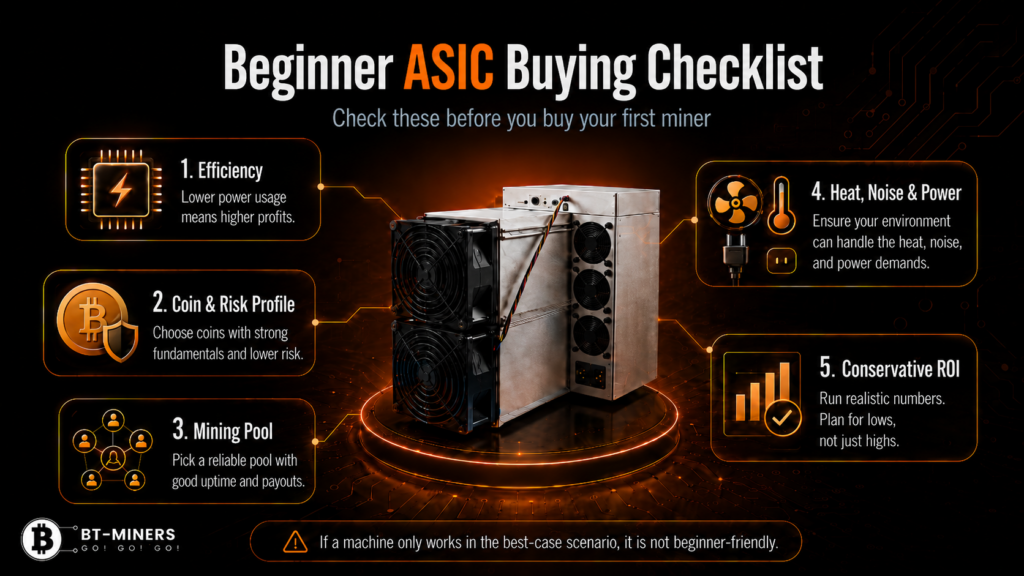
Lista di controllo per l'acquisto di un ASIC per il mining per principianti
Prima di effettuare un ordine, consulta questa lista di controllo per principianti sull'acquisto di ASIC:
- Conferma la criptovaluta e l'algoritmo supportati dal miner
- Verifica i ricavi attuali utilizzando una calcolatrice e i dati in tempo reale dei minatori.
- Ricalcola il profitto utilizzando la tua tariffa reale per l'elettricità o l'hosting.
- Confronta l'efficienza, non solo l'hashrate
- Verifica il supporto del pool di mining e il metodo di pagamento.
- Stimare i requisiti di calore, rumore, tensione e potenza.
- Verifica i tempi di spedizione, i dazi doganali e il metodo di consegna.
- Esaminare la copertura della garanzia e l'assistenza post-vendita
- Modella almeno uno scenario negativo
- Confronta il valore di rivendita e la durata prevista dell'hardware.
- Decidi se è più pratico minare da casa o ospitare un'attività di mining.
I clienti di BT-MINERS possono iniziare dalla collezione di miner ASIC, per poi restringere la ricerca in base a criptovaluta, limite di potenza, budget e ambiente operativo.
Qual è il miglior miner ASIC per principianti nel 2026?
Il miglior primo miner ASIC di solito non è la macchina più aggressiva sul mercato.
Per i principianti, la scelta migliore è spesso una macchina con un supporto chiaro per il biliardo, una documentazione completa, requisiti di alimentazione ragionevoli, un'assistenza post-vendita affidabile e un profilo di ammortamento che sia ancora conveniente anche con ipotesi prudenti.
Se disponete di energia elettrica a basso costo e desiderate investire in Bitcoin, un moderno miner di Bitcoin SHA-256 potrebbe essere una soluzione valida. Se invece puntate al mining combinato di Litecoin e Dogecoin, i miner Scrypt meritano attenzione. Se avete una tesi di mercato incentrata sulle criptovalute incentrate sulla privacy, i miner Equihash possono essere un valido confronto. Se il vostro ambiente domestico non è adatto a gestire calore, rumore o requisiti di alimentazione elevati, il mining con ASIC ospitati potrebbe rappresentare un punto di partenza migliore.
Il segreto è evitare di acquistare basandosi esclusivamente sull'hashrate.
Un acquisto oculato di un ASIC dovrebbe bilanciare ricavi, efficienza, infrastruttura, esposizione al rischio di cambio, supporto e rischio complessivo. Il miglior miner per principianti non è sempre il più veloce, ma quello che offre le maggiori probabilità di sopravvivenza in condizioni di mercato reali.
FAQ
Qual è l'errore più grande che commettono i nuovi miner ASIC?
L'errore più grande è acquistare basandosi solo sull'hashrate. Un miner dovrebbe essere valutato in base al margine netto dopo aver considerato elettricità, commissioni del pool, uptime, rischio di difficoltà, spedizione, garanzia, costi di riparazione e valore di rivendita.
L'ASIC più redditizio oggi è sempre il miglior ASIC da acquistare?
No. La macchina più redditizia oggi può diventare meno attraente se la difficoltà della rete aumenta, il prezzo delle monete diminuisce, il costo dell'elettricità aumenta o le effettive condizioni operative dell'acquirente differiscono dalle ipotesi del calcolatore.
I principianti dovrebbero minare da soli o unirsi a un pool di mining?
La maggior parte dei principianti dovrebbe utilizzare un pool di mining affidabile, poiché il mining in pool riduce la varianza dei pagamenti. Il mining in solitaria può essere interessante per gli appassionati, ma per la maggior parte dei principianti è più simile a una lotteria che a una strategia per ottenere un reddito stabile.
Come posso confrontare i miner ASIC per Bitcoin, Scrypt e Zcash?
Confronta l'algoritmo di mining, l'esposizione al rischio di criptovaluta, il consumo energetico, l'efficienza, il supporto ai pool, i ricavi giornalieri, il costo dell'elettricità, le opzioni di hosting, la garanzia e il rischio di perdite. La scelta migliore dipende dalla tariffa elettrica, dall'ambiente operativo e dalle prospettive di mercato.
I principianti dovrebbero scegliere il mining domestico o l'hosting ASIC?
Il mining domestico è fattibile se si dispone di un'alimentazione elettrica adeguata, una buona ventilazione, un buon controllo del rumore e una connessione internet stabile. Se l'ambiente circostante non è adatto al mining con apparecchiature industriali, l'hosting potrebbe essere più pratico, poiché la struttura si occupa di alimentazione, raffreddamento, manutenzione e gestione del tempo di attività.
Qual è il modo più sicuro per valutare il ritorno sull'investimento (ROI) degli ASIC?
Utilizza ipotesi prudenti. Non basarti solo sui ricavi odierni. Considera possibili variazioni del prezzo delle criptovalute, della difficoltà della rete, dei tempi di attività, dei costi di riparazione, dei ritardi di spedizione e del valore di rivendita. Se il miner risulta redditizio solo nello scenario migliore, potrebbe non essere un buon acquisto per un principiante.
Questo articolo ha scopo puramente informativo e non costituisce consulenza finanziaria. La redditività del mining varia in base al prezzo della criptovaluta, alla difficoltà della rete, alle commissioni di transazione, alla disponibilità dell'hardware, al costo dell'elettricità, alle condizioni di hosting e alla domanda di mercato.